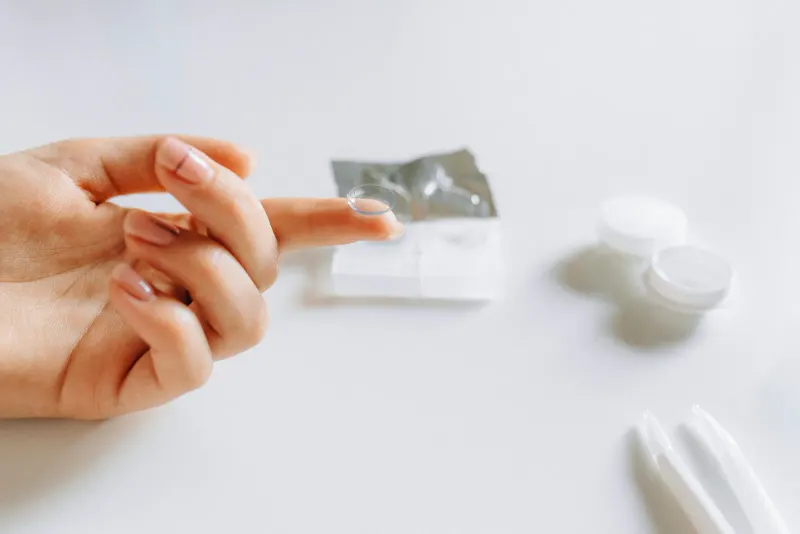
Dry eye screening before contact lens fitting checks whether the tear film and eyelids can support comfortable, stable wear. The clinician evaluates symptoms, tear breakup, surface staining, blinking, lid margins, and relevant history. Findings can influence lens material, design, replacement schedule, care system, wear time, and whether the surface should be treated first. For a related symptom pattern, read Why Children Wearing Contacts Need Closer Follow-Up.
Screening is not a promise that a lens will stay comfortable all day. Contact lens performance depends on the lens-eye interaction, environment, behavior, health changes, and follow-up after the trial begins.
Dry eye before contact lenses matters because an unstable tear film can make lenses uncomfortable, blurry, and less safe. Screening helps an eye doctor decide whether the eye surface is ready for lens wear or needs treatment first.
Contact lenses rest on the tear film over the cornea. If tears evaporate too fast, if the eyelids are inflamed, or if the surface is irritated, lenses may worsen burning, redness, watering, and fluctuating vision.
What matters first for dry eye screening before contact lenses?
Dry eye screening can improve contact lens comfort and safety planning. Its importance should be judged against the symptom timeline, affected task, and current examination.
- Symptoms include burning, grit, watering, redness, fluctuating blur, and lens intolerance.
- Eyelid oil gland problems and incomplete blinking can make lenses dry out faster.
- Redness with pain, light sensitivity, discharge, or blurry vision after lens wear needs prompt care.
- Some patients need dry eye treatment before a contact lens fitting.
Why Screening Helps Before Lens Wear
A contact lens fit is not only about lens power. The doctor also needs to know whether the cornea, eyelids, and tears can support a lens for the intended wearing schedule.
The National Eye Institute explains that dry eye can occur when eyes do not make enough tears or when tears do not work correctly. That matters for contact lenses because the lens depends on a stable, comfortable surface.
Screening can also identify conditions that mimic dry eye, such as allergy, blepharitis, medication effects, or corneal irritation. Treating the right cause can prevent a frustrating cycle of trying lens after lens without addressing the surface.
Symptoms to Mention Before a Fitting
Tell your eye doctor if your eyes already feel dry before contact lenses. Mild symptoms can become more noticeable once lenses are added.
- Burning, stinging, or gritty feeling.
- Watery eyes after screen use or wind exposure.
- Blur that clears after blinking.
- Redness late in the day.
- Contact lens discomfort in the past.
- Eyelid crusting, flakes, or frequent styes.
- Dry mouth, autoimmune disease, allergy, or medicines that may reduce tears.
Be honest about screen hours, sleeping habits, and whether you plan to wear lenses for sports, long shifts, travel, or occasional events. The safest lens plan depends on real use.
What the Eye Doctor May Check for dry eye screening before contact lenses
The exam may include tear break-up time, corneal staining, eyelid margin health, meibomian gland function, tear volume, and allergy signs. The doctor may also check blinking pattern and whether the eyelids close fully.
If the surface looks inflamed or dry, the doctor may recommend treating the eye surface before fitting lenses. That delay can feel inconvenient, but it may improve comfort and reduce the chance of quitting lenses early.
For some patients, daily disposable lenses, different materials, shorter wearing time, or specialty lenses may be discussed. The choice depends on the exam and the reason for dryness.
Contact Lens Safety Red Flags
The CDC emphasizes proper contact lens cleaning, storage, and wearing habits to reduce infection risk. Dry eye does not remove the need for hygiene. It makes comfort and monitoring even more important.
Remove lenses and seek prompt care if you develop pain, light sensitivity, worsening redness, discharge, sudden blurry vision, or a white spot on the cornea. Do not sleep in lenses, swim in lenses, or rinse lenses with tap water unless your eye doctor has given specific instructions for a medically necessary lens system.
Questions to Ask Before Starting Contacts
Does my tear film look stable enough for contact lenses? The next decision requires comparison with the earlier baseline and the purpose of the visit.
- Do my eyelids or oil glands need treatment first?
- Which lens type best fits my dry eye pattern and wearing goals?
- How many hours should I start with?
- What symptoms mean I should remove the lenses and call?
How to Build Lens Wear Gradually
A gradual wearing schedule can help you notice problems before they become severe. Your eye doctor may ask you to build wear time over days and return for a follow-up lens check.
At follow-up, report dryness timing, blur, redness, and whether comfort differs between eyes. A lens that feels fine at insertion but dry after four hours may need a different material, fit, solution, or wearing schedule.
When Dry Eye Needs Treatment First
Dry eye treatment before contacts may include eyelid care, lubricating drops, allergy management, prescription treatment, or changes to screen and airflow habits. The plan should match the exam findings.
Screening does not mean contacts are off the table. It means your eye doctor is checking whether the surface can handle lens wear and what changes can make lens use safer and more comfortable.
Questions people ask about dry eye screening before contact lenses
One common question for people considering dry eye screening before contact lenses is "Can I wear contacts if I have dry eye?" That question and the related points below are answered separately because they do not all depend on the same finding.
Can I wear contacts if I have dry eye for dry eye screening before contact lenses?
Some people can, but the lens type, wearing schedule, and dry eye treatment plan matter. An exam can show whether your surface is ready.
Are daily lenses better for dry eye?
Daily disposable lenses may help some patients, but they are not the right answer for every dry eye pattern. Fit, material, tears, and eyelids all matter.
Should I use drops over my contacts?
Use only drops that your eye doctor says are safe with your lenses. Some drops are not meant for use over contacts.
Why Follow-Up Matters After the First Fit
The first lens that feels acceptable in the office may behave differently during a workday, school day, or practice. Follow-up lets the doctor see how the lens moves, how the cornea looks after wear, and whether dryness is creating staining.
Do not skip follow-up because the lenses feel comfortable at first. Some contact lens complications cause mild symptoms early, and the slit lamp exam can reveal surface stress before the eye becomes painful.
When Contacts May Need a Different Plan
If dryness remains strong after treatment, your doctor may discuss limited wear, glasses for certain tasks, or specialty lens designs. Scleral lenses can help some medical surface conditions, but they require careful fitting and hygiene.
The safest plan may also change with seasons, allergies, pregnancy, medication changes, or autoimmune disease. Tell your eye doctor when your health or environment changes so the contact lens plan can be adjusted.
For the next question after Why Dry Eye Screening Helps Before Contact Lenses, read Contact Lens Mistakes That Raise Infection Risk and keep its purpose separate from the dry eye screening before contact lenses decision explained here.