Dynamic visual acuity testing measures how well a person identifies visual detail while the head, the target, or both are moving. In a clinical vestibular setting, the test can help assess gaze stability during head motion. In a sports vision setting, a motion task may describe one part of visual performance. It does not diagnose every balance problem or predict who will excel in competition. For a related symptom pattern, read When Depth Perception Problems Need an Eye Exam.
The result only makes sense when the examiner explains the method. Head speed, target motion, display time, viewing distance, correction, and scoring can all change performance. Two tests called dynamic visual acuity may not be equivalent.
Dynamic visual acuity testing for sports and motion vision measures how well a person sees when the target, the head, or the body is moving. Standard eye charts are useful, but many real activities require clear vision during motion.
Athletes, drivers, dancers, pilots, and people with balance concerns may notice problems only when things are moving. Testing motion vision can help identify whether blur, tracking, vestibular issues, or visual processing demands are part of the complaint.
What matters first for dynamic visual acuity testing?
Dynamic visual acuity tests clarity during motion rather than still viewing. The appropriate response requires comparison with the earlier baseline and the purpose of the visit.
- It may be relevant for sports, driving, concussion recovery, dizziness, and motion sensitivity.
- The test does not measure athletic talent by itself.
- After head injury, worsening headache, confusion, vomiting, double vision, or sudden vision loss needs urgent care.
Why Dynamic Visual Acuity Testing Matters
Static acuity asks what a person can see while still. Dynamic acuity asks what happens when the visual system must stabilize an image quickly. That can be important for catching a ball, scanning traffic, or staying oriented during rapid movement.
The test can also be useful after concussion or vestibular problems. Blurred vision with head movement may point toward coordination between the eyes, inner ear, and brain rather than a simple glasses prescription issue.
Sports vision and vestibular literature both recognize that visual clarity during movement can affect comfort and performance. A patient-centered exam should connect the score to real symptoms rather than treating it as a stand-alone number.
What does motion-vision assessment measure?
The purpose of testing visual clarity during movement is to compare how clearly a moving or briefly presented target is seen with whether head movement makes letters blur. That motion-vision testing comparison helps the clinician decide whether the result answers the motion-based acuity measure question or needs confirmation from another part of the examination.
Interpret motion-vision testing alongside eye tracking, fixation, and visual attention during motion and how symptoms relate to dizziness, concussion history, or sports performance. When the motion-vision testing findings conflict, review acquisition quality and consider a repeat or different method before accepting the first output.
Describe the daily task connected with how clearly a moving or briefly presented target is seen, and note whether the change is stable, intermittent, or worsening. That history gives motion-vision assessment a functional context without asking the measurement to diagnose more than it can show.
- How clearly a moving or briefly presented target is seen
- Whether head movement makes letters blur
- Eye tracking, fixation, and visual attention during motion
- How symptoms relate to dizziness, concussion history, or sports performance
What can testing visual clarity during movement results establish?
Motion-based acuity measure does not prove athletic talent or diagnose every cause of motion discomfort. It is one part of a broader exam that may include refraction, eye teaming, tracking, vestibular screening, and neurologic history.
Results can be affected by fatigue, attention, anxiety, target speed, lighting, and testing method. Comparing repeatable results over time is often more helpful than focusing on one score.
A normal result also does not rule out all sports vision concerns. Depth perception, contrast sensitivity, reaction time, visual attention, and eye teaming may need separate evaluation.
- Ask what the result means for your specific diagnosis.
- Ask whether the finding is new, stable, or uncertain.
- Ask whether repeat testing or imaging is recommended.
- Ask what symptoms should prompt faster contact before the next visit.
What happens during motion-vision assessment?
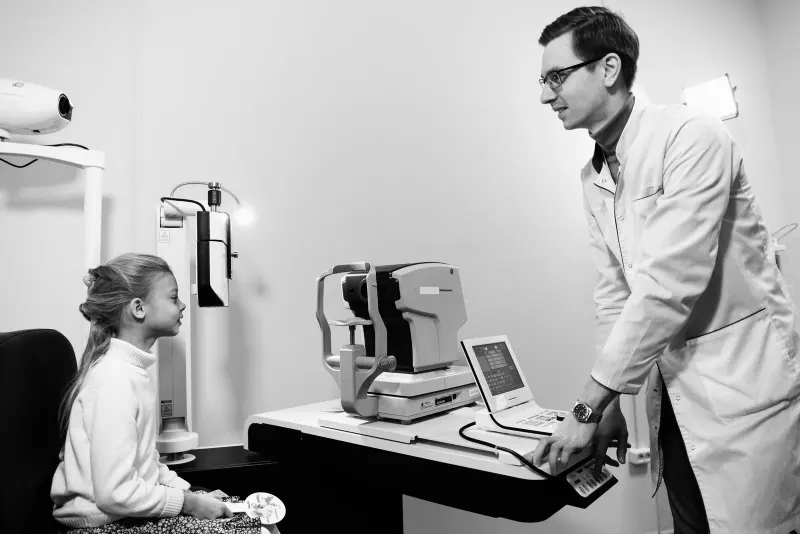
Testing may involve reading letters while the head moves, identifying moving targets, or responding to briefly presented images. The exact method depends on the clinic and reason for testing.
The clinician should ask when symptoms happen. Blur during a tennis serve, dizziness in a grocery aisle, and trouble tracking traffic are different situations and may point toward different next steps.
If dizziness, nausea, or headache appears during testing, the team may pause. Symptom response can be informative, but testing should not push someone beyond a safe and reasonable limit.
- Bring sport-specific details such as position, visual tasks, and when blur occurs.
- Mention concussion, dizziness, motion sickness, or neck injury history.
- Bring current glasses, contacts, goggles, or helmet visor if relevant.
- Ask whether findings suggest eye care, vestibular therapy, or medical evaluation.
When do symptoms connected with testing visual clarity during movement need faster care?
Seek prompt care after head injury if there is worsening headache, repeated vomiting, confusion, seizure, unequal pupils, double vision, or sudden vision loss. Sports vision testing should wait until urgent medical issues are addressed.
For what dynamic visual acuity testing measures, an abrupt or severe change matters more than the scheduled testing plan. For motion-vision testing, use the warning signs above to choose prompt or urgent care, and do not wait for a routine motion-based acuity measure appointment when vision or safety is changing quickly.
How motion-vision assessment findings shape follow-up
Repeat motion-vision testing should use comparable targets, head movement, correction, presentation time, and symptom conditions. For motion-vision testing, a later result matters only when its quality and context make comparison with the baseline credible.
Bring earlier reports and explain whether eye tracking, fixation, and visual attention during motion changed between visits. That motion-vision testing record gives the clinician a concrete way to connect the motion-based acuity measure record with symptoms, function, treatment response, or the need for another test.
It is also fair to ask how motion-vision assessment will change decisions today. For motion-vision testing, the answer may be treatment, a cleaner baseline, a safer monitoring interval, a referral, or a repeat test under better conditions. That motion-vision testing context makes the next step clearer without turning the visit into a pass-fail exercise.
If the motion-vision testing finding affects work, school, sports, reading, driving, or home safety, say so clearly. Functional details help the clinician connect testing visual clarity during movement results with practical advice and realistic follow-up timing.
Questions people ask about motion-based acuity measure
Is dynamic acuity the same as a regular eye chart? No. It measures clarity during motion, while a standard chart measures still viewing.
Can training improve motion vision? Some skills may improve with targeted practice, but the plan depends on the cause and the person.
Do I need this test for routine glasses? Usually no. It is most useful when motion-related symptoms or performance concerns are present.
When the concern in What Dynamic Visual Acuity Testing Measures shifts to that related decision, What Athletes Can Learn From Sports Vision Testing provides the more specific route while this article remains focused on motion-vision assessment.