
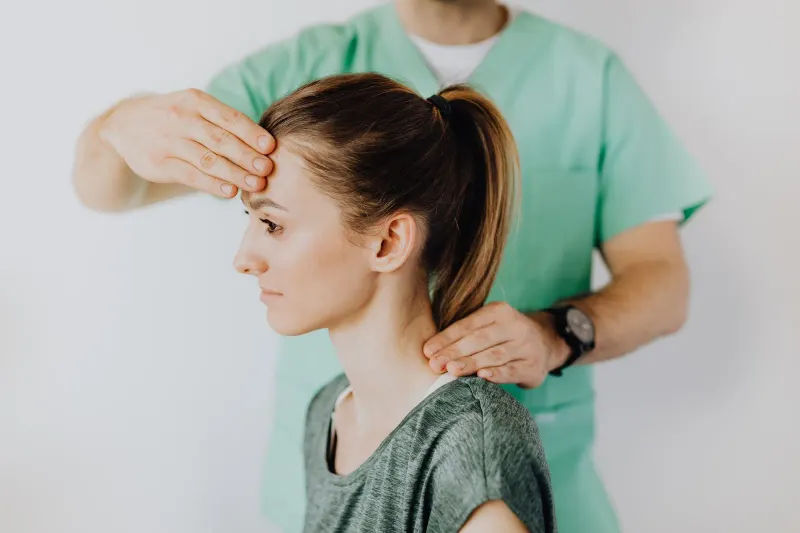
Concussion can disrupt convergence, accommodation, eye movements, and visual tolerance, making reading, screens, busy environments, and motion difficult. Evaluation should connect specific findings with symptoms and recovery stage while urgent neurologic warning signs and the broader concussion plan remain the priority. For a related symptom pattern, read Post-Concussion Visual Dysfunction Symptoms That Warrant an Eye Doctor Call.
Eye teaming problems after concussion can make reading, phone use, or computer work cause blur, double vision, headache, nausea, or rapid fatigue. Concussion can also affect focusing, eye movements, balance, and light tolerance. A full medical and vision assessment is needed because several systems can create similar symptoms. You can compare this topic with Planning Care after Post-Concussion Visual Dysfunction Is Identified.
What matters first for eye teaming after concussion?
One common question for people considering eye teaming after concussion is "What to report" That question and the related points below are answered separately because they do not all depend on the same finding.
What to report
Double vision, moving words, or losing place while reading. The next decision depends on whether it is new, worsening, and consistent with other findings.
- Headache or nausea that increases with near work.
- Closing one eye, tilting the head, or avoiding screens.
- Dizziness, imbalance, weakness, or worsening neurologic symptoms.
Return to activity should follow the concussion plan
Vision symptoms are one part of concussion recovery. Do not use a clear eye chart or a single good day as permission to return to driving, school, work, or sport. Follow the medical plan and report tasks that trigger symptoms.
How eye teaming problems after concussion affect near vision
One common question for people considering eye teaming after concussion is "The eyes must turn inward together" That question and the related points below are answered separately because they do not all depend on the same finding.
The eyes must turn inward together
When you look at a nearby target, both eyes turn inward, called convergence. The National Eye Institute explains that convergence insufficiency can occur after a brain injury such as concussion. One eye may drift outward during near work, causing strain or double vision.
Focus must change with distance
The eyes also adjust focus when shifting between a phone, monitor, and distant object. After concussion, this response may feel slow or hard to sustain. Blur that clears after a pause can still interfere with reading and work.
Eye movements guide reading
Small eye movements move attention from word to word, while larger movements shift between lines or targets. Symptoms can arise from attention, language, vestibular function, fatigue, or eye movement control. Testing should avoid treating every reading complaint as one diagnosis.
Symptoms during real tasks
One common question for people considering eye teaming after concussion is "Reading becomes less efficient" That question and the related points below are answered separately because they do not all depend on the same finding.
Reading becomes less efficient
A patient may reread lines, lose place, skip words, or need frequent breaks. Print may move or split after sustained effort. Record how long the task lasts before symptoms begin and how long recovery takes after stopping.
Screens add visual and sensory demand
Scrolling, animation, brightness, and close distance can provoke symptoms. Reducing motion, increasing text size, and shortening sessions may support recovery. These changes manage demand; they do not diagnose the underlying problem.
Busy spaces can feel overwhelming
Stores, hallways, traffic, and crowds combine eye movement with balance and motion processing. Tell the medical team if symptoms occur mainly while moving through space rather than during stationary reading. Vestibular assessment may be needed alongside eye care.
What the binocular vision evaluation may measure
One common question for people considering eye teaming after concussion is "Alignment at distance and near" That question and the related points below are answered separately because they do not all depend on the same finding.
Alignment at distance and near
The examiner checks whether the eyes are aligned and how alignment changes with a cover test or prisms. A person may have straight-looking eyes but still struggle to keep them coordinated during prolonged near work.
Convergence range and recovery
The clinician measures how close a target can move before double vision or an outward drift occurs, then how the eyes recover. The American Association for Pediatric Ophthalmology and Strabismus describes near point and fusional vergence as common parts of convergence testing.
Focusing and eye movement control
Testing may assess focus strength, flexibility between distances, tracking, rapid target shifts, pupils, fields, and eye health. Results must be interpreted with symptoms, effort, fatigue, and the broader concussion examination.
Treatment and accommodation choices
One common question for people considering eye teaming after concussion is "Early adjustments can reduce overload" That question and the related points below are answered separately because they do not all depend on the same finding.
Early adjustments can reduce overload
Use shorter reading blocks with planned breaks. The appropriate response changes only after the clinician considers severity, reliability, and competing explanations.
- Increase text size and reduce unnecessary screen motion.
- Use printed material or audio when it lowers symptoms.
- Return to school, work, and sport through the medical plan.
Prescription correction comes first
Uncorrected nearsightedness, farsightedness, or astigmatism can add strain. Updating glasses may help clarity but does not automatically treat concussion-related coordination problems. Some patients may be assessed for temporary prism or task-specific lenses.
Vision therapy needs a defined target
For a diagnosed binocular or focusing disorder, structured exercises may be discussed. The plan should name the measured deficit, the functional goal, the expected schedule, and how progress will be tested. Avoid claims that therapy treats every cognitive, reading, or balance symptom after concussion.
How to judge whether care is helping
One common question for people considering eye teaming after concussion is "Track function, not only exercise scores" That question and the related points below are answered separately because they do not all depend on the same finding.
Track function, not only exercise scores
Useful outcomes include longer reading tolerance, fewer episodes of double vision, easier screen use, and reduced recovery time after a task. Improvement in one test should connect with a meaningful daily change.
Coordinate with the concussion team
Share the eye findings with the clinician managing headache, balance, sleep, mood, and return to activity. The related article on convergence insufficiency and reading fatigue explains the condition outside the concussion setting.
Reassess when symptoms do not fit
Persistent symptoms may require neurologic, vestibular, headache, or rehabilitation review. A vision label should not end the search for other contributors. Worsening symptoms need medical reassessment.
When symptoms need urgent medical care
One common question for people considering post-concussion binocular symptoms is "Neurologic warning signs" That question and the related points below are answered separately because they do not all depend on the same finding.
Neurologic warning signs
Seek emergency care for increasing confusion, repeated vomiting, weakness, seizure, severe or worsening headache, unequal pupils, slurred speech, loss of consciousness, or difficulty waking. Follow the emergency instructions given after the injury.
Sudden eye or vision changes
Urgent eye care is needed for sudden vision loss, a curtain or shadow, new flashes or many floaters, severe eye pain, or an obvious eye injury. Do not assume these symptoms are part of ordinary concussion recovery.
Practical questions for Concussion-related alignment concern
One common question for people considering eye-coordination problem after head injury is "Can I have eye teaming trouble with clear distance vision?" That question and the related points below are answered separately because they do not all depend on the same finding.
Can I have eye teaming trouble with clear distance vision?
Yes. Distance acuity can be normal while convergence, focusing, or sustained near work causes symptoms.
Will the problem resolve with rest alone?
Some symptoms improve during recovery, while persistent measured deficits may need targeted care. Follow-up should be based on function and repeat testing.
Are online eye exercises safe to start on my own?
Exercises can worsen symptoms or target the wrong problem. Start only after a clinician identifies the deficit and explains the plan.
When can I return to sports?
The clinician managing the concussion should guide return to play. Normal vision testing is only one part of that decision.
When the concern in Why Concussion Can Disrupt Eye Teaming shifts to that related decision, Why Convergence Insufficiency Can Be Easy to Miss provides the more specific route while this article remains focused on post-concussion binocular symptoms.