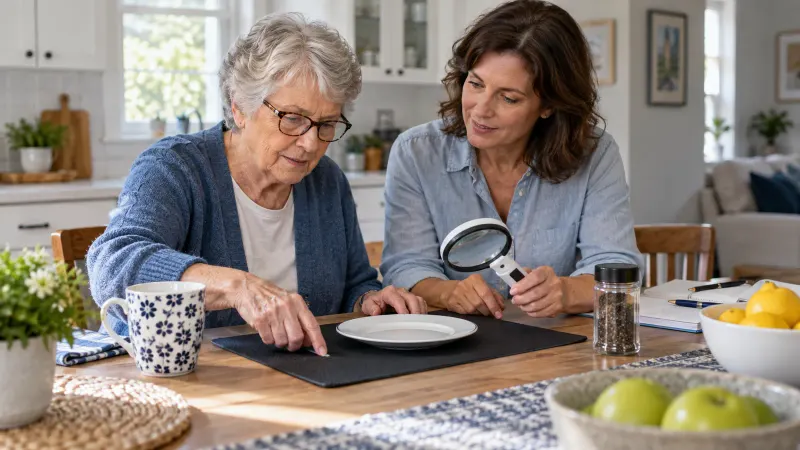

Put the person's goals before the checklist
Start with the routine the person wants to keep
Start by asking which routines the person with vision loss wants to keep. Then ask where those tasks feel less safe. Write down the room, route, or step that causes doubt. Take the notes to the low-vision team (people who help patients use remaining sight and adapt tasks) and the medical team. They can shape a plan around sight, health, balance, medicines, and the home. Seek urgent medical care after a fall with head impact, new vision change, severe pain, fainting, new weakness, or no ability to get up or bear weight. For a related symptom pattern, read Deciding Which Fall Prevention Supports Fit Your Home.
Treat vision as one part of fall risk
Vision loss can add to fall risk, but sight does not tell the whole story. Health problems and side effects from medicines can also play a part. Strength, balance, footwear, past falls, and the home may add other risks. A full care-team talk keeps one concern from hiding another and avoids a guess about any one person's risk. You can compare this topic with Discussing Mobility Choices at a Low Vision Visit.
Ask before changing a familiar space
A well-meant change can make a room less familiar to the person who uses it. The room may then feel new. Ask what feels hard and what the person wants to change before you move an item or add a device. Consent helps the person keep control of the plan and gives the care team a clear goal to support. For another care decision in this area, see Discussing Cooking Challenges at a Low Vision Visit.
Make an Independence-First Room-and-Routine Map
Choose one routine to watch
Pick one routine that the person values. It may involve getting from bed to the bathroom or walking from a chair to the front door. Watch the whole task with the person's consent. Do not test the person or ask for a risky move. The purpose is to find a good question for the care team, not to grade how the person performs.
Name the room and route
Write the start point and end point. Mark the path between them. Note doors, turns, steps, floor changes, or shared items that shape the route. A simple route note helps the low-vision team understand the space before giving advice that fits the person.
Record the hard point in plain words
Describe what the person reports or what you both notice without naming a medical cause. Use plain facts. Useful notes focus on details that the team can discuss.
- The edge or object was hard to see.
- Glare or low light made the route less clear.
- The person felt weak, dizzy, or off balance.
- A loose item or narrow path got in the way.
Add the person's main goal
Ask what the person wants the plan to protect. The goal may involve privacy or access to a favorite room. It may focus on safe use of the stairs or less fear during a night trip. A clear goal helps the team weigh safety, cost, effort, and the person's right to choose.
Turn the note into a team question
End each map entry with a question instead of a fix. Keep the question plain. Ask whether an eye exam, light change, home review, medicine review, or balance check fits the concern. Use the same order on each note: routine, route, hard point, goal, and team question. That order gives the right team a compact record without treating a broad home list as a personal plan.
Bring each concern to the right source of help
Ask the eye-care team about sight changes
Tell the eye-care team about a change in vision or glare. Add trouble with steps or missed objects. Keep up with eye care so the clinician can check the eyes and current vision correction. An exam may find a change that needs care, but new glasses or treatment cannot promise that a fall will not happen.
Ask the medical team about health and medicines
Tell the medical team about falls, near-falls, dizziness, weakness, and health changes. Ask a clinician or pharmacist to review medicines that may affect balance or alertness. Do not stop, start, or change a medicine from a home checklist. The prescriber needs to weigh the reason for the drug and the risks of a change.
Seek guidance before starting balance work
Strength and balance activity can form part of a fall plan when it fits the person's health and skills. Ask a clinician or a rehab specialist (a person trained to help with movement or tasks) for help. That person can match the activity to the user's needs. The same boundary applies to canes and other mobility aids, since the wrong fit or use can add a new problem.
Match home changes to the actual route
A care team may discuss more light, firm nonslip shoes, clear paths, or secure rugs. The team may also discuss handrails or grab bars. Choose changes that address the mapped route and fit the home. Review the plan with the person, test one change at a time, and note whether it helps without creating a new source of doubt.
Know when to seek care after a fall or near-fall
Get urgent help for injury or sudden change
Seek urgent medical care after a fall with a head impact, severe pain, fainting, new weakness, a sudden vision change, or an inability to bear weight or get up. Use local emergency help if the person seems in danger. Do the same if moving the person could add harm. A web page cannot judge the cause or the extent of an injury.
Report a recent fall to the care team
Tell the care team about a recent fall even if the person did not need urgent help. Share what happened before and during the event. Add what happened after it. The team can review sight, health, medicines, strength, balance, and the setting instead of assuming that vision loss caused the fall. Ask what belongs in ongoing monitoring and which change should lead to another call.
Speak up about repeated near-falls
Near-falls and new unsteadiness also deserve a call to the care team. Record the task, place, and time of day. Add footwear and any sign that came before the loss of balance. Those facts help the team decide whether the person needs an eye visit, medical review, home input, or rehab support.
Questions about fall prevention with vision loss
Can better glasses remove the risk of falling?
Clear vision correction may form part of a fall plan, but it cannot remove all fall risk. Strength and balance may also affect a person. So can health, medicines, footwear, and the home. Ask the eye doctor to check sight while the broader care team reviews the other concerns.
Should a caregiver move furniture without asking first?
Ask the person before changing a familiar room. An urgent danger may call for fast action. A moved chair or table can alter a route the person knows. Discuss the concern, agree on a goal, and seek home-safety input if the right change remains unclear.
What can renters do when they cannot change fixtures?
Renters can map the hard route. They can ask the care team which concern should come first. A local support service may help the person discuss possible changes with the property owner. Do not buy a device or make a fixed change until a trained person confirms that it fits the user and space.
Does a past fall belong in my eye appointment notes?
Tell the eye-care team about a past fall and a near-fall. Add any vision change near the event. The note helps the clinician place the sight concern in context. It does not prove that an eye problem caused the fall, so share the same event with the rest of the care team.
Can I choose a cane for a person with vision loss?
A trained clinician or rehab professional should help select and fit a mobility aid. Sight and strength may affect the choice. So can balance, hand use, and the home route. Bring the room-and-routine map to that visit so the discussion starts with real tasks and the person's goals.
When should new unsteadiness lead to a call?
Call the care team for new unsteadiness. Report repeated near-falls or a recent fall as well. Seek urgent care if the person also has a head impact, sudden vision change, severe pain, fainting, new weakness, or cannot get up or bear weight. Give the team a short account of the event and any symptom that came first.
Take the person's priority map to the care team
Choose a valued routine and record its route, hard point, goal, and team question. Ask the person which goal comes first. Bring one completed map entry to the low-vision and medical teams so they can build a plan that fits the person's health, home, and choices.