
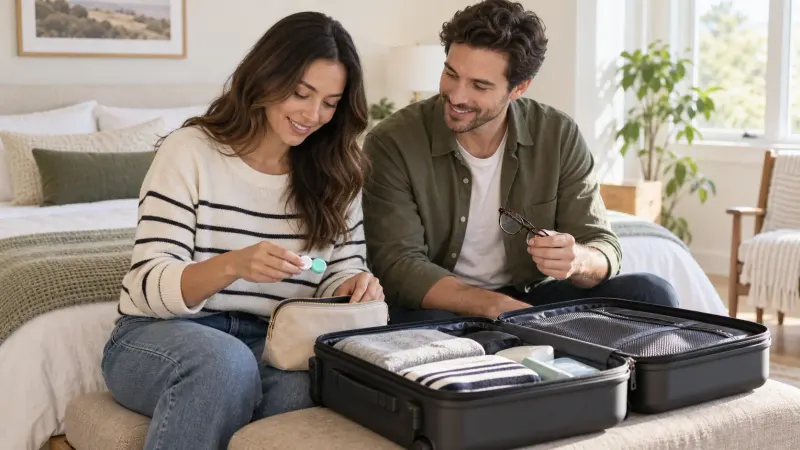
Daily Disposable Contact Lenses at a Glance
What decision are you making?
If you are considering contact lenses for the first time or changing from a reusable pair, use the visit to answer a practical question: can a single-use lens give you clear, comfortable vision for your usual day, and can you follow its wear plan? A true daily disposable lens is worn once, discarded after that day, and replaced with a new lens the next day. 1 You can leave the appointment with a plan even if a particular lens is not right for you.
What should you bring?
Bring your current glasses, any contact lens boxes or prescription you use, and a short record of when your vision feels blurry or your eyes feel dry or irritated. Note your work, driving, sports, screen, makeup, and water activities. List eye drops, medicines, allergies, prior eye problems, and questions you want answered. This is a conversation aid, not a test you need to pass before booking. The fitter needs to examine your eyes, assess a trial lens on your eyes, and test your vision through it. 2
Who Might Consider a Daily Disposable Fit?
Match the lens to your ordinary day
Tell the clinician how many days a week you expect to wear lenses and how long a typical day lasts. Explain whether you need clear vision across a room, at a screen, and up close. Contact lenses can correct common focusing errors, but lens type and fit need an individual prescription. 2 If you have tried contacts, describe exactly when comfort or vision fell short. Ask whether a daily disposable trial addresses those problems or whether another lens design deserves consideration.
Check your ability to use the lens
Be candid about whether you can see the lens, handle it, wash and dry your hands, and remove it at the end of the day. Ask to practice insertion and removal before you commit to ordering boxes. A friend may help you prepare questions, but the fitting and handling plan should reflect what you can do reliably. Ask the clinician to watch any handling step you find difficult and help you decide whether this routine is realistic. For a related symptom pattern, read What to Mention at a Visit about Contact Lenses for Presbyopia.
When to Pause the Contact Lens Decision
Report symptoms before trying a lens
Tell the office before the visit if an eye is newly red or painful, has discharge, or your vision has changed. Do not treat a painful red eye as a routine fitting problem. Active eye inflammation or infection can make ordinary contact lens wear inappropriate until an eye care professional evaluates it. 3 The clinician can decide whether to postpone fitting and what care is needed.
Discuss dryness and allergies rather than guessing
Describe itching, seasonal flares, gritty feelings, and whether your eyes become uncomfortable late in the day. Bring the names of drops you use. Eye allergy and dry-eye susceptibility can affect whether contact lenses are suitable or comfortable. 3 These concerns do not let an online checklist determine your candidacy. Ask what the exam shows, whether a trial is reasonable now, and what signs should prompt you to stop wearing the trial lenses.
What to Ask at the Fitting
Ask what the exam and trial showed
Useful questions are: “How does the lens fit each eye?” “Is my distance and near vision good enough for my usual tasks?” and “What should I notice during a home trial?” A contact lens fitting includes checking the lens on the eye and testing vision through it. 2 If the first trial does not work well, ask what will change at the next fitting step instead of assuming all daily disposables will feel the same.
Agree on the exact wear plan
Ask when to put lenses in and take them out, whether there is a gradual start plan, when to return, and whom to call with a problem. Confirm the exact product and replacement schedule. A daily disposable is not a lens to clean, store overnight, and reuse the next day. 2 Daily-wear contact lenses are not intended for sleeping. 2
Leave with a usable prescription and backup plan
Ask when the fitting is complete, when you will receive your contact lens prescription, and whether you should order a trial supply before a larger purchase. A contact lens order requires a current, valid prescription with lens-specific information. 4 Keep glasses available for days when you cannot wear lenses. The FDA advises contact lens wearers to have backup glasses with a current prescription. 5
How Daily Disposable Wear Fits into a Day
Start with clean hands and a fresh pair
Ask the fitter to watch you place and remove a trial lens, then repeat the steps yourself. Wash and dry your hands before touching contact lenses. 2 Open a fresh pair on a day you plan to wear lenses, and follow the wear hours given for that product and your eyes. If you cannot remove a lens when needed, call the fitting office for help with the technique.
Plan for sleep and water
Remove daily-wear lenses before sleep and take contacts out before showering, swimming, or entering a hot tub. 2 Never rinse or store contact lenses in water. 2 Tell the fitter if your work or recreation makes these steps difficult. Ask what to do if a lens falls out or gets wet. A spare pair of glasses can make it easier to follow the plan when lenses must come out.
What Daily Disposables Do and Do Not Solve
Less storage does not mean zero risk
Single-use lenses do not need the overnight cleaning and storage used for reusable lenses. 2 That convenience may suit your routine, but it does not remove the need for fitting, clean hands, safe wear hours, or follow-up. Contact lens wear can lead to irritation, infection, or a corneal ulcer. 6 If irritation or infection symptoms appear, remove the lens and contact your eye care professional right away. 6
Decide after you have tried the lens
Compare how well you see and feel in a trial lens during the tasks you named at the visit. Ask what to do if comfort fades before the planned removal time, and whether a different fit or lens type should be tested. Do not stretch a daily disposable across another day to see if it becomes more economical. The prescribed wear and replacement schedule should be followed rather than extended. 1
When to Stop Wear and Call for Eye Care
Symptoms that need prompt advice
If a contact lens wearer develops eye pain, unusual redness, discharge or excessive tearing, light sensitivity, swelling, or blurred vision, the FDA advises immediate lens removal, keeping the lens out, and contacting an eye care professional right away. 6 Do not put in a new lens to check whether it feels better. The clinician can examine the eye and advise when lens wear is safe again. You cannot determine the seriousness of a contact lens problem without an eye care professional's assessment. 6
Routine follow-up is part of the plan
Before leaving, write down the follow-up date, how to reach the fitting office, and what changes would bring you back earlier. The National Eye Institute recommends at least yearly eye examinations for people who wear contacts. 2 Your clinician may set a different interval for your eyes or the current fitting. Keep the prescription and lens box details so you can identify exactly what you are wearing if a problem arises.
Questions About Preparing for the Visit
Can I use my glasses prescription to order daily disposables?
No. Contact lenses require their own valid prescription, and the fitting checks how a trial lens sits on your eye and how you see through it. 4 2 Bring your glasses prescription because it provides useful history, then ask what additional fitting steps are needed. The clinician will identify the lens and prescription details after examining you. Avoid guessing a lens power or buying boxes before the fit is confirmed.
Should I bring my old contact lens boxes?
Yes, if you have them. A box identifies the exact product you have worn and helps you describe its replacement schedule. Tell the fitter what worked, what felt uncomfortable, and whether you ever slept or showered in the lenses. Contact lens materials, wear schedules, and replacement schedules differ, and the prescribed schedule matters. 1 Your past product is useful context, but it does not establish that the same design remains right for you.
Do I need to stop using eye drops before the appointment?
Do not change a prescribed medicine on the basis of this checklist. Bring the names of all eye drops and ask the office whether it has specific instructions before your examination. The fitter can use your symptom history and current treatment to interpret comfort during a trial. Ask the clinician whether any of your drops affect the trial or lens routine. A clear list is more helpful than trying to conceal symptoms for a lens trial. You can compare this topic with Questions for an Eye Visit about Multifocal Contact Lens Adaptation.
Can I keep a daily disposable lens for tomorrow if I wore it only briefly?
No. A true daily disposable is used once and then thrown away; the next wear starts with a new pair. 1 Ask the fitter what to do if you need to remove a lens earlier than expected. A backup pair of glasses can cover the rest of the day. Tell the clinician if the number of single-use lenses you expect to need changes your decision about this option.
Are daily disposables suitable if my eyes feel dry?
They may be worth discussing, but comfort cannot be promised before your eyes and trial lens are assessed. Tell the fitter when dryness begins, what drops you use, and whether previous lenses became uncomfortable. People susceptible to dry eye need caution with contact lens wear. 3 Ask whether the findings support a trial now, what wear time to test, and what symptoms mean you should stop the trial.
Questions About Wear and Next Steps
Can I nap in daily disposable contacts?
Daily-wear lenses are designed for waking hours, and sleeping in them increases the risk of eye infection. 2 Remove them before a nap as well as bedtime. If you often fall asleep unexpectedly, mention that at the fitting so the clinician can discuss a realistic plan. Never assume that a fresh lens is safe for overnight wear just because it came from a sealed package.
What if I swim or shower while wearing contacts?
The National Eye Institute advises removing contacts before swimming, showering, bathing, or using a hot tub because water can expose lenses and eyes to germs. 2 If water reaches a single-use lens, take it out and discard it. 2 Ask during the fitting how to manage your usual activities, especially if you need clear vision near water. Keep glasses available so removing lenses does not leave you without vision correction.
What if my eye becomes red during a home trial?
Take out the lens, do not reinsert it, and contact your eye care professional right away if redness or other irritation develops. 6 Tell the office whether you also have pain, discharge, light sensitivity, or blurry vision. The symptom may be treatable, but you need an examination to know what it means. Ask the fitter in advance which number to call after hours.
When can I order a full supply?
Ask the fitter when the trial and any follow-up are complete and which exact lens is prescribed. Ordering contact lenses requires a current, valid contact lens prescription that identifies the prescribed lens details. 4 Before buying many boxes, confirm the replacement schedule and that you can insert, remove, and wear the trial lens as planned. The right timing depends on your fitting, so use the clinician's instructions rather than a general calendar.
Questions to Ask Your Doctor
- How did the trial lens fit and how well did I see in each eye?
- How long should I wear this product each day, and when should I return?
- What should I do if the lens feels dry, falls out, or gets wet?
- Which symptoms require removing it and calling immediately?
- What alternatives should we try if this lens does not work for my routine?
Sources
- U.S. Food and Drug Administration (undated). Types of Contact Lenses.
- National Eye Institute (2024). Contact Lenses.
- American Academy of Ophthalmology EyeWiki (undated). Contact Lenses.
- U.S. Food and Drug Administration (2020). Buying Contact Lenses.
- U.S. Food and Drug Administration (undated). Everyday Eye Care.
- U.S. Food and Drug Administration (undated). Contact Lens Risks.