LASIK and PRK both use an excimer laser to reshape corneal tissue, but LASIK creates a flap while PRK removes the surface epithelium and lets it regrow. LASIK usually offers faster visual recovery and less early discomfort. PRK avoids a permanent flap but has slower recovery and more early surface pain. Neither procedure is universally safer.
Corneal shape, thickness, prescription, dry eye, occupation, healing risk, and expectations determine which option, if either, offers the better balance.
LASIK vs PRK and Why the Safer Choice Depends on the Cornea is a better question than asking which procedure is newer, faster, or more popular. Both LASIK and PRK reshape the cornea with a laser to reduce dependence on glasses or contacts. The difference is how the surgeon reaches the tissue being reshaped and how much corneal structure is left afterward.
The safest option depends on corneal thickness, shape, prescription, tear film, pupil size, occupation, hobbies, and risk tolerance. Some people are good candidates for LASIK. Some are better suited to PRK. Some should avoid laser vision correction and consider glasses, contacts, or another option.
What matters first for LASIK vs PRK cornea?
LASIK creates a corneal flap, while PRK treats the surface after removing the outer cell layer.
- Corneal thickness and shape are central to candidacy.
- PRK may be considered when flap-related risk is a concern.
- LASIK often has faster early visual recovery, while PRK surface healing takes longer.
- Dry eye, glare, halos, undercorrection, overcorrection, and corneal weakening are risks to discuss.
LASIK vs PRK
The FDA explains that LASIK and PRK use the same type of laser to reshape the cornea. In LASIK, a flap is created and lifted before the laser reshapes deeper corneal tissue. The flap is then placed back. In PRK, the outer epithelial layer is removed, the laser reshapes the surface, and the epithelium grows back during healing.
Because LASIK preserves the surface layer at first, early recovery is often quicker and less uncomfortable. Because PRK avoids a flap, it may be preferred for certain corneas, jobs, or activities where flap concerns matter. Neither approach is automatically safer for every person.
Why the Cornea Decides So Much
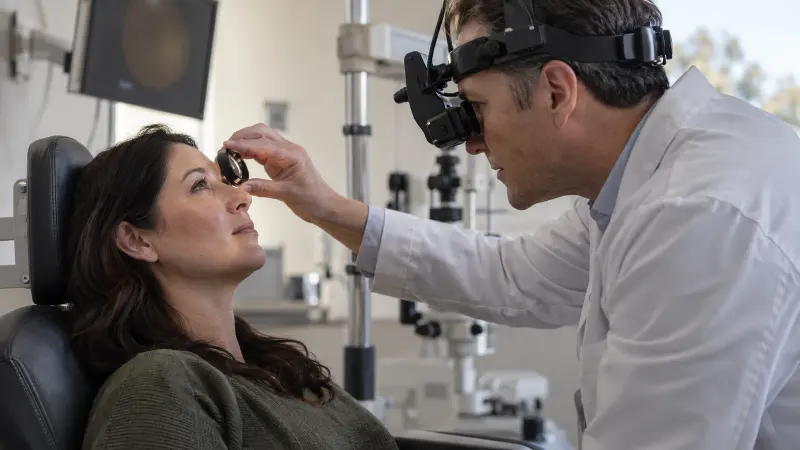
The cornea must be thick and stable enough for laser reshaping. Removing tissue from a thin or irregular cornea can increase the risk of ectasia, a weakening and bulging of the cornea. This is why preoperative testing includes corneal thickness measurement and corneal mapping.
Corneal shape matters as much as thickness. Early keratoconus or irregular topography may make laser vision correction unsafe even if the prescription seems straightforward. A careful surgeon should be willing to say no when the cornea is not a good candidate.
Other Candidacy Factors
Stable glasses or contact lens prescription. Its clinical relevance changes only after the clinician considers severity, reliability, and competing explanations.
- Healthy tear film and manageable dry eye
- No active eye infection or inflammation
- Realistic expectations about glasses for some tasks
- Work or sports activities that affect flap risk
- Pregnancy, nursing, autoimmune disease, or medications that may affect healing
The FDA LASIK checklist highlights questions about corneal thickness, dry eyes, visual symptoms such as glare and halos, and whether the patient has read the information for the laser being used. Those questions apply to the decision process, not only the day of surgery.
Recovery Differences
LASIK patients often notice clearer vision sooner, though dryness and fluctuating vision can still occur. PRK recovery usually takes longer because the surface layer has to heal. A bandage contact lens may be used during early healing, and vision can fluctuate for days to weeks.
PRK is not simply the rougher version of LASIK. It is a different surface-based procedure with its own reasons and tradeoffs. For some corneas, avoiding a flap is worth the slower recovery. For other patients, LASIK may be reasonable after testing confirms adequate structure and low risk.
Risks to Discuss Before Choosing
Dry eye or worsening dryness. How much that point matters should be judged against the symptom timeline, affected task, and current examination.
- Glare, halos, starbursts, or night driving difficulty
- Undercorrection or overcorrection
- Need for glasses or contacts for some tasks
- Infection or inflammation
- Corneal haze after PRK
- Flap-related issues after LASIK
- Corneal weakening in susceptible eyes
No screening process removes every risk. The purpose of testing is to reduce avoidable risk and identify people whose corneas make elective surgery a poor fit.
When to Seek Care After Surgery
After LASIK or PRK, contact the surgical team promptly for worsening pain, sudden vision decrease, increasing redness, discharge, new light sensitivity, trauma to the eye, or a contact lens bandage problem after PRK. Do not use leftover drops or change the drop plan without guidance.
For anyone considering surgery, urgent symptoms before surgery should be evaluated first. Eye pain, active infection, unexplained vision loss, or unstable vision should not be brushed aside as refractive surgery planning.
Questions to Ask the Surgeon
What do my corneal thickness and topography show? The value of that observation should reflect the person's function, risk pattern, and direct assessment.
- Why do you recommend LASIK, PRK, or neither for my eyes?
- How does my dry eye risk affect the choice?
- What visual symptoms are possible at night?
- What would make you cancel or change the plan?
The safer choice is the one that respects the cornea in front of the surgeon, not the procedure a patient hoped to hear. Good refractive surgery evaluation should make the reasons clear.
Second Opinions and Timing
Because LASIK and PRK are elective, patients should feel comfortable slowing down the decision. A second opinion can be useful when one office recommends surgery and another has concerns about corneal shape, dry eye, or prescription stability. Different technology may produce slightly different measurements, but major safety concerns should be explained clearly.
- Ask for copies of your topography and thickness measurements.
- Ask whether contact lens wear should stop before repeat measurements.
- Ask how dry eye will be treated before surgery if present.
- Ask what nonlaser options fit your prescription if surgery is not advised.
A careful no is not poor service. It may be the most protective recommendation when the cornea does not meet safety criteria.
Readers leaving Why the Safer Choice Between LASIK and PRK Depends on the Cornea can continue with Why Ectasia Risk Screening Matters Before LASIK, which addresses a distinct step rather than repeating this page.