
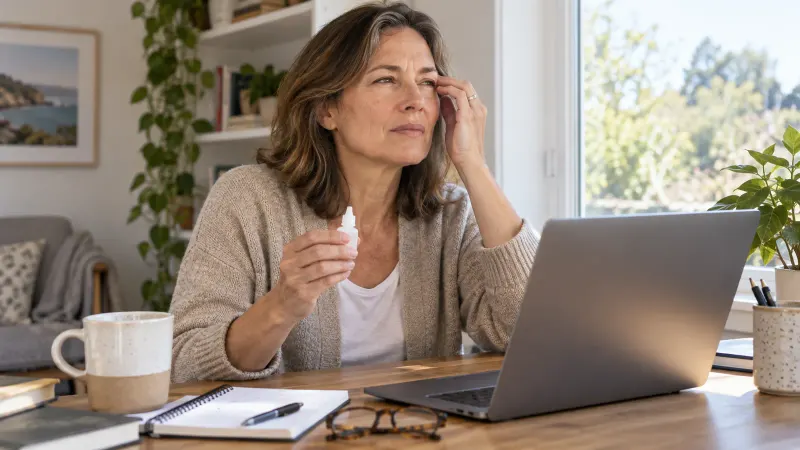
Recognizing the Pattern Without Guessing the Cause
Track the pattern
Dry eye can cause burning, stinging, a scratchy or gritty feeling, red eyes, light sensitivity, and blurry vision. 1 AAO guidance lists long periods of reading or screen use, contact-lens wear, wind, and a dry climate as factors that can contribute to dry eye. 2
Write down what you feel, when it starts, and which task is hard. Symptoms alone do not establish menopause as the cause. 3
Menopause may be one clue
AAO guidance links hormone changes around menopause with dry eye. 2 It also lists lid problems, immune disease, medicines, contact lenses, smoke, wind, and long periods of reading or screen use. 2
A 2024 review did not find a clear pooled link between menopause and dry eye disease. 3 An eye examination and a full health history can help identify dry eye and other possible contributors. 1 2
The reassuring part is that dry eye has several treatment options that can ease symptoms and help keep the eyes healthy. 1 Symptoms that persist, worsen, or affect daily activities should still be assessed by an eye doctor. 2
What These Symptoms May Mean
How the tear film is involved
Dry eye occurs when the eyes do not make enough tears, when tears evaporate too quickly, or when the tears do not work well enough to keep the surface wet. 1
Use plain descriptions such as burning, sandiness, tired eyes, or blur after a specific task, and bring them to the examination. For a related symptom pattern, read Symptoms to Report Before In-Office MGD Treatment.
Watery eyes and dryness
The Academy notes that dry-eye irritation can trigger extra tearing, so watery eyes do not rule out dry eye. 2
Add watering, redness, discharge, pain, and any change in vision to your symptom note. You can compare this topic with What Dry Eye Symptoms Feel Like and What May Help.
Blur needs context
Both NEI and AAO guidance include blurry vision among dry eye symptoms. 1 2
Note whether blinking changes the blur, how long the change lasts, and whether one or both eyes are affected.
Why Symptoms Can Appear Around Menopause
Age, sex, and hormone history
NEI lists age 50 or older and female sex as dry eye risk factors, while AAO guidance says dry eye is more common in women, especially after menopause. 1 2
Population-level associations cannot show what is causing dry-eye symptoms in one person. 3 Record changes in medicines, health conditions, work habits, contact-lens tolerance, and environment around the time symptoms began.
Medicines and health conditions belong in the history
AAO guidance lists rheumatoid arthritis, Sjögren syndrome, thyroid disease, lupus, eyelid disease, and several medicine groups as possible contributors to dry eye. 2
AAO guidance advises telling the eye doctor about all prescription and nonprescription medicines because several medicine groups can contribute to dry eye. 2 Bring the names of medicines and supplements and note any recent change.
Daily conditions and symptom patterns
Smoke, wind, a dry climate, long periods of reading or screen use, and prolonged contact-lens wear are among the factors AAO guidance says can contribute to dry eye. 2
Record the setting rather than avoiding every activity. “Burning after two hours at a screen near a fan” gives the eye clinician a usable pattern.
Build a Clear Symptom Record
Describe sensation, timing, and task
Use three short lines: what the eye feels like, when it begins, and what you can no longer do comfortably. Add whether the pattern is improving, stable, or worsening. If vision changes, note the distance and lighting.
Dry eye symptoms described by NEI and AAO include scratchiness, stinging or burning, redness, light sensitivity, blur, mucus, contact-lens discomfort, and excess tearing. 1 2
Compare the eyes in your notes
Say whether one eye seems worse or whether both behave similarly. Record the difference without trying to trigger symptoms with lenses, cosmetics, or several new drops.
Bring products and lens details
List every eye drop you use and how often you use it. Bring the bottle or a photograph of its label. If you wear contact lenses, bring the lens name, replacement schedule, solution, and the time of day discomfort usually begins.
Small Steps While You Wait for the Visit
Change one exposure at a time
NEI suggests limiting screen time, taking screen breaks, avoiding smoke, wind, and direct air conditioning, and using a humidifier when indoor air is dry. 1
Moving direct airflow, taking screen breaks, or using a humidifier when indoor air is dry are among NEI’s suggested comfort measures. 1 Choose one change and record whether the task becomes easier. Treat the result as a comfort note rather than a diagnosis.
Keep product use simple and visible
NEI lists artificial tears as the most common treatment for mild dry eye and notes that moisturizing gels and ointments are also sold without a prescription. 1
If you try a nonprescription product, keep its name and directions. Ask a pharmacist or eye clinician when you are unsure which product fits, especially if you use other eye medicines. Keep a clear record instead of changing several products at once.
Track contact-lens symptoms
AAO guidance includes painful contact-lens wear among dry eye symptoms and prolonged contact-lens use among possible contributors. 2
Tell the lens clinician how many hours the lenses stay comfortable, when the problem begins, and whether it occurs with a new lens or solution.
What an Eye Examination Can Clarify
The clinician checks more than the symptom list
NEI says dry eye can be checked during a comprehensive dilated eye examination that also looks for other eye problems. 1
AAO guidance says the examination may assess the eyelids, eye surface, and blinking. 2 Tell the clinician about menopause timing, health conditions, medicines, lenses, and treatments already tried.
Tear testing answers specific questions
NEI describes tests that check how many tears the eyes make, how long tears take to dry, and the structure of the eyelids. 1
Ask which test applies, which finding supports the diagnosis, and how improvement will be judged at follow-up.
Building the plan from examination findings
NEI says dry eye treatment depends on the cause and may include over-the-counter lubricants, prescription medicines, lifestyle changes, or treatment of another health condition. 1
Ask for the name of each product, how to use it, and when to reassess. Write down the plan before adding another product.
Hormone Therapy and a Realistic Outlook
What hormone-therapy evidence can show
A meta-analysis of seven randomized trials in postmenopausal women found improvement in one tear-production measure but no significant improvement in tear break-up time or ocular comfort scores. 4
The same meta-analysis reported very high statistical heterogeneity across the measured outcomes. 4 These mixed results do not establish systemic hormone therapy as the right dry-eye treatment for an individual. 4
Take these results to the clinician who manages your general health and ask how the eye symptoms fit the broader purpose of that treatment.
Most care is adjusted over time
AAO guidance describes dry eye as a condition that may require identifying eyelid disease, autoimmune disease, medicines, or environmental contributors rather than relying on one symptom. 2
Keep the follow-up plan and report whether the chosen task is easier over time.
Severe dry eye and the cornea
NEI states that severe untreated dry eye can sometimes damage the cornea. 1
Persistent dry-eye symptoms should not be assumed to be an unavoidable part of menopause. 2 3 Arrange a comprehensive eye examination when symptoms persist, worsen, affect daily activities, or do not improve with the plan you were given. 2
When to Arrange Eye Care
Persistent or worsening symptoms
AAO guidance recommends seeing an eye doctor when dry eye symptoms persist, worsen, affect daily activities, or are not relieved by over-the-counter lubricating drops. 2
A comprehensive eye examination can begin the evaluation. 1 Bring the symptom note, medicine list, lens details, and products you have tried.
A painful or vision-changing red eye
A systematic review recommends prompt ophthalmology referral when conjunctivitis comes with visual loss, moderate or severe pain, or corneal involvement. 5 It says referral should be considered for people with photophobia or contact-lens wear. 5
Use the urgent eye-care route available where you live for these warning signs and state the warning sign when you call. 5
Contact-lens symptoms
The review says a contact-lens wearer with conjunctivitis should remove the lenses immediately and should be considered for ophthalmology referral. 5
Bring your lens name, solution, case, replacement schedule, and the time symptoms began if doing so does not delay care.
Common Questions About Symptoms
Can menopause cause dry eye?
Can dry eye make my eyes water?
Yes. AAO guidance explains that irritation from dry eye can trigger extra tearing. 2 Include redness, discharge, pain, light sensitivity, and vision change in the symptom note.
Why does my vision clear after I blink?
Dry eye can cause blurry vision because the tears are not keeping the surface wet or working correctly. 1 Note whether blinking changes the blur and report the pattern at the examination.
Do screens cause menopause-related dry eye?
Can contact lenses become less comfortable?
Contact-lens discomfort and prolonged lens wear are included in AAO dry-eye guidance. 2 Tell the lens clinician when discomfort begins and which lens and solution you use.
Questions About Examination and Care
Should I ask for a hormone test?
Start with an eye examination and a full medicine and health history to assess dry-eye symptoms and possible contributors. 1 2 Ask the clinician managing menopause whether hormone testing or another broader evaluation is useful for your general symptoms.
Should I start hormone therapy for dry eye?
Randomized-trial evidence summarized in a meta-analysis showed mixed dry-eye outcomes and very high heterogeneity, so it does not establish systemic hormone therapy as the right treatment for one person’s eye symptoms. 4 Take that uncertainty to the clinician who manages the systemic treatment plan.
What should I bring to the appointment?
Bring a short symptom timeline, medicine and supplement list, eye-drop bottles or label photos, contact-lens details, and examples of tasks that have become uncomfortable. Include whether blinking changes blur and whether one eye seems different.
Who can evaluate these symptoms?
NEI says dry eye can be assessed during a comprehensive dilated eye examination. 1 Ask the examining eye doctor whether another type of care is needed.
Sources
- National Eye Institute (2026). Dry Eye.
- American Academy of Ophthalmology (2026). What Is Dry Eye? Symptoms, Causes and Treatment.
- Medicine (2024). Association between potential factors and dry eye disease: A systematic review and meta-analysis.
- Medicine (2018). Sex hormone therapy's effect on dry eye syndrome in postmenopausal women: A meta-analysis of randomized controlled trials.
- JAMA (2013). Conjunctivitis: A Systematic Review of Diagnosis and Treatment.