Treat lighting as task support, not medical care
Match light to the person and the task
Task lighting should help with one clear activity. It may reduce strain, glare, or guesswork. More light does not help each person, and one level does not fit each room or task. Track what you do and where you do it. Note how the setup affects the task before you change several things. For a related symptom pattern, read Preparing to Discuss Work with Low Vision.
Vision rehab can help fit changes to your remaining sight and goals. It may include training, useful tools, and support from a low-vision team. Lighting does not find an eye condition, restore lost sight, or replace an eye exam. You can compare this topic with When to Review Contrast Aid Support with a Caregiver.
Define the task before judging the lamp
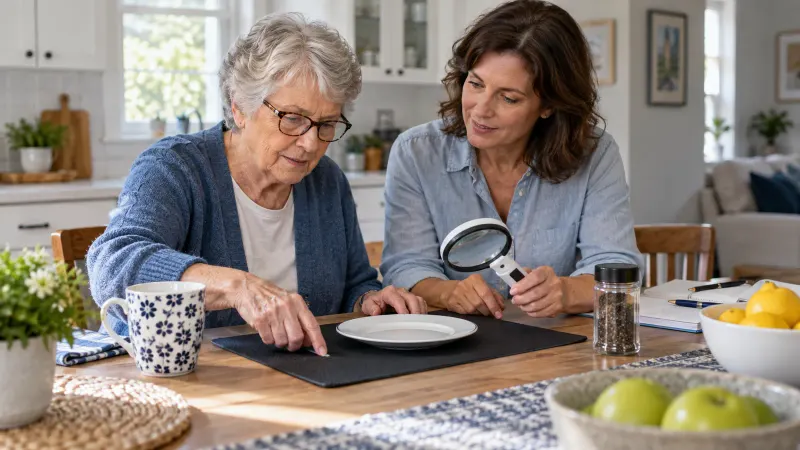
Name the action you want the light to support. Reading a label may need a different setup from sorting dark clothes. Food prep, forms, and faces also need different detail and contrast. A lamp that helps one job may add glare or shadows during another.
Set a narrow goal. You might need to find the right line on a bill or see the edge of food on a plate. A clear goal lets you compare setups by how well the task goes. It also gives a rehab professional useful facts.
Keep new vision changes out of the lighting experiment
Do not label a new loss of task skill as a lamp problem without professional advice. Note if the change began at once or over time. Also note if it affects one eye or both and if it reaches tasks in several places. Contact an eye-care professional about any new concern.
Seek prompt advice for a sudden vision change. Use urgent or emergency care if it comes with severe eye pain, injury, a dark curtain, new weakness, speech trouble, or another alarming symptom. Stop testing bulbs while the care team checks a concerning change.
Create a task-lighting change log
Capture the scene before changing it
Describe the room, time, daylight, task surface, and place of the light. Note glare from windows, glossy paper, polished counters, or screens. A quick sketch can show where you, the task, and the lamp sit.
Use the same fields each time you record a scene:
- task and material you need to see
- room and time of day
- light source and its position
- glare, shadow, or contrast problem
- effect on accuracy, comfort, and posture
- any trip or heat concern near the setup
This record gives the care team a clear starting point. It does not measure eye health or prove the cause of the problem.
Separate amount from direction
Brightness tells you how much light reaches the area. Direction tells you where the light comes from. A task may stay hard if your hand or head casts a shadow. A bright source in your line of sight can also cause glare. Glare is light that cuts comfort or hides detail.
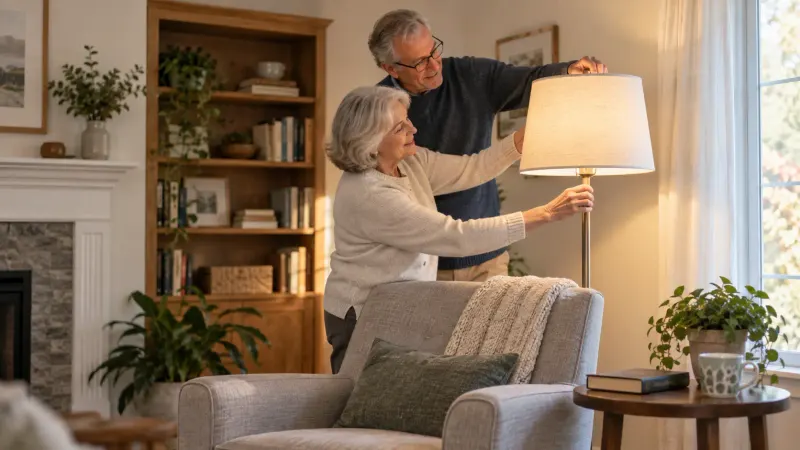
Keep the walking path clear when you move a lamp. Avoid loose or unsafe cords. Record if the move made an edge clearer, cut a shadow, or added glare. Do not stare into a bright source during the test.
Compare contrast before adding more light
Contrast shows how much an object stands out from its background. Dark food on a dark plate may stay hard to see in a bright room. So can pale print on a pale sheet. A new background may help without more light.
Note the color and finish of the object and the surface. A dull surface may cut glare in some settings. A shiny one may add visual clutter. Ask a rehab professional to check the full task if glare or poor balance creates risk.
Record the result in functional terms
Words such as better or worse do not show what changed. Record if you found the line, cut along an edge, or sorted items without mistakes. Note any unsafe pose. Include comfort because a setup that works for a moment may fail during the full task.
Repeat the task in a normal setting if it stays safe. Keep both results if the task changes between trials. The difference can show the team which parts of the scene need a closer look.
Make small and reversible lighting trials
Change one feature at a time
Move the source as one trial. Change the task position, cut a glare source, or change contrast in other trials. Several changes at once can hide what helped. Keep the old setup until you know the new one supports the task without added risk.
Do not use a brightness target from a general article as a rule. Your glare response, task, room, and eye condition all shape the fit. One number cannot capture those needs. Ask the low-vision team for advice that fits your setting.
Protect movement around the task area
A lamp should not create a new obstacle. Keep cords, bases, stools, and leads out of walking paths. Check the floor when you stand up. A bright task area may make the darker space around it harder to see.
Ask a support person to watch as you move away from the task if you want help. This page does not create a fall plan. Its aim is to keep a light trial from making the nearby area less safe. A rehab visit can address wider room needs.
Include heat, stability, and reach
Notice if a light gets hot, tips with a light touch, or needs an awkward reach. These features can turn a useful setup into a hazard. Choose a firm base and follow the fixture steps.
Hand strength, tremor, neck movement, and sitting position can affect a control. Record the barrier instead of forcing the change. The rehab team can consider other controls or placements as part of your plan.
Test the full task instead of a quick glance
A brief look may miss strain, glare, or a later loss of place. Test long enough to reflect the task, but do not push through pain. Note when strain, repeated errors, or a change in posture begins.
Stop the trial if it causes pain, marked discomfort, or unsafe movement. A longer test adds no useful facts when the setup creates risk. Bring the result to the care team instead of trying to endure the problem.
Know when the log needs professional review
Bring patterns to a low-vision visit
Share examples from more than one task and place. Bring photos or a sketch to show lamp position, windows, and glare. Ask which changes fit your remaining sight and which may need a home visit.
Vision rehab can link changes in the room with tools and training. Ask the team to show a setup during a real task. Then request steps in a format you can use. No product or room plan suits each person.
Contact eye care for a new functional change
Call the eye-care team if a known task gets harder across several safe setups. Call if one eye seems different or the change concerns you. Describe the start, pattern, and effect on the task. Do not use the log to decide that known low vision explains it.
Keep planned eye visits even if a light change helps. Eye care checks sight and eye health. Rehab helps you adapt tasks. Both roles can support the same goal without replacing each other.
Recheck the setup when the task or room changes
A move, new work surface, change in daylight, or new task can change how light reaches the target. Return to the log instead of assuming the old setup should still work. Compare one feature at a time so the result stays clear.
Ask for a new review when the old plan no longer supports the task or adds glare. The care team should set the timing. Your notes can show what changed between visits.
Questions about monitoring task lighting
Is brighter light better for every low-vision task?
No. More light can help some tasks, but it can also increase glare or make transitions harder. Match the setup to the person, task, and setting with help from a rehabilitation professional when needed.
What should I write in a lighting log?
Record the task, room, time, light position, glare or shadow, contrast, and result. Include mistakes, comfort, posture, and hazards near the setup. These details give the care team more value than a bulb label alone.
Can I use the same lamp for every task?
You can try it, but one position may not support every activity. Tasks differ in detail, surface, distance, and shadow. Judge the source through each real task and keep any change safe and reversible.
Does a new need for light mean my eye condition became worse?
Lighting need alone cannot show the cause of a vision change. Report a new or concerning loss of task performance to an eye-care professional. An examination can assess vision and eye health instead of leaving you to guess.
When to seek care for a lighting-related vision change?
Seek prompt advice for sudden vision change. Use urgent or emergency care for severe eye pain, injury, a dark curtain, weakness, speech trouble, or another alarming symptom. Lighting experiments should stop while those features receive assessment.
Who can help assess task lighting?
An eye-care clinician can assess eye health and vision, while a low-vision rehabilitation team can assess function, tools, training, and the setting. Ask which professional can review the actual task or home scene. Bring your log so both conversations stay tied to the same functional concern.
Bring one lighting scene to your next review
Choose a task that has become harder and record one safe setup before changing it. Share the scene, the task result, and any vision change with the eye-care or rehabilitation team so the next trial follows your goals and setting.