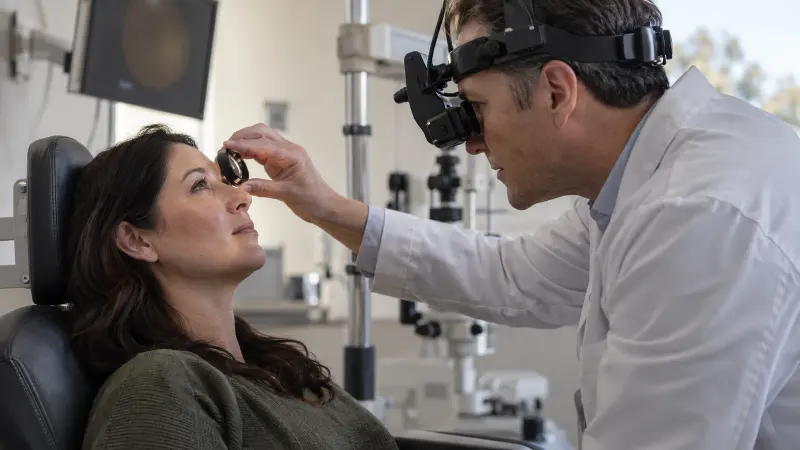

Eye pain that worsens with movement together with new vision loss can fit optic neuritis, but the same combination can also signal other urgent eye or neurologic problems. The safest response is prompt examination rather than watching the symptoms at home or assuming inflammation is the cause.
Optic Neuritis Symptoms Eye Pain With Vision Loss should be treated as a prompt medical concern, not a wait-and-see vision complaint. Optic neuritis means inflammation of the optic nerve, the nerve that carries visual information from the eye to the brain. It often causes vision loss in one eye and pain with eye movement, though symptoms can vary.
Many causes are possible, including immune-related conditions, multiple sclerosis, MOG antibody disease, neuromyelitis optica spectrum disorder, infections, and other inflammatory problems. Because the optic nerve is involved, the evaluation may include both eye care and neurologic testing. Early assessment helps confirm the diagnosis and rule out other urgent causes of vision loss.
What matters first for optic neuritis eye pain vision loss?
Optic neuritis can cause eye pain, especially with movement, and vision loss.
- Colors may look washed out in the affected eye.
- Symptoms often affect one eye, but both eyes can be involved in some conditions.
- Sudden vision loss with eye pain should be checked right away.
- Testing may include an eye exam, visual field testing, imaging, and blood work.
Optic Neuritis Symptoms to Recognize for optic neuritis eye pain vision loss
MedlinePlus advises contacting a health care provider right away for sudden loss of vision in one eye, especially with eye pain. Typical optic neuritis symptoms can include blurred vision, dim vision, a central gray area, pain with eye movement, reduced contrast, and colors that look less vivid.
Symptoms may develop over hours to days. Some people notice that red objects look dull through the affected eye. Others notice pain first, then vision change. Because optic neuritis overlaps with other conditions, self-diagnosis is risky.
Why Eye Pain With Vision Loss Matters
Eye pain alone can come from dry eye, inflammation, sinus pressure, migraine, corneal problems, or other causes. Vision loss changes the level of concern. When pain and reduced vision occur together, the optic nerve, retina, cornea, eye pressure, or blood supply may be involved.
Not every painful vision change is optic neuritis. Acute glaucoma, uveitis, corneal infection, retinal detachment, vascular problems, and neurologic disease can also cause serious symptoms. A same-day evaluation helps sort these possibilities.
What the Exam May Include for optic neuritis eye pain vision loss
Visual acuity testing in each eye. The value of that observation rests on how well it fits the history, measurements, and care timeline.
- Color vision comparison
- Pupil testing for optic nerve signal differences
- Visual field testing
- Dilated exam of the retina and optic nerve
- Optical coherence tomography to measure nerve or retinal layers
- MRI or blood testing when the pattern suggests neurologic or inflammatory disease
Sometimes the optic nerve looks swollen during the eye exam. Other times it looks normal because the inflammation is farther behind the eye. A normal-looking nerve on the first exam does not automatically rule out optic neuritis.
How Treatment Decisions Are Made for optic neuritis eye pain vision loss
Treatment depends on the suspected cause, severity, imaging, medical history, and whether both eyes or other neurologic symptoms are involved. Some cases are monitored closely, while others need urgent specialist treatment. Patients should not start leftover steroid pills or drops on their own. Steroids can be helpful in certain optic nerve conditions and harmful or misleading in others if the cause is not understood.
The eye doctor or emergency team may coordinate with neurology or neuro-ophthalmology. Follow-up matters because optic neuritis can be a first sign of a broader immune or neurologic condition.
Symptoms That Need Emergency Attention
Sudden vision loss in one or both eyes. The weight of that detail should reflect the person's function, risk pattern, and direct assessment.
- Eye pain with reduced vision
- New weakness, numbness, trouble speaking, or trouble walking
- Severe headache with vision change
- Jaw pain, scalp tenderness, or fever with vision symptoms in an older adult
- Vision loss after trauma
These symptoms can point to conditions beyond typical optic neuritis, including stroke-like events, giant cell arteritis, or traumatic injury. Urgent evaluation is the safer path.
Record the pain and vision-loss timeline before assessment
When pain and vision changes started. The value of that observation should reflect the person's function, risk pattern, and direct assessment.
- Whether one eye or both eyes are involved
- Whether pain worsens when moving the eye
- Whether colors look different between eyes
- Any recent infection, vaccination, autoimmune diagnosis, or neurologic symptom
- Current medications and past optic nerve episodes
Bring glasses or contacts to the appointment if possible. If vision is changing quickly, do not delay care to gather records.
Life After an Episode
Recovery varies. Some people improve substantially, while others have lingering blur, contrast loss, or heat-related worsening. Follow-up testing can track visual field, optic nerve structure, and recurrence risk. If an underlying condition is found, ongoing care may focus on reducing future inflammatory attacks.
The main patient message is direct. Eye pain with vision loss deserves prompt evaluation. The faster the cause is identified, the better the care team can protect vision and overall health.
How to Compare Eyes Safely
If symptoms are developing, compare one eye at a time without delaying care. Look at a familiar object, a red item, and a straight edge. Notice whether one eye sees dimmer, blurrier, grayer, or more distorted than the other. Do not press on the eye. Do not drive yourself if vision is reduced or pain is significant.
- Record the time symptoms started.
- Note whether pain changes with eye movement.
- Check whether colors look different between eyes.
- Write down any numbness, weakness, imbalance, or recent infection.
This information helps triage, but it does not replace an exam. Optic nerve symptoms can overlap with retinal and neurologic emergencies, so same-day evaluation is the safer choice.
If urgent evaluation confirms optic neuritis, ask who will coordinate follow-up and when repeat testing should occur. Some patients need neurology care, repeat imaging, or blood tests for specific inflammatory conditions. Others need monitoring for recovery and recurrence. Clear follow-up instructions reduce the chance that a serious first episode becomes a disconnected set of visits.
When the concern in When Eye Pain and Vision Loss Suggest Optic Neuritis shifts to that related decision, Sudden Vision Changes That Should Not Wait provides the more specific route while this article remains focused on optic neuritis eye pain vision loss.