Start with equipment made for ball-sport impact
Choose a sport-specific protector
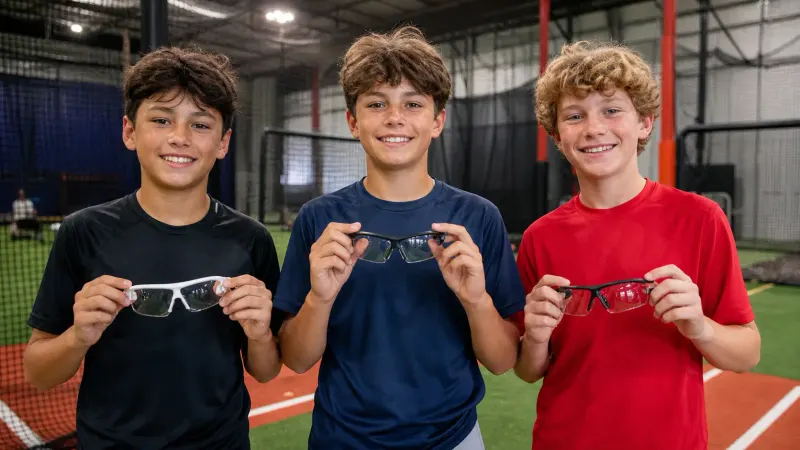
Choose eye gear made for baseball or softball, then check the current program rules before purchase. Test the protector with the player's own helmet and any face guard or mask used for that role. Include the player's prescription and field-of-view needs in the choice. No protector removes all injury risk, so a label cannot replace a complete fit check. For a related symptom pattern, read Comparing Protective Eyewear for Racquet Sports.
Leave regular eyewear out of the protection plan
Regular glasses, sunglasses, and work safety glasses do not serve as ball-sport eye protectors. Contact lenses can correct sight but do not form an impact shield. A player who needs vision correction may need a sports frame with a prescription. Ask an eye doctor or trained sports-eyewear fitter to check the full setup before play begins.
Account for more than the incoming ball
A ball, bat, finger, or another player can strike the eye during baseball or softball. A helmet, mask, or face guard can also press against eye gear that does not fit the full setup. Choose a protector for the sport and field role instead of judging strength from its appearance. Check how every piece sits before the player enters practice or a game. You can compare this topic with Choosing Cycling Eyewear for Variable Light.
Match the protector to the player's setting
Check the rule book before shopping
Ask the league or school which gear rules govern play. A field or event may set its own rules as well. Request the name of the current sport impact standard. Ask about limits tied to age, role, helmet, or face guard. A product label cannot prove that a program allows the item.
Test the protector with the actual helmet
Bring the player's helmet to the fitting. Put the helmet and eye gear on at the same time. The helmet should not push the frame down the nose. It should not lift the eye gear or cause a sore spot. Turn the head and look up and down to test both pieces.
Consider the player's field role
A catcher and a fielder may use different sets of gear. Batters and runners may face other fit needs. A catcher's mask can add protection for that role. Face guards can add another layer. Ask how each piece works with the eye gear the program requires.
Build vision correction into the first fitting
Tell the fitter if the player wears glasses or contact lenses. Also report weak sight in either eye. Polycarbonate (a type of impact-resistant plastic) or another suitable lens material may form part of a sports prescription. An eye doctor can match the vision need with the sport, frame, and other equipment.
Complete the ball-sport fit and requirements check
Verify the label and intended sport
Read the marks on the product and package while you hold the current league or program rule. Confirm that the gear names the intended sport and the impact standard the program accepts. A shop category, product photo, or brand name cannot verify those points. Ask the program or fitter to resolve an absent or unclear mark before purchase.
Check stability through game-like movement
The eye gear should stay centered as the player moves. Ask the player to run, bend, and turn. Have them look up as if tracking a high ball. Straps and frame parts should hold position without causing pain. Return to the fitter if the player must keep moving the gear.
Look for a clear and usable field of view
Ask the player to scan from side to side. Have them look down and then track a mock pitch. The frame should not block sight needed for the field role. Note fog, glare, or blur during the test. Fix any sight concern with the fitter before the player takes the field.
Confirm the complete purchase decision
Use a short record to compare gear. Do not give a brand a pass based on its name. Each choice should meet all needs for this player. Take the record to the program, shop, or eye doctor. Ask for help when a label, fit point, or vision need remains unclear.
- Current league or program rule
- Sport and field role
- Helmet and face-guard relationship
- Stable and comfortable fit
- Clear field of view
- Prescription pathway when needed
Make consistent wear possible
Invite the player into the fit decision
Ask what pinches, slips, or blocks sight during the try-on. A child may resist gear that hurts or moves. The child may also notice a blocked view that an adult misses. Treat the complaint as useful fit data. Offer choices among the items that still meet all gear rules.
Practice before a competitive game
Have the player wear the chosen gear at a supervised practice. Watch the frame during runs, turns, throws, and catches. Note each move or removal. Ask about pain and blocked sight after the practice. Return to the fitter when the setup shifts or hurts.
Recheck fit when equipment or the wearer changes
A new helmet can change how eye gear sits. A new prescription may call for another fit check. Growth or a change in hair can also affect the frame. Repeat the move and sight tests after such changes. Follow the maker's care advice and ask about gear that took an impact.
Act after an eye impact
Stop play when vision or the eye changes
Stop play at once after an impact that changes sight. Double vision, eye pain, strong pain from light, marked swelling, or blood in or near the eye also needs an urgent eye assessment. The pupil (the dark opening in the center of the eye) may look misshapen after a severe injury. Do not test the eye on the field or send the player back into play.
Use emergency care for severe injury signs
Seek emergency care now for sudden sight loss, severe pain, or a possible deep cut. Treat an object that may have entered the eye as an emergency. Do not press, rub, or test the injured eye. Keep the player out of play while the care team checks the injury.
When to see an eye doctor after an impact
An eye doctor should check an injury that changes vision. The same advice fits marked swelling or blood in the eye. Tell the doctor what struck the eye. Name the gear the player wore and the changes that came next. Ask the doctor when play and a new gear check can take place.
Questions buyers ask about baseball eye protection
What should I check before buying a protector?
Start with the current program rule and the player's field role. Bring the helmet to the fitting. Add the player's prescription details when they need vision correction. Check the impact label and lens type. Buy the gear after it stays in place and leaves a clear view.
Can a player wear regular glasses under a protector?
Some sports gear may fit over glasses. All parts must meet program rules. It should not press, slip, or block sight. Regular glasses alone do not guard against sport impact. Ask a skilled fitter or eye doctor to check the full set.
Do contact lenses count as eye protection?
Contact lenses correct sight but do not shield the eye. A player who wears them still needs sport eye gear. The gear must fit the player. It must also work with the helmet. Check the full setup against the current program rules before play.
How do I know whether the helmet fits with the eyewear?
Put on the helmet and eye gear at the same time. Move through the player's usual head positions. Watch for slips or blocked sight. Ask the player what they feel and see. Seek another setup if either item harms the fit of the other.
What if a child refuses to keep the eyewear on?
Ask the child to point out pain, fog, or blocked sight. Also listen to concerns about how the gear looks. Take fit and view problems back to the fitter. Let the child choose among safe options when the rules allow it. A supervised practice can show problems before a game begins.
When should an eye doctor join the selection process?
Involve an eye doctor when the player needs a prescription. Seek help for one weak eye. Call when the gear causes eye or vision symptoms. Bring the sport and program rules to the visit. The doctor can address sight needs without passing judgment on a product or rule.
Schedule a sports-eyewear fitting before play
Bring the player, helmet, vision details, and current rules to a sports eyewear fitting. Check the label, fit, movement, field of view, and field role. Choose gear after it passes the full check for that player.