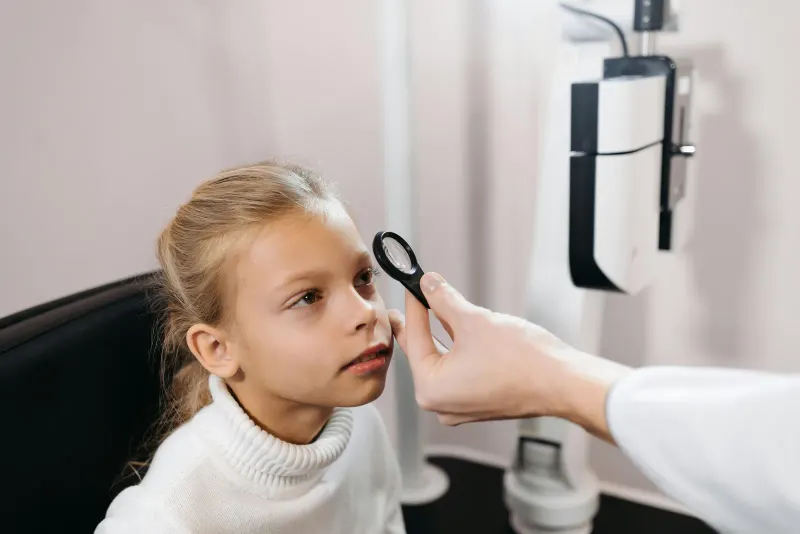

Biometry accuracy before cataract surgery matters because the artificial lens power is chosen from careful eye measurements. Cataract surgery removes the cloudy natural lens and replaces it with an intraocular lens, often called an IOL.
Patients often focus on the surgery day, but planning begins with measurement quality. Small errors in axial length, corneal power, lens position estimates, or ocular surface quality can affect how close the final vision comes to the target. For a related symptom pattern, read Cataract or Retina Problem? How Doctors Tell the Difference.
At a Glance
- Biometry measures the eye so the IOL power can be selected.
- Dry eye, prior refractive surgery, contact lens wear, and unusual anatomy can affect planning.
- Repeat measurements may be done to confirm accuracy before surgery.
- Sudden vision loss, pain, flashes with floaters, or a curtain over vision needs urgent evaluation.
Why Biometry Accuracy Before Cataract Surgery Matters
Modern cataract planning uses formulas that estimate which lens power will best match the chosen vision goal. The formula depends on accurate inputs. If the eye surface is dry or measurements disagree, the plan may need repeat testing. You can compare this topic with When the Eye Chart Does Not Explain Vision Trouble.
Accuracy is especially important when patients are considering toric, multifocal, extended depth of focus, monovision, or other customized lens strategies. These options may be less forgiving of measurement uncertainty.
The American Academy of Ophthalmology notes that cataract surgery replaces the cloudy lens with an artificial lens. Choosing that lens is not guesswork. It relies on measurements and a shared decision about the vision target.
What the Test Looks For
During biometry, the eye care team is looking for patterns that match the symptoms and the medical question. The details matter because similar complaints can come from different parts of the visual system.
The result is most useful when it is repeatable and when it fits the rest of the examination. If the result does not fit, repeating the test or using a different method can be the careful choice.
For biometry accuracy before cataract surgery, patients should describe what has changed in ordinary life, not only what happens in the exam room. Reading, driving, screen use, sports, glare, balance, pain, or one-eye differences can make the result more meaningful for cataract surgery planning care.
- Axial length, which is the front-to-back length of the eye
- Corneal curvature and astigmatism measurements
- Tear film quality and whether the surface is stable
- Prior eye surgery, retinal disease, glaucoma, or unusual anatomy
What Results Can and Cannot Tell You
Even careful biometry cannot guarantee a glasses-free result. Healing, lens position, astigmatism, retina health, dry eye, prior LASIK, and individual anatomy can influence the final outcome.
The goal of testing is to reduce avoidable error and set realistic expectations. Sometimes the best decision is to treat dry eye first or repeat measurements on another day.
Patients who had LASIK, PRK, RK, corneal transplant, or keratoconus may need extra planning because ordinary assumptions about corneal power may not apply.
- Ask what the result means for your specific diagnosis.
- Ask whether the finding is new, stable, or uncertain.
- Ask whether repeat testing or imaging is recommended.
- Ask what symptoms should prompt faster contact before the next visit.
What to Expect at the Appointment
Biometry may be optical, ultrasound-based, or both. The patient usually looks at a target while the device measures the eye. If cataract density or fixation makes the scan difficult, another method may be used.
Corneal measurements may be repeated if the tear film is unstable or if numbers disagree. This can feel like a delay, but it may improve confidence in the lens choice.
The appointment should also include a conversation about goals. Distance focus, near focus, astigmatism correction, night driving, reading, and tolerance for halos can all influence lens selection.
- Bring records of LASIK, PRK, RK, or prior eye surgery if available.
- Use only clinician-approved drops before measurement visits.
- Tell the team about fluctuating vision, dryness, or contact lens wear.
- Ask which vision target is being chosen for each eye.
When to Seek Faster Eye Care
Cataract measurement visits are planned, but sudden vision loss, eye pain, severe redness, new flashes and floaters, or a curtain over vision should be checked urgently rather than waiting for a surgery planning appointment.
If symptoms are severe, sudden, or clearly different from your usual pattern, it is safer to ask for guidance promptly. Routine testing is valuable, but urgent symptoms need timely examination.
How Follow-Up Uses the Findings
Follow-up for cataract surgery planning often depends on whether results are stable over time. One visit may set a baseline, while later visits show whether vision, eye structure, or symptoms are changing.
Patients can help by keeping appointments, reporting changes early, and bringing questions about how the result affects daily activities. The best plan connects test results with the person, not just the printout.
It is also fair to ask how biometry will change decisions today. Sometimes the answer is treatment, but often it is a cleaner baseline, a safer monitoring interval, a referral, or a repeat test under better conditions. That context keeps the visit from feeling like a pass-fail exercise and makes the next step easier to understand.
If the finding affects work, school, sports, reading, driving, or home safety, say that clearly. Functional details help the clinician connect biometry accuracy before cataract surgery results with practical advice and realistic follow-up timing.
Common Patient Questions
Why did I need repeat measurements? Repeat testing can confirm that the numbers are stable enough to choose an IOL power.
Can dry eye affect cataract measurements? Yes. An unstable tear film can change corneal readings and may need attention before final planning.
Does accurate biometry mean I will not need glasses? No. It improves planning, but glasses may still be needed for some tasks.