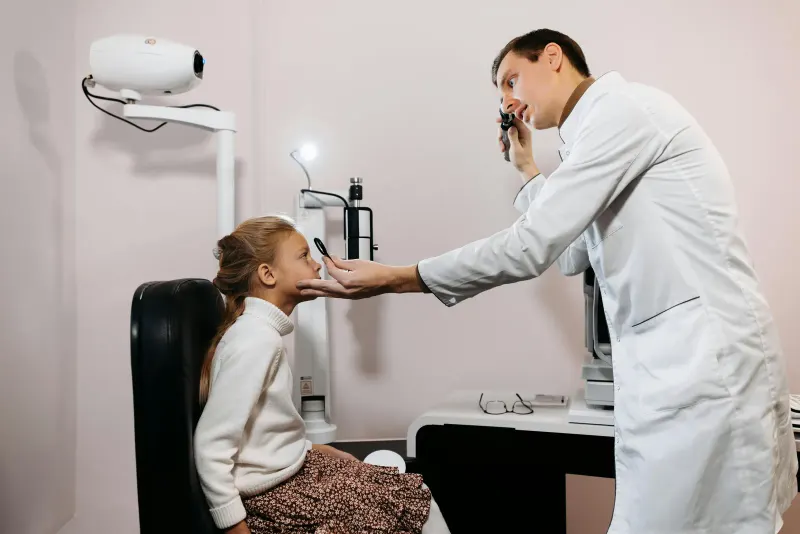

Corneal tomography shows the shape and thickness of the cornea before eye surgery. The cornea is the clear front surface of the eye, and its structure can affect whether procedures such as laser vision correction or cataract surgery planning are appropriate. For a related symptom pattern, read Corneal Topography Results: When Specialist Review Matters.
Unlike a basic front-surface map, tomography can evaluate both front and back corneal shape along with thickness patterns. That extra detail may help detect subtle corneal weakness or irregularity before surgery is planned. You can compare this topic with Early Keratoconus Signs Eye Doctors Look For.
At a Glance
- Corneal tomography creates a three-dimensional style map of corneal shape and thickness.
- It is often used before refractive surgery and in keratoconus evaluation.
- Dry eye and contact lens warpage can affect measurement quality.
- Pain, light sensitivity, reduced vision, or a white corneal spot needs prompt care.
Why Corneal Tomography Matters
Some corneas look normal on a routine exam but show subtle irregularity on imaging. Detecting those features matters because certain surgeries can place stress on the cornea or depend heavily on accurate corneal measurements. For another care decision in this area, see Infectious or Sterile Keratitis? Why the Difference Matters.
Tomography is often used before refractive surgery, premium cataract lens planning, corneal cross-linking decisions, and evaluation of keratoconus or post-surgical changes.
Corneal specialists use tomography because the back surface and thickness pattern may reveal risk that a simple front-surface measurement misses. That extra information can change whether surgery is offered.
What the Test Looks For
During corneal tomography, the eye care team is looking for patterns that match the symptoms and the medical question. The details matter because similar complaints can come from different parts of the visual system.
The result is most useful when it is repeatable and when it fits the rest of the examination. If the result does not fit, repeating the test or using a different method can be the careful choice.
For corneal tomography, patients should describe what has changed in ordinary life, not only what happens in the exam room. Reading, driving, screen use, sports, glare, balance, pain, or one-eye differences can make the result more meaningful for pre-surgical corneal evaluation care.
- Front and back corneal curvature
- Thinnest point and thickness distribution
- Irregular astigmatism or signs of ectasia risk
- Whether measurements are stable and repeatable
What Results Can and Cannot Tell You
Corneal tomography does not decide surgery by itself. The clinician also considers age, prescription stability, dry eye, corneal thickness, pupil size, lens status, retina health, and patient goals.
Poor tear film or contact lens warpage can affect measurements. Some people need to stop contact lens wear for a clinician-directed period before final measurements are trusted.
An abnormal or borderline scan does not always mean a serious disease is present, but it may mean elective surgery should be delayed, changed, or avoided.
- Ask what the result means for your specific diagnosis.
- Ask whether the finding is new, stable, or uncertain.
- Ask whether repeat testing or imaging is recommended.
- Ask what symptoms should prompt faster contact before the next visit.
What to Expect at the Appointment
The scan is usually quick and noninvasive. The patient looks at a target while the device captures corneal data. Good fixation and a stable tear film help produce a cleaner map.
If scans do not agree with each other, the team may repeat them or treat the ocular surface first. Rushing to surgery with unstable measurements can create avoidable uncertainty.
The discussion should include what the scan means for the planned procedure. Sometimes the safest recommendation is a different procedure, more monitoring, or no elective surgery.
Patients should ask whether the scan is normal, suspicious, or simply limited by surface quality. That wording can clarify whether the next step is repeat imaging, dry eye care, contact lens holiday, or a different surgical plan.
- Follow instructions about contact lens removal before measurements.
- Tell the clinician about eye rubbing, allergies, and family history of keratoconus.
- Mention dry eye symptoms because tear quality can affect scans.
- Ask whether the findings change surgical options or lens choices.
When to Seek Faster Eye Care
Corneal tomography is usually planned, but sudden eye pain, severe light sensitivity, reduced vision, a white spot on the cornea, or contact lens-related redness should be checked quickly.
If symptoms are severe, sudden, or clearly different from your usual pattern, it is safer to ask for guidance promptly. Routine testing is valuable, but urgent symptoms need timely examination.
How Follow-Up Uses the Findings
Follow-up for pre-surgical corneal evaluation often depends on whether results are stable over time. One visit may set a baseline, while later visits show whether vision, eye structure, or symptoms are changing.
Patients can help by keeping appointments, reporting changes early, and bringing questions about how the result affects daily activities. The best plan connects test results with the person, not just the printout.
It is also fair to ask how corneal tomography will change decisions today. Sometimes the answer is treatment, but often it is a cleaner baseline, a safer monitoring interval, a referral, or a repeat test under better conditions. That context keeps the visit from feeling like a pass-fail exercise and makes the next step easier to understand.
If the finding affects work, school, sports, reading, driving, or home safety, say that clearly. Functional details help the clinician connect corneal tomography results with practical advice and realistic follow-up timing.
Common Patient Questions
Is tomography the same as topography? They are related, but tomography provides more three-dimensional information, including the back corneal surface and thickness pattern.
Can tomography rule out every surgery risk? No. It reduces uncertainty about corneal structure but cannot remove all surgical risk.
What if my scan is abnormal? The clinician may repeat measurements, treat the surface first, recommend different surgery, or advise against elective surgery.