
Ask Kate is a Myopia Profile educational assistant that expanded to parents and caregivers through MyKidsVision in 2026. It can explain terms and help a family organize questions about childhood myopia. It cannot measure a child's prescription or eye length, examine the retina, verify progression, or select treatment. Its developer's description is useful product information, not independent proof that every answer fits a U.S. child. For a related symptom pattern, read What New Diet Research Can and Cannot Say About AMD.
The Ask Kate myopia assistant is best treated as a starting point for questions that will later be checked against a child's records and examination. You can compare this topic with How to Read the New MiYOSMART iQ Data.
A parent-facing tool can help families learn the vocabulary before an eye exam. It cannot measure a prescription, check eye health, or decide which treatment is right. That distinction matters. The goal is not to replace pediatric eye care. The goal is to help parents arrive prepared, less overwhelmed, and ready to ask better questions.
What Childhood Myopia Questions Are Parents Asking?
The National Eye Institute explains that severe myopia can raise the risk of other eye problems later in life, including retinal detachment. That does not mean every nearsighted child will have serious eye disease. It does mean progression matters, especially when prescriptions change quickly or myopia begins at a young age.
Parents often ask whether screens caused the problem. Near work and outdoor time are part of the discussion, but myopia is not usually explained by one habit. Family history, age, eye growth, and daily visual demands all contribute. A useful eye exam looks at the whole pattern rather than blaming one activity.
What Myopia Control Means
Regular glasses correct blur. Myopia control treatments try to slow the progression of myopia while still allowing the child to see. Options may include myopia control glasses, certain soft contact lenses, orthokeratology lenses worn during sleep, or prescription low-dose atropine drops. Each option has its own routine and risk profile.
The FDA reminds families that contact lenses are medical devices. That point is important for myopia control contacts and overnight lenses. They can be helpful for selected children, but they require maturity, hygiene, follow-up, and a family routine that is realistic.
How a Parent Tool Can Help
A tool like Ask Kate can help parents sort basic questions before the appointment. It may explain the difference between regular lenses and myopia control lenses, why an eye doctor may measure eye length, or why outdoor time is discussed. That background can make the office visit more focused.
The most helpful use is question building. A parent may write down what they learned, bring old prescriptions, and ask how quickly the child's myopia is changing. If the tool gives a confident-sounding answer that does not fit the child's exam, the exam should guide the plan.
Turn an AI Answer Into Evidence for the Appointment
The safest use of Ask Kate is to convert a broad answer into questions that can be settled with the child's records and examination. Parents can bring the wording they received, but they should also bring the measurements that the tool cannot see.
| If the tool discusses | Ask the clinician to show | | --- | --- | | Fast progression | The prescription change across dated visits and whether the measurements are comparable | | Eye growth | Whether axial length was measured, how the trend is interpreted, and what uncertainty remains | | A treatment option | Its U.S. regulatory status, expected routine, risks, cost, and fit for this child | | Outdoor time or near work | A realistic habit plan that supports school, sleep, and family life without implying one behavior caused the myopia |
This approach prevents the conversation from becoming a contest between an AI answer and an eye doctor. The tool supplies vocabulary; the clinician supplies examination findings, product-specific counseling, and follow-up. The children's vision library can help parents separate myopia from other school-age vision concerns before the visit.
What the Eye Doctor May Check
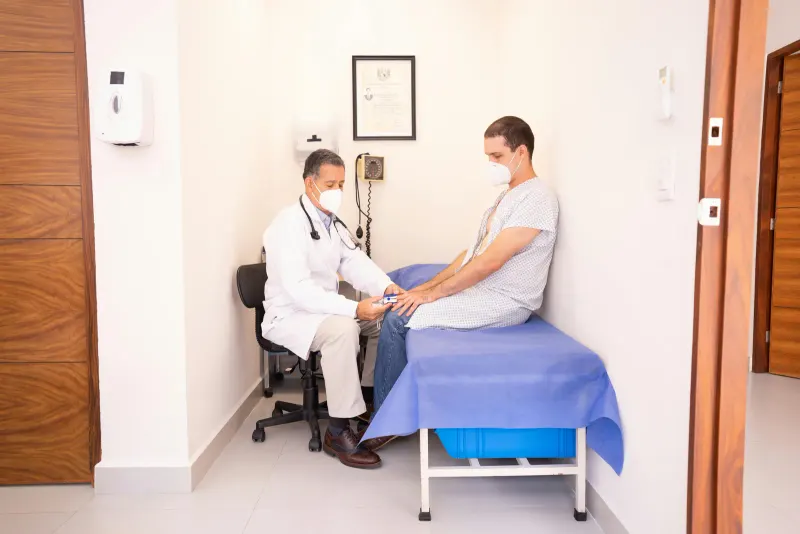
An in-person visit measures the child's vision and eye health instead of inferring them from a written description.
- Distance and near visual acuity
- A careful refraction to measure the prescription
- Eye alignment and focusing ability
- Eye health, often including a dilated retinal exam
- Past prescription changes to judge progression
- Sometimes axial length, which measures eye length
These measurements help separate ordinary nearsightedness from other issues that can affect school, reading, or sports. A child can also have eye teaming problems, amblyopia, or eye disease at the same time as myopia. That is why the visit should not be reduced to buying stronger glasses.
When Parents Should Seek Care
Schedule an eye exam if a child squints, moves close to screens, struggles to see the board, avoids reading, has frequent headaches, or has a changing glasses prescription. Children often adapt quietly and may not know their vision is blurry until one eye is tested at a time.
Seek same-day eye care for sudden vision change, eye pain, light sensitivity, injury, new double vision, or an eye that suddenly turns. These symptoms are not typical myopia progression and need a more urgent look.
Questions to Bring to the Visit
Bring the child's previous prescriptions and use these questions to turn general information into a measurable follow-up plan.
1. How much has my child's prescription changed since the last exam? 1. Is my child a candidate for myopia control? 1. Which options fit our child's age, prescription, and habits? 1. What are the risks and responsibilities of each option? 1. How will we know whether the plan is helping?
Parent education works best when it reduces panic and improves follow-through. Ask Kate and similar tools can start the conversation. A pediatric eye exam turns that conversation into a plan based on the child's actual eyes.
Questions parents ask about Ask Kate
Short answers can correct common misunderstandings, but each answer still depends on the child's examination and treatment plan.
- Does a stronger prescription mean treatment failed? Not necessarily. Myopia control is judged by the rate of change over time, not by one prescription alone.
- Should my child stop reading or using screens? Near work can be part of the conversation, but school and reading still matter. The eye doctor may discuss breaks, working distance, and outdoor time as realistic habits.
- Do myopia control contacts fit every child? No. Contact lens options depend on prescription, maturity, hygiene, eye surface health, and family support.
- Will my child still need glasses? Many children still need correction for clear vision, even when a myopia control plan is used.
Parents can also ask whether siblings should be examined, especially when myopia runs in the family. A family plan may include routine exams, watching school behavior, keeping old prescriptions for comparison, and asking how quickly follow-up should happen if the child starts squinting again.