
Menopause-Related Dry Eye at a Glance
The short answer
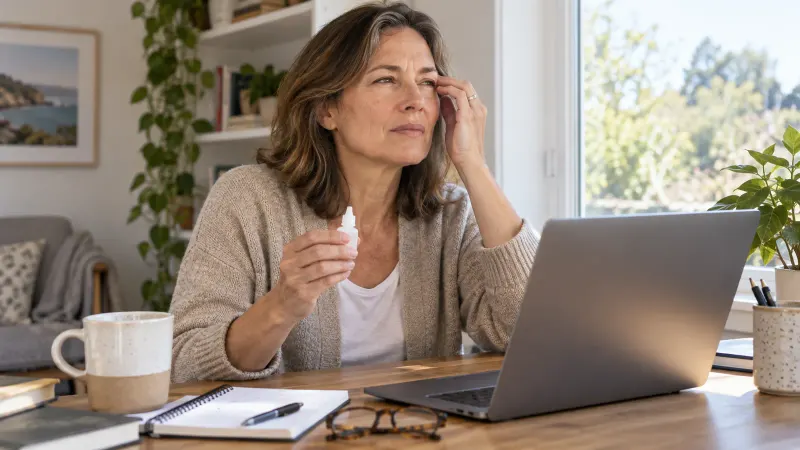
Track the pattern, not just whether your eyes feel “dry.” Note burning or grittiness, watering, redness, blur, light sensitivity, contact-lens comfort, time of day, triggers and the effect on reading, screens, driving or sleep. Bring that record to an eye exam if symptoms persist or worsen. For a related symptom pattern, read Tracking Progress with in-Office MGD Treatment.
Hormones can influence the tissues that make and support tears, and dry eye is more common in women. However, age, eyelid oil-gland function, medicines, health conditions, contact lenses and the environment can contribute at the same time, so menopause alone does not prove the cause. 1 2 3
Seek immediate care for a new sight change, pain with light, a very dark red eye, severe headache with nausea, an eye injury or something stuck in the eye. 3
What should change the plan
Arrange a routine eye exam when symptoms continue after home care or interfere with daily life. 2 3
Seek urgent care for a painful red eye or a red eye in a contact-lens wearer. Seek emergency assessment for a new sight change, pain with light, a very dark red eye, severe headache with nausea, an eye injury or something stuck in the eye. 3
What Dry Eye Means Around Menopause
Tears need water, oil and a healthy surface
Dry eye occurs when the eyes do not make enough tears to stay wet or when the tears do not work correctly. 2
Many people have a mixture of tear underproduction and excessive evaporation. Meibomian gland dysfunction, in which the eyelid oil glands do not support the tear film normally, is an important contributor to evaporative dry eye. 4
Menopause is one part of the history
Sex and hormones influence ocular-surface tissues, including the lacrimal glands, meibomian glands, cornea and conjunctiva, but the evidence about estrogen and progesterone in dry eye is inconsistent. 1
The TFOS evidence review found that dry-eye prevalence rises with age in both women and men and that the evidence isolating menopause itself as the cause is not definitive. 1 An eye examination can assess tear production, tear stability and eyelid structure while looking for the main contributors. 2 4
Why Symptoms May Change During Midlife
Hormonal change may affect the ocular surface
Estrogen and progesterone receptors have been identified in the lacrimal glands, meibomian glands, cornea and conjunctiva. 1
The evidence does not establish menopause or a hormone level as a stand-alone explanation for dry eye. 1 Record the timing of eye and menopause changes, then bring that record to an eye examination.
Everyday exposures can amplify symptoms
Long screen sessions, contact-lens wear, wind, smoke, heating and air conditioning can contribute to dry eye. 3
Record the setting when symptoms rise. Compare workdays with days off, contact-lens days with glasses days, and air-conditioned rooms with more humid spaces. A repeatable trigger gives the clinician a more specific question to investigate. You can compare this topic with Monitoring Demodex Blepharitis during Treatment.
Medicines and health conditions also matter
Some medicines and conditions such as blepharitis, Sjogren syndrome and lupus can contribute to dry eye. 3 Bring a complete medicine list, including nonprescription products and the date of any recent start, stop or dose change.
Do not stop a prescribed medicine because you suspect it is drying your eyes without first getting medical advice. 3 Record the timing and ask the prescribing clinician and eye-care professional how to weigh the medicine's benefits, alternatives and eye effects.
Changes Worth Writing Down
Track sensations and visible changes
Dry eye can cause burning, stinging, scratchiness or grittiness, redness, light sensitivity, blurred vision and watery eyes. 2 3
For each symptom, note which eye, the time it starts, how long it lasts and whether blinking or a lubricating drop briefly clears the blur. Pair what you see with pain, vision and daily-task effects. For another care decision in this area, see Menopause-Related Dry Eye Symptoms to Recognize.
Track function, not only discomfort
Write down the first task affected. Examples include reading for ten minutes, finishing a work call, driving at night, applying makeup, wearing contacts through a shift or waking with eyelids feeling stuck.
Dry eye can interfere with vision and everyday activities, and severe untreated disease can sometimes damage the corneal surface. 2 Tell the eye doctor when dry eye interferes with daily activities. 2
A Two-Week Dry Eye Monitoring Record
Record the same details each day
- Morning, afternoon and evening symptom level from 0 to 10
- Burning, grittiness, watering, redness, blur or light sensitivity
- Which eye is affected and whether blinking clears blur
- Screen hours, contact-lens hours and environmental triggers
- Drops or other measures used and how long relief lasts
- Reading, work, driving, exercise or sleep affected
Use brief, repeatable entries. “Burning 6/10 after two screen hours, both eyes, improved for 30 minutes after lubricant” is more useful than “eyes bad today.”
Add medicine and menopause context
Mark the date of a period, the final menstrual period if known, a change in hot flashes or sleep, and any start or change in systemic hormone therapy. Some medicines can contribute to dry eye. 3 Also mark the date of any medicine start, stop or dose change.
The log is not a hormone test. It helps you and the clinician see whether the eye pattern changed at the same time as something else. A timing link can guide questions, but it does not prove that one change caused the other.
Know when to stop monitoring
Seek urgent care for a painful red eye or a red eye in a contact-lens wearer. Seek emergency assessment for a sight change, pain with light, a very dark red eye, severe headache with nausea, an eye injury or something stuck in the eye. 3
Do not delay the appropriate assessment to finish the two-week record. Take the record with you if it is readily available.
What an Eye Exam Can Clarify
The examination looks beyond symptoms
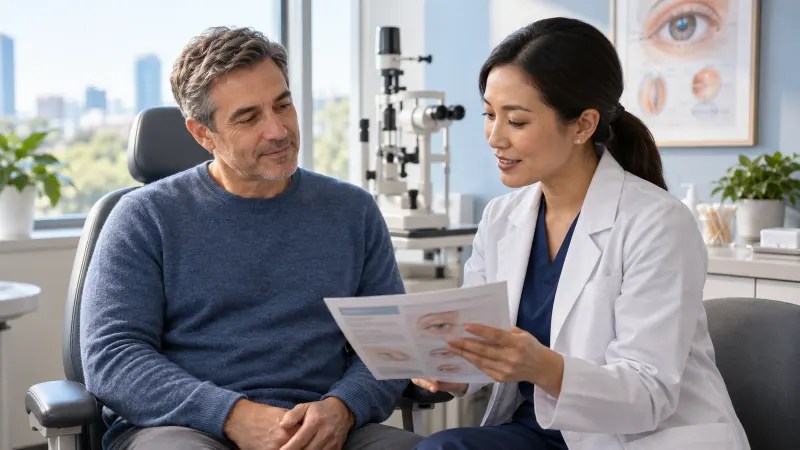
An eye-care professional may examine the eye and eyelids with a slit lamp, assess how much tear fluid is produced, and measure how long the tear film remains stable after a blink. 2 5
Common tests include a Schirmer test, which measures moisture on a paper strip, and tear break-up time, which uses dye to observe how long the tear film covers the eye. 5 The clinician may choose different tests based on the history and examination.
Symptoms and test results may not match perfectly
Dry eye can involve overlapping problems with tear production, evaporation, eyelid oil glands and the ocular surface, so one test does not describe the whole condition. 4
Ask the clinician to name the main contributors in plain language. Useful questions are: “Am I making too few tears, are they evaporating too quickly, are my eyelid glands involved, and is there surface damage?” Those answers make the treatment plan easier to evaluate.
How Treatment Is Matched to the Cause
Start with a plan you can measure
Treatment depends on the cause and severity. Options can include lubricating drops, gels or ointments, environmental changes, prescription eye medicines, tear-duct plugs and treatment directed at eyelid or health-condition contributors. 2 4
Ask what outcome to track and when. A plan might aim for longer screen comfort, less morning grittiness, improved contact-lens tolerance or fewer rescue drops. Record the product, frequency and response rather than switching several things at once without guidance.
Simple measures still need the right fit
Screen breaks, using a humidifier and taking a break from contact lenses are self-care measures for dry eye. 3
Artificial tears are commonly used for mild dry eye, but comparative evidence among specific over-the-counter formulas is limited. 2 4 Ask the clinician which product and schedule fit your findings.
Hormone therapy is not a predictable dry-eye treatment
Evidence on systemic sex-hormone therapy for postmenopausal dry eye is mixed. A meta-analysis of seven small trials found improvement in one tear-production measure but no clear improvement in tear stability or reported eye comfort, and results varied substantially among studies. 6
The broader TFOS review also found inconsistent effects of estrogen and progesterone on dry eye. 1 Discuss any proposed hormone-therapy change with the prescribing clinician and share the eye findings.
What Persistent Changes May Mean
Dry eye often has more than one driver
Tear underproduction and excessive evaporation frequently overlap, and eyelid-gland function, environmental exposure, medicines and health conditions can all shape the pattern. 4 3
Bring the monitoring record to show which symptom, task or time of day improved and which did not. That comparison can help the clinician reassess the contributors and plan.
Severe disease can affect the cornea
Severe untreated dry eye can sometimes damage the corneal surface and affect vision. 2 Persistent symptoms after home care should be assessed. 3
Set a review date and ask which symptom should trigger an earlier return.
When to Arrange, Urgently Revisit or Seek Emergency Care
Arrange a routine assessment
See an eye-care professional when dry-eye symptoms continue after home care or interfere with daily activities. 2 3
Tell the eye doctor when blur or discomfort interferes with daily activities. 2 Bring the log, current eye products and full medicine list.
Use urgent or emergency assessment for red flags
Seek urgent care for a painful red eye or a red eye while wearing contact lenses. Seek emergency assessment for a sight change, pain with light, a very dark red eye, severe headache with nausea, an eye injury or a foreign object. 3
Use the urgent or emergency route described above instead of waiting for a routine menopause or dry-eye appointment.
Common Questions About Menopause and Dry Eye
Does menopause cause dry eye?
Menopause may be one contributor, but the evidence does not support treating it as the only explanation. Dry eye becomes more common with age, women are affected more often, and hormones interact with ocular-surface tissues. 1 An exam can identify whether low tear production, rapid evaporation, eyelid-gland problems or another condition better explains your current pattern.
Why are my eyes watering if they are dry?
Watery eyes can occur with dry eye. 3 Track when watering happens, whether it follows wind, screens or contact lenses, and whether burning, grittiness or blur occurs at the same time.
Can dry eye make vision blurry?
Should I ask for hormone testing?
Dry-eye symptoms alone do not establish menopause as the cause because prevalence also rises with age and several hormonal and nonhormonal factors may contribute. 1 Ask your menopause clinician whether hormone testing is useful for your broader symptoms, and ask what the eye examination shows about tear production, evaporation and eyelid glands.
Can hormone therapy treat my dry eye?
Research has not shown a predictable dry-eye benefit from systemic hormone therapy. A meta-analysis found mixed results across tear tests and symptoms, while the broader TFOS review describes inconsistent effects. 6 1 Discuss hormone therapy with the prescribing clinician rather than making the decision from dry-eye symptoms alone.
What should I track before my appointment?
Track burning, grittiness, watering, redness, blur, light sensitivity and contact-lens comfort by time of day. Add screen time, wind or air conditioning, sleep, products used and how long relief lasted. Record medicine and hormone-therapy changes. Bring the bottles or photos of their labels so the clinician can see exactly what you tried.
Questions About Testing, Products and Follow-Up
Which dry-eye test is most important?
No single test describes every part of dry eye. Slit-lamp examination, tear-production testing and tear-stability testing answer different questions. 5 4 Ask which finding is abnormal in your eyes and how it changes the plan. A result should be interpreted with your symptoms, eyelids, surface examination and treatment history.
How long should I try an over-the-counter drop?
Use the schedule on the product or the one your clinician recommends, and record how long relief lasts. Persistent symptoms after home treatment should be assessed. 3 Seek urgent care for a painful red eye, and seek emergency assessment for a sight change or pain with light. 3
Do I need to stop wearing contact lenses?
Taking a break from contact lenses can help some people manage dry-eye symptoms. A red eye in a contact-lens wearer needs urgent assessment. 3 Track lens-wearing time and when discomfort starts, then bring that record to the assessment.
Will dry eye always keep getting worse?
No single course applies to everyone because symptoms can vary with environment, screen use, contact lenses, medicines, health conditions and treatment. 2 3 A monitoring record helps show whether the trend is stable, improving or worsening. Set a review date and ask which change should trigger an earlier appointment.
Questions to Ask Your Doctor
- Do my findings suggest low tear production, rapid evaporation or both?
- Are my meibomian glands or eyelids contributing?
- Is there any damage to the corneal surface?
- Could a medicine or health condition be adding to the problem?
- What treatment should I try first, and what result should I track?
- When should I return if the plan is not working?
- Does my contact-lens routine need to change?
- Should my menopause clinician receive a copy of the eye findings?
Sources
- Tear Film and Ocular Surface Society (2017). TFOS DEWS II Sex, Gender and Hormone Report.
- National Eye Institute (2025). Dry Eye.
- NHS (2025). Dry eyes.
- Tear Film and Ocular Surface Society (2017). TFOS DEWS II Management and Therapy Report.
- National Eye Institute (2025). Testing for Dry Eye.
- Medicine (2018). Sex hormone therapy's effect on dry eye syndrome in postmenopausal women: A meta-analysis of randomized controlled trials.