A Clear Eye-Monitoring Plan for a Child with NF1
What matters most?
Keep the scheduled eye visits, keep the latest results in one place, and know which changes the team wants reported before the next appointment. Children with neurofibromatosis type 1, or NF1, need regular eye assessment because NF1 can affect several parts of the eye and the visual pathway. 1 2 The goal is to notice a meaningful change early enough for the specialist to decide what it means. A parent is not expected to diagnose the cause at home.
What should you leave each visit knowing?
Ask how each eye saw today, whether every part of the examination was reliable, when the next visit is due, and what should lead to an earlier call. NF1 surveillance guidance recommends an eye examination at diagnosis or suspicion in childhood and continued visual screening through childhood. 2 Put the answers on a one-page visit record so every caregiver follows the same plan.
How NF1 Can Affect the Eyes
What is NF1?
NF1 is a genetic condition associated with changes in skin coloring and tumors that can grow along nerves; its signs and symptoms vary widely from one person to another. 3 This page focuses on eye monitoring. The child's NF1 clinic or pediatrician still needs to oversee the condition as a whole.
What are Lisch nodules?
Lisch nodules are benign growths in the colored part of the eye, called the iris, and they do not interfere with vision. 3 Ask the clinician to name any iris finding in the visit record and explain whether it affects sight.
What is an optic pathway glioma?
An optic pathway glioma is a tumor along the nerve pathway that carries visual information from the eye toward the brain. In NF1, an optic glioma may reduce vision, but in some cases it has no effect on vision. 3 That range is why the team follows vision over time instead of trying to predict an individual child's course from the diagnosis alone.
Why These Eye Findings Can Occur
What causes NF1?
Changes in the NF1 gene cause neurofibromatosis type 1. About half of cases are inherited from an affected parent, while the other cases result from a new NF1 gene change in a person with no family history of the condition. 3 A genetics professional can explain how this applies to the child and family.
Why do children with NF1 have different eye findings?
The features of NF1 vary widely among affected people, and NF1 eye findings can range from Lisch nodules that do not interfere with vision to optic gliomas that may reduce vision. 3 Use the child's own examination results and schedule. A relative's experience cannot show what will happen to this child.
Changes Families May Notice Between Visits
Which eye changes should go in the family record?
Visual signs reported with an NF1-related optic pathway glioma can include a new squint or eye turn, loss of vision, an eye that protrudes, swelling of the optic disc, or involuntary eye movements called nystagmus. Some findings, such as optic-disc swelling, require a clinical examination to identify. 2 At home, write down what you can actually see or what the child reports, when it began, and whether it is repeated.
What behavior may be useful to report?
New visual symptoms, vision loss, a new eye turn or unusual eye movement are reasons for ophthalmology assessment in a child with NF1. 2 Give the team a concrete example, such as, “He has covered the same eye while reading on three days,” instead of guessing at a diagnosis. School observations can also be useful when they describe a new pattern rather than a label.
Can a child have an eye finding without obvious symptoms?
Lisch nodules do not interfere with vision, and some optic gliomas have no effect on vision. Childhood NF1 guidance still recommends planned ophthalmologic surveillance. 3 4 Home observations can add context for the visit.
What the Eye Team Checks
Who should examine the child?
ERN GENTURIS guidance recommends that NF1-related visual assessment be performed by a trained pediatric ophthalmologist, neuro-ophthalmologist, or an equivalent clinician experienced in NF1 visual changes. 2 Ask which clinician owns the eye-monitoring plan and where to call if a new concern appears. If several clinics are involved, ask who receives each report.
What happens during the examination?
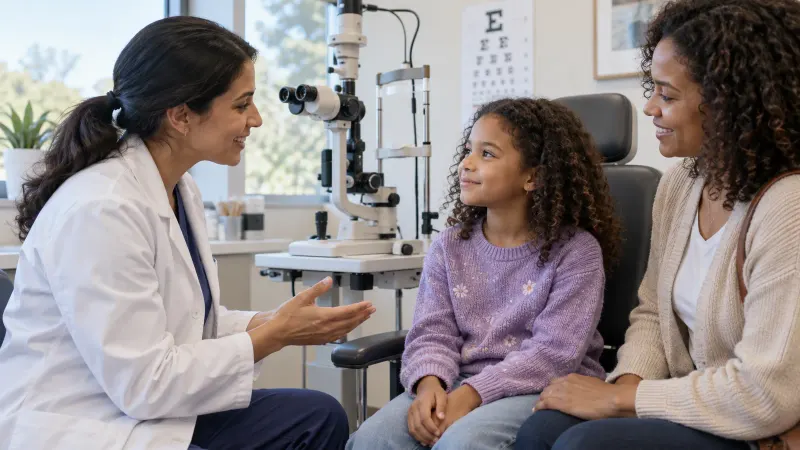
An NF1 eye assessment can include age-appropriate visual acuity, visual fields, pupil responses, eye movements and the appearance of the optic disc. Optical coherence tomography, or OCT, can add information about retinal nerve layers when it is feasible. 2 Ask the clinician which parts were completed and whether the results can be compared with the previous visit.
What if a test result is unclear?
NF1 guidance says an abnormal, inconclusive or unreliable eye examination should be repeated within a short timeframe. It also recognizes that age or attention difficulty can make an examination unreliable. 2 Ask exactly which measure was uncertain, whether the team suspects a true change, and when it should be repeated.
Does every child need routine brain MRI?
GeneReviews advises brain MRI for a child with NF1 only when clinical signs or symptoms indicate it. 4 ERN guidance recommends MRI when the eye examination suggests an optic pathway glioma or when a child older than two has repeated inconclusive or unreliable eye examinations. 2 Ask what question a proposed scan is meant to answer and how the result would change care.
How Often Eye Monitoring May Be Planned
What do major guidance sources recommend?
GeneReviews recommends an ophthalmologic examination every year until adolescence, or at the interval the ophthalmologist recommends, with examinations as needed in older children. 4 ERN guidance advises at least yearly ophthalmologic assessment through age eight for children without a known optic pathway glioma and annual visual screening after age eight until adulthood. 2 These recommendations come from different guidance systems, but both support ongoing childhood eye follow-up.
Why might the child's schedule be different?
The follow-up interval can change with the child's age, visual symptoms, examination reliability or a known optic pathway glioma. 2 Ask the team to write the date and reason for the next visit. If an appointment is missed, call the clinic rather than choosing a new interval yourself.
What should change the plan?
New visual symptoms call for diagnostic evaluation by an ophthalmologist, and an examination that suggests an optic pathway glioma can lead to MRI. 2 Contact the eye or NF1 team when a new change appears and ask how soon the child should be seen. Do not wait for the next routine date if the team tells you to come earlier.
What Happens If the Team Finds a Problem
Does an optic pathway glioma always need treatment?
AAPOS explains that optic nerve gliomas are often watched and that medicines or surgery are sometimes needed. 1 ERN guidance recommends referral to a unit with pediatric, ophthalmology or neuro-oncology expertise when an optic pathway glioma is diagnosed, including when it is asymptomatic. 2 Ask the expert team whether the current plan is observation or treatment and what would change it.
What should parents ask about the plan?
Ask whether the team is watching a finding or recommending treatment, what change would alter that plan, and how vision will be measured. Request the next review date and the correct contact for concerns between visits. Use the team's written plan rather than another family's treatment story.
Who may be involved?
Expert NF1 optic pathway glioma care may involve pediatric, ophthalmology and neuro-oncology specialists. 2 Ask one clinician to explain how the parts fit together. A clear lead contact helps the family know where to send new eye reports, imaging reports and questions.
Build a Record That Travels with Your Child
Use a one-page visit record
List the eye clinician's name, date of the last examination, how each eye saw, any result that was hard to obtain, and the next appointment. Add the routine and urgent contact numbers. Keep the full reports as well, but use the one-page record to help a new clinician see the sequence quickly. For a related symptom pattern, read Everyday Family Life with Coats Disease.
Describe changes without interpreting them
Write what happened, which eye seemed involved, when it started, how long it lasted, and whether it happened again. A short video may help document an unusual eye movement if it can be recorded safely. Avoid testing the child repeatedly or turning reading time into an examination. Send the observation to the team and ask what action is appropriate. You can compare this topic with Fourth Nerve Palsy in Children: A Family Guide.
Bring school observations into the conversation
Ask teachers to report concrete changes, such as losing a place on the page, moving closer to read, or a new eye turn. Do not assume a school difficulty comes from vision. Bring the observation to the NF1 and eye teams so they can decide whether the child needs an eye review, learning support, or another assessment.
Risks and a Realistic Outlook
What is the main vision concern?
An optic glioma may reduce vision or cause severe vision loss, but some optic gliomas do not affect vision. 3 Monitoring cannot predict every future change. It gives the team repeated information about the child's vision so a new concern can be assessed.
Does every eye finding mean sight is getting worse?
No. Lisch nodules do not interfere with vision. 3 AAPOS also lists several different NF1 eye findings, including eyelid neurofibromas, glaucoma, amblyopia, Lisch nodules, choroidal spots and optic nerve glioma. 1 Ask the eye clinician to name the finding, explain whether it affects sight, and say what will be compared at the next visit.
Why does follow-up continue when the child seems well?
Both GeneReviews and ERN guidance recommend ongoing childhood eye surveillance for NF1 even when no optic pathway glioma is known. 4 2 A normal day at home does not show every measurement an examination can provide. Keep the planned schedule and report changes between visits.
When to Contact the Eye or NF1 Team
Contact the team promptly about a new visual change
NF1 guidance calls for ophthalmologist assessment when new visual symptoms appear. 2 Contact the child's eye or NF1 team promptly for a repeated new eye turn, involuntary eye movement, protruding eye, or a clear report or behavior suggesting vision loss. Describe what changed and ask whether the child needs a same-day examination or another timetable.
Use same-day contact for a known glioma with new symptoms
A child with NF1 and a symptomatic optic pathway glioma should receive urgent referral to a unit with appropriate pediatric, ophthalmology or neuro-oncology expertise. 2 If a child with a known optic pathway glioma develops a new or worsening visual symptom, contact the responsible team the same day and follow its urgent instructions. If you cannot reach that team and the child is acutely unwell, use local urgent medical care.
Report neurologic changes to the NF1 team
NF1 tumor-surveillance guidance lists a new or changed seizure, an unusual or concerning headache, endocrine problems and a focal neurologic deficit among signs that clinicians assess for possible brain tumors. 2 Contact the NF1 or pediatric team when one of these changes appears and follow the child's written urgent-care plan. Use emergency services for a seizure lasting longer than the child's plan allows, a severe sudden illness, or immediate danger.
Keep routine follow-up even without changes
Childhood NF1 guidance recommends regular ophthalmologic assessment through childhood. 4 2 Call the clinic if the child misses a visit, a test could not be completed, or you do not know the next date. Ask whether the examination should be repeated sooner rather than selecting an interval at home.
Common Questions About NF1 Eye Monitoring
Can I check my child's vision at home?
NF1 guidance recommends a clinical eye assessment that can include age-appropriate visual acuity and visual-field testing, pupil and eye-movement checks, optic-disc assessment and sometimes OCT. 2 Use home notes to prepare for that visit. Avoid repeatedly covering an eye or quizzing the child. Send a clear observation to the team and let the specialist decide what testing is needed.
What if my child is too young to read an eye chart?
NF1 guidance calls for age-appropriate vision assessment, recognizes that age can make an examination unreliable, and says an unreliable examination should be repeated within a short timeframe. 2 Ask which measures were reliable, which could not be completed and when another attempt is needed. Record the repeat date before leaving.
Should we ask for an MRI for reassurance?
Routine brain MRI is not recommended for every child with NF1 who has no clinical signs or symptoms. 4 MRI is recommended when an eye examination suggests an optic pathway glioma or, in a child older than two, when repeated examinations remain inconclusive or unreliable. 2 Ask the specialist what concern the scan would address and how its result would change the plan.
Do Lisch nodules mean my child is losing vision?
No. Lisch nodules are benign iris growths that do not interfere with vision, while an optic pathway glioma is a tumor along the nerve leading from the eye to the brain. 3 Ask the clinician to write the exact eye finding in the visit record so the family does not have to remember an unfamiliar term or confuse it with another condition.
Does a normal eye visit mean future visits are unnecessary?
Guidance for children with NF1 continues ophthalmologic surveillance through childhood even when no optic pathway glioma is known. 4 2 A normal visit gives the team a result to compare over time. Before leaving, record the next appointment and ask what change should prompt an earlier call. Keep that date in the family record.
Questions About Results, School and Next Steps
What if one test is different from the last visit?
Ask whether the difference is likely to be real, whether the test was reliable, and what should happen next. ERN guidance says an abnormal, inconclusive or unreliable eye examination should be repeated within a short timeframe. 2 Leave with a date or a clear instruction for arranging the repeat assessment.
Can school problems show that vision has changed?
A new classroom pattern can be worth reporting, but it cannot identify the cause. Write down the teacher's specific observation and bring it to the child's clinicians. Learning and attention differences can occur in people with NF1, and attention difficulty can also make an eye examination unreliable. 3 2 Ask whether vision testing, educational support or another assessment is the next useful step.
Who should receive the eye report?
Ask the eye team and NF1 team how they exchange results. Send the report to the named clinician if records do not transfer automatically. If an optic pathway glioma is diagnosed, guidance recommends care from a unit with relevant pediatric, ophthalmology or neuro-oncology expertise. 2 Keep the family copy with imaging reports and the current follow-up schedule.
How can my child take part in monitoring?
Use words that fit the child's age. Explain that the visit checks how each eye is working and that there are no wrong answers. Encourage the child to mention a new change in sight or unusual eye movement. Let an older child help update the visit record and choose questions for the next appointment, while adults remain responsible for scheduling and medical decisions.
Preparing for the Next Eye Visit
What records should I bring?
Bring the latest eye report, any imaging report the eye team requested, the current NF1 clinic contact, the child's medicine list, and your short change log. Include the date and details of any new observation from home or school. If records should have transferred electronically, confirm that the receiving clinic can see them. Keep a family copy of each new report and the written return plan.
Questions to Ask Your Child's Eye Team
- How did each eye see today compared with the last visit?
- Which parts of the examination were reliable, and which need repeating?
- When is the next eye visit, and what could make it earlier?
- Which new changes should prompt a same-day call?
- Would MRI answer a specific concern in this child?
- Who is the main contact for eye results and after-hours concerns?
Sources
- American Association for Pediatric Ophthalmology and Strabismus (2024). Neurofibromatosis.
- European Reference Network on Genetic Tumour Risk Syndromes (2023). ERN GENTURIS tumour surveillance guidelines for individuals with neurofibromatosis type 1.
- MedlinePlus Genetics, National Library of Medicine (2020). Neurofibromatosis type 1.
- GeneReviews, National Center for Biotechnology Information (2025). Recommended Surveillance for Children with Neurofibromatosis 1.