
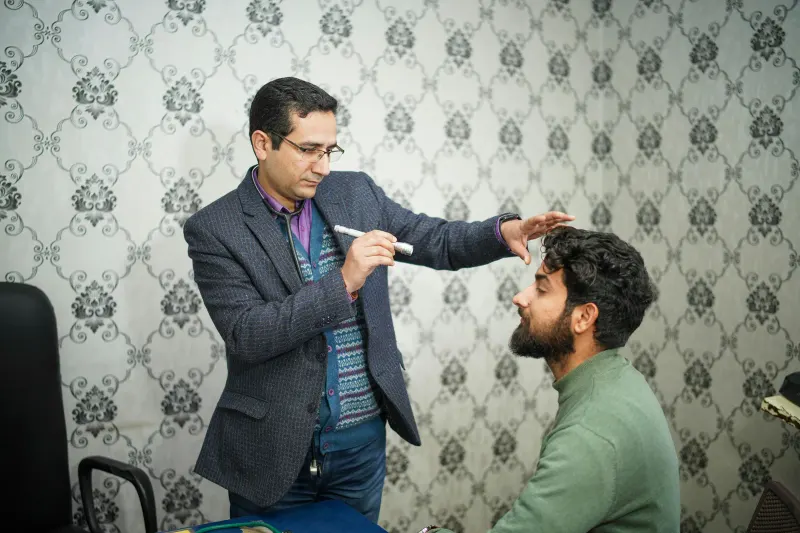
Tearing or reflex watery eyes can look the same to the person wiping tears away, but the causes can be very different. Some eyes overflow because drainage is blocked. Others water because dryness, irritation, inflammation, or eyelid problems trigger reflex tearing. For a related symptom pattern, read Ptosis vs Aging Eyelids: How Doctors Tell the Difference.
Testing helps separate extra tear production from poor tear drainage. That distinction matters because the right plan for a blocked tear duct is not the same as the right plan for dry eye or eyelid irritation. You can compare this topic with Droopy Eyelids: Functional Vision Problem or Cosmetic Concern?.
At a Glance
- Watery eyes can come from irritation, dry eye, allergies, eyelid problems, or blocked drainage.
- Reflex tearing means the eye waters in response to irritation.
- Epiphora often refers to tears overflowing because drainage is impaired.
- Painful swelling near the inner corner, fever, thick discharge, or vision change needs prompt care.
Why Tearing Or Reflex Watery Eyes Matters
Reflex tearing happens when the eye senses irritation and responds by making watery tears. Those tears may not have the right balance of oil and mucus to feel comfortable, so the eye can water and still feel dry. For another care decision in this area, see Orbital Tumor Red Flags Around the Eye.
Drainage-related tearing happens when tears cannot leave through the normal pathway near the inner eyelid. The eye may tear constantly, overflow outdoors, or develop discharge if the drainage system is infected.
The difference matters because lubricating, lid treatment, allergy care, eyelid repair, or tear duct procedures are aimed at different problems. Guessing from symptoms alone can miss mixed causes.
What the Test Looks For
During tearing evaluation, the eye care team is looking for patterns that match the symptoms and the medical question. The details matter because similar complaints can come from different parts of the visual system.
The result is most useful when it is repeatable and when it fits the rest of the examination. If the result does not fit, repeating the test or using a different method can be the careful choice.
For tearing or reflex watery eyes, patients should describe what has changed in ordinary life, not only what happens in the exam room. Reading, driving, screen use, sports, glare, balance, pain, or one-eye differences can make the result more meaningful for watery eyes care.
- Tear film quality and dry eye signs
- Eyelid position, blink pattern, and lashes touching the eye
- Drainage openings and tear duct flow
- Allergy, infection, inflammation, or surface irritation
What Results Can and Cannot Tell You
A tearing evaluation may require more than one test. Dye disappearance, irrigation, eyelid examination, tear film testing, and sometimes imaging can help localize the problem.
Symptoms can overlap. A person can have both dry eye and partial drainage narrowing, which is why a careful exam is more useful than assuming one cause.
Tearing also changes with weather, wind, screen use, and allergies. A diary of when symptoms happen can be more helpful than a single description.
- Ask what the result means for your specific diagnosis.
- Ask whether the finding is new, stable, or uncertain.
- Ask whether repeat testing or imaging is recommended.
- Ask what symptoms should prompt faster contact before the next visit.
What to Expect at the Appointment
The clinician may look closely at the eyelids, lashes, tear openings, and ocular surface. Fluorescein dye may be used to watch how quickly tears leave the eye.
If drainage blockage is suspected, irrigation may be discussed. That test can help show whether fluid passes through the tear duct pathway or meets resistance.
If irritation is the main trigger, the plan may focus on dry eye, allergies, lid inflammation, or environmental factors. If drainage is blocked, referral for tear duct evaluation may be considered.
- Notice whether tearing is worse outdoors, while reading, or all the time.
- Report discharge, crusting, itching, burning, or sinus symptoms.
- Bring a list of eye drops and allergy medications.
- Ask whether the problem is production, drainage, eyelid position, or more than one factor.
When to Seek Faster Eye Care
Seek faster care for painful swelling near the inner corner of the eye, fever, thick discharge, sudden vision change, significant redness, trauma, or a chemical exposure. These symptoms may need urgent treatment.
If symptoms are severe, sudden, or clearly different from your usual pattern, it is safer to ask for guidance promptly. Routine testing is valuable, but urgent symptoms need timely examination.
How Follow-Up Uses the Findings
Follow-up for watery eyes often depends on whether results are stable over time. One visit may set a baseline, while later visits show whether vision, eye structure, or symptoms are changing.
Patients can help by keeping appointments, reporting changes early, and bringing questions about how the result affects daily activities. The best plan connects test results with the person, not just the printout.
It is also fair to ask how tearing evaluation will change decisions today. Sometimes the answer is treatment, but often it is a cleaner baseline, a safer monitoring interval, a referral, or a repeat test under better conditions. That context keeps the visit from feeling like a pass-fail exercise and makes the next step easier to understand.
If the finding affects work, school, sports, reading, driving, or home safety, say that clearly. Functional details help the clinician connect tearing or reflex watery eyes results with practical advice and realistic follow-up timing.
Common Patient Questions
Can dry eye really make my eyes water? Yes. Dryness and irritation can trigger reflex watery tearing.
Will tear duct irrigation hurt? It may feel odd or mildly uncomfortable, but it is usually brief. Ask the clinician what to expect.
Can tearing be fixed with drops alone? Sometimes, if irritation or dry eye is the cause. Drainage blockage or eyelid malposition may need different care.