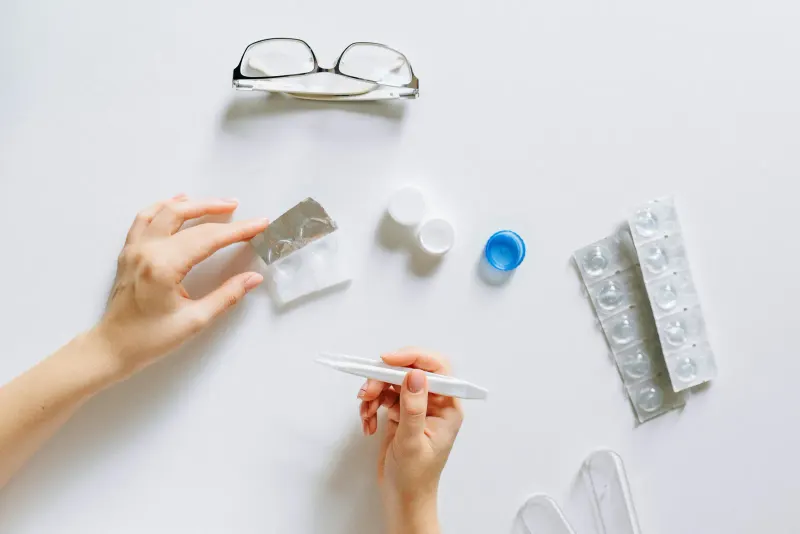

Some preservative-free lubricating drops can be used over a scleral lens, while prescribed drops are usually placed in the eye before lens insertion or after removal. The liquid used to fill the lens bowl is a separate decision. It should be the sterile, preservative-free solution recommended by the clinician who fitted the lens. Do not put a medicated, preserved, redness-relief, oily, or homemade liquid into the reservoir unless that clinician has given specific instructions.
That distinction matters because a scleral lens holds fluid against the cornea with very little tear exchange. A product that feels harmless as a quick drop may behave differently when trapped under the lens for hours.
The lens bowl is not an ordinary place for eye drops
The bowl creates the fluid reservoir between the lens and the cornea. Scleral Lens Education Society guidance says the reservoir should be filled with preservative-free solution because prolonged exposure to preservatives can irritate or damage the corneal surface.
Use only a sterile product that your scleral lens clinician has approved for filling. A bottle labeled for rinsing, disinfecting, redness relief, allergy control, or soft contact lens storage is not automatically suitable for the reservoir. Saline also does not disinfect the lens. Cleaning, disinfection, rinsing, and filling are different jobs even when the bottles look similar.
Never substitute tap water, bottled water, distilled water from the grocery aisle, saliva, or a homemade salt mixture. These are not sterile contact lens filling solutions. Water exposure can introduce organisms that cause severe corneal infection.
Can lubricating drops go over a scleral lens?
Preservative-free artificial tears may sometimes be used on top of the lens for surface dryness or poor wetting. The drop lands on the front surface rather than entering the reservoir in the same way as the filling liquid.
The label still matters. A drop that is compatible with soft contact lenses is not necessarily tested for every scleral lens material or surface treatment. Thick gels and oily formulations can blur vision or coat the lens. Some products may interact with a special lens coating. Ask the fitting clinic for a short approved list instead of choosing by bottle color or a broad claim such as contact lens friendly.
If a drop clears comfort for only a few minutes, the problem may not be a shortage of lubricant. Deposits, cosmetics, poor surface wetting, an aging lens, incomplete blinking, or the underlying eye condition may be contributing. Repeatedly adding drops can hide the pattern without correcting it.
Where do prescription drops fit in the routine?
Prescription drops need their own schedule. Glaucoma, allergy, antibiotic, anti-inflammatory, and other medicated drops are commonly used before insertion or after removal so the medicine can reach the eye without being trapped unpredictably under the lens.
Do not change the timing of a prescription on your own. Ask both the prescribing clinician and the scleral lens clinician how long to wait before inserting the lens. The answer can depend on the medicine, the condition being treated, and whether the formulation contains a preservative.
Remove the lens before using an urgent treatment unless a clinician who knows your case tells you otherwise. A scleral lens should not become a barrier between the medicine and the tissue it is meant to treat.
A four-part check before using any bottle
This check separates product marketing from the decision that matters at the eye.
- Purpose. Is the liquid intended to fill, rinse, disinfect, lubricate, or medicate? One product should not be assumed to do every job.
- Preservative status. Confirm the exact formulation. A product family can include preserved and preservative-free versions with similar packaging.
- Sterility after opening. Follow storage and discard directions. A preservative-free bottle is not useful if the tip is contaminated or the container is used beyond its safe period.
- Clinician approval. Make sure the product fits your lens material, coating, ocular surface condition, and treatment plan.
Bring the bottle or a clear photo of its front and ingredient panel to the appointment. That is more reliable than trying to remember a brand or asking whether all artificial tears are safe.
Bottle design deserves attention as well. A single-use vial can still become contaminated if its tip touches a finger, lash, or lens. A preservative-free multidose bottle may use a special valve or filter, but it must still be stored and discarded exactly as directed. Do not transfer liquid into an unmarked travel container. If two bottles look alike, label their storage locations instead of writing on a sterile tip or nozzle.
What symptoms mean the lens and drops should stop?
Pain, increasing redness, light sensitivity, discharge, swelling, a new white spot on the cornea, or vision that stays blurred after removal needs prompt advice. Take the lens out and do not reinsert it simply to test whether the symptoms return.
Milder burning can also matter when it happens every time a particular solution is used. Stop that product, keep the packaging, and contact the clinic. The reaction could reflect a preservative, an ingredient sensitivity, contamination, or a fit problem rather than ordinary adjustment.
A lens that suddenly becomes foggy may have a bubble, debris, front-surface deposits, or changes in the fluid reservoir. Remove, clean, refill, and reinsert only if the eye feels comfortable and the clinic has taught you the process. Persistent fogging deserves a fit and surface review.
Build one written routine instead of improvising
A safe routine is easier when every bottle has one named role. Store filling solution apart from cleaning and disinfection products. Wash and dry hands, keep bottle tips away from fingers and lenses, and replace containers according to their instructions.
Write the order beside the lens case if you use several products. For example, a prescribed medicine may be used at a clinician-approved time, followed later by lens insertion with approved filling solution. A compatible preservative-free tear may be available for the front surface during wear. The exact timing belongs in the personal plan.
Review that plan whenever a prescription, lens coating, cleaning system, or eye diagnosis changes. A product that was reasonable for an earlier lens may not be the best choice for a replacement lens or a newly inflamed eye. Keeping an updated photo of every approved label can prevent mistakes while traveling or shopping.
People new to these lenses may also benefit from reviewing who scleral contact lenses help and what wear involves. The bigger lesson is simple. “Eye drops with scleral lenses” is not one yes-or-no category. Decide where the liquid will go, what job it performs, and whether the fitting clinician has approved that exact formulation.