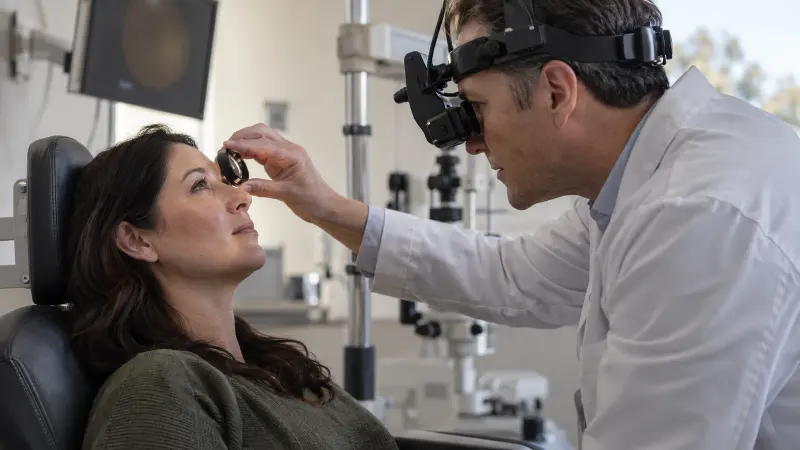

Amblyopia treatment depends on steady follow-through because the care plan gives a weaker visual pathway a better chance to develop. Glasses, patching, prescribed atropine, digital treatment, or treatment of a related eye problem cannot be adjusted safely from appearance alone. Progress has to be measured, and the plan may need to change when vision improves, stalls, or regresses. For a related symptom pattern, read Family Strategies for Accommodative Excess.
Early follow-through matters because the visual system is still developing in childhood. Treatment is not only about having a prescription written. It usually requires wearing glasses, patching, using prescribed drops, treating eye alignment problems when needed, and returning for follow-up so the plan can be adjusted. Families do much of the daily work at home. Our children's vision library explains related screening, focusing, and eye-alignment questions.
What Amblyopia Treatment Tries to Do
Amblyopia treatment encourages the brain to use the weaker eye. First, the eye doctor looks for the reason the eye is not developing clear vision. If the issue is a strong glasses prescription or unequal focusing between the eyes, glasses may be the first step. If the eye turns, the child may also need evaluation for strabismus. If something blocks vision, such as a cataract, that problem needs medical attention. You can compare this topic with Fungal Keratitis Symptoms to Report Between Visits.
The American Association for Pediatric Ophthalmology and Strabismus explains that amblyopia should be treated as early as possible because treatment works better in younger children. That does not mean older children should be ignored. It means delays can make treatment harder. For another care decision in this area, see Treatment Planning for Convergence Excess.
Why Is Follow-Through Hard?
Parents often understand the plan in the office and then meet reality at home. A young child may resist glasses or a patch. A child may feel embarrassed at school. The stronger eye may be covered during patching, so tasks can feel more difficult. If prescribed drops are used, the child may dislike the sensation or temporary blur.
None of this means a family is failing. It means the plan needs practical support. The eye care team should know when adherence is hard so they can adjust timing, offer strategies, or explain which parts of the plan are most important.
Common Parts of a Treatment Plan
The exact combination differs by cause and response, but a plan may include several coordinated parts rather than one isolated treatment.
- Glasses to give each eye the clearest possible image
- Patching the stronger eye for a prescribed schedule
- Prescription drops in selected cases to blur the stronger eye
- Treatment of strabismus when eye alignment contributes
- Follow-up vision checks to measure change
- Maintenance visits after improvement to watch for regression
Parents should avoid changing patching or drop routines on their own. If the plan feels impossible, call and ask for help. A plan that is realistic is more useful than a plan that looks perfect on paper but is not followed.
What Follow-Up Visits Track
At follow-up, the eye doctor checks whether vision in the weaker eye is improving, whether the glasses prescription needs adjustment, and whether the child is using both eyes together. The stronger eye is also monitored. Treatment should protect the whole visual system, not focus on one eye in isolation.
Progress may be gradual. Some visits show clear improvement, while others show a plateau. That information guides whether to continue, change, or taper parts of the plan. Skipping visits makes it harder to know whether the treatment is helping or whether the child needs a different approach.
Separate a Treatment Problem From a Practical Barrier
When vision does not improve as expected, the next step is not automatically more intense treatment. The clinician first needs to know whether the prescription is current, whether the patch fully covered the stronger eye, whether glasses were worn during the assigned activity, and whether the routine was followed often enough to interpret the response.
Parents can make that conversation more accurate with a short, neutral record. Note completed treatment days, recurring skin irritation, peeking, school objections, and any days when the plan was not possible. The record is not a scorecard for blaming a child or caregiver. It helps the clinician distinguish limited treatment exposure from a visual response that truly needs another strategy.
Helping a Child Cooperate
Cooperation often improves when adults make the routine predictable, explain it simply, and report barriers before frustration builds.
1. Use simple words about helping the eye practice. 1. Pair patch time with enjoyable close-up activities if recommended. 1. Let teachers know the child may need support while patched. 1. Use calendars or sticker charts when they motivate the child. 1. Tell the eye care team about skin irritation, anxiety, or school problems.
Children vary. Some adapt quickly, while others need repeated coaching. A calm, consistent approach usually works better than turning treatment into a daily battle.
When to Seek Care Promptly
Schedule an eye exam if a child squints, closes one eye, has an eye that turns, fails a vision screening, holds objects very close, or seems to favor one eye. Seek same-day care for eye injury, sudden vision loss, severe eye pain, strong light sensitivity, or a sudden new eye turn. These symptoms may involve more than amblyopia.
Babies and toddlers cannot explain blur. If a parent notices a white pupil reflex in photos, constant eye turning, or unusual eye movements, pediatric eye evaluation should not be delayed.
Questions to ask about the amblyopia plan
These questions help a family understand the cause, current priority, measurement plan, and options when daily treatment is difficult.
- What caused my child's amblyopia?
- What part of treatment is most important right now?
- How will we measure improvement?
- What should we do if my child refuses the patch or glasses?
- How long might follow-up continue after vision improves?
Amblyopia treatment is a partnership between the child, family, and eye care team. Early follow-through matters because daily practice and timely adjustments give the weaker eye its best chance to develop useful vision.
What If Progress Slows
Progress can slow for several reasons. The glasses prescription may need updating, patching may not be happening as often as expected, the child may be peeking around the patch, or the original cause may need more attention. Sometimes the weaker eye improves and then reaches a plateau. That is why follow-up is part of treatment, not a formality.
- Bring the glasses and patch supplies to visits.
- Be honest about missed days so the plan can be adjusted.
- Ask whether the stronger eye is staying healthy.
- Ask whether eye alignment has changed.
If a child suddenly refuses treatment after doing well, look for a practical reason. Skin irritation, teasing, blur, or headaches may be solvable when the care team knows about them.