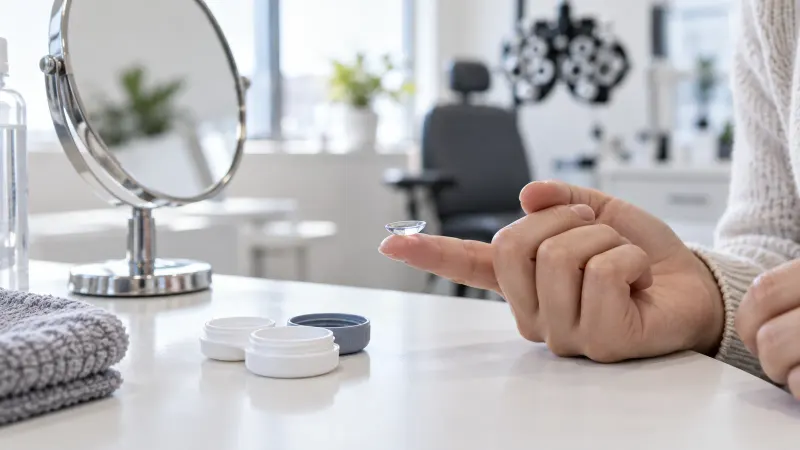

Remove the lens when warning symptoms appear.
Act on pain and redness.
Remove a contact lens and contact an eye doctor right away if you develop eye pain, redness, blurred sight, sensitivity to light, or unusual discharge. Manufacturers make one-day lenses for one day of wear and replacement. But that schedule does not make warning symptoms safe to ignore. Keep the lens out until the evaluating doctor advises you about wearing contacts again.
The symptoms cannot tell you whether the cause is dryness, allergy, a scratch, infection, or another problem. Do not treat the eye as a trial to see what helps. Prompt medical review protects the chance to find a serious lens-related problem before more wear adds risk.
Leave the lens out instead of trying a fresh one.
Do not insert another one-day lens to check whether the first lens had a defect. A fresh lens can still cover an irritated eye and make the symptom harder to judge. If you have glasses, use them when they support the activity without causing discomfort or an unsafe change in sight.
Wash your hands before touching the eye area. Avoid rubbing the eye or sharing drops and lenses. The doctor may ask about the lens, package, or routine, so keep useful details without putting the used lens back in your eye.
Know when to seek care for severe symptoms.
Tell the eye-care office how strong the pain is, whether sight changed at once, and whether light becomes hard to tolerate. Follow its urgent-care or emergency instructions when staff judge that an in-person review cannot wait. Do not drive if pain, blur, or light sensitivity makes driving unsafe.
If you cannot reach your usual prescriber, use an right urgent eye-care route. Take the lens prescription or package details with you when available. Severe symptoms deserve action even when you opened a new lens that morning.
Record the wear episode without diagnosing it.
Build a lens-day snapshot.
Write down the point in the day when comfort or sight changed. Include when you inserted the lens, what you were doing, and whether the concern affects one eye or both. This lens-day snapshot gives the doctor a sequence without pretending that the sequence proves a cause.
Mention water exposure, sleep in the lenses, eye rubbing, or reuse if any occurred. Accurate details helps the doctor decide what to examine. Do not omit a mistake because you fear judgment.
- Eye with the symptom.
- Insertion time and symptom start.
- Pain, redness, blur, light sensitivity, or discharge.
- Water, sleep, or unusual exposure during wear.
- Lens brand and prescription from the package.
- Action taken after the symptom began.
Separate mild awareness from a changing pattern.
Some wearers notice a lens at times, but a pattern that becomes more uncomfortable, lasts longer, or affects sight belongs in a talk with the prescriber. Describe the pattern through tasks and timing. Avoid calling it "normal dryness" without an review.
If the change improves after lens removal, report that detail. Improvement does not establish that the eye is healthy or that reinsertion is safe. Ask the doctor what conditions must be met before you wear a lens again.
Compare eyes without repeated reinsertion.
You can tell the doctor whether the other eye feels normal. But do not move a lens from one eye to the other. Do not share contact lenses between eyes or people as a home experiment. A symptom in one eye still deserves care from a professional.
Use glasses to observe broad function if doing so feels comfortable. Avoid pressing on the eyelid or covering and uncovering the eye over and over when pain is present. The exam, not a home comparison, determines the next step.
Review the one-day lens routine with the prescriber.
Confirm what one day of wear means for your lens.
Manufacturers design these lenses for one day of wear and replacement. Throw them away after removal instead of cleaning or storing them for another day. Follow the wearing time and replacement directions that belong to your prescription.
One-day replacement does not remove the need for clean hands, proper insertion, and right follow-up. Tell the prescriber how many hours you tend to wear the lenses and whether comfort changes late in that period. The answer can guide an personal review with the prescriber.
Map the routine from clean hands to removal.
Walk through your normal lens day with the prescriber. Describe where you insert lenses, how you dry your hands, what products touch the eyelids, and when you remove the lenses. This routine map can reveal questions that a symptom label misses.
Keep the map factual. Do not assume that one habit caused the current problem. Ask which parts of the routine should change after the doctor checks the eye.
- Hand washing and drying before insertion.
- Cosmetics or skin products used near the eyes.
- Work, exercise, water, or dust exposure.
- Planned removal time and actual removal time.
- Backup glasses available during the day.
Ask for a restart rule after the eye check.
Before leaving an review, ask when contact lens wear can resume and whether the current prescription or fit needs review. Request a clear instruction for what to do if the symptom returns. Do not treat a comfortable hour as permission to restart.
The doctor may need to look at both eye health and lens fit before advising you. A treatment or new lens choice depends on those findings. This article does not replace a decision from your eye doctor.
Plan around work and travel without hiding symptoms.
Keep usable glasses within reach.
Backup glasses let you remove a lens without losing all practical sight. Keep them in a place you can reach at work, school, or during travel. Make sure the prescription supports the tasks you expect to do.
Glasses do not treat the reason for pain or redness. They give you a way to leave the lens out while you arrange care. Avoid driving if the glasses do not give you safe sight for the trip.
Tell the office which tasks changed.
Report whether the problem interrupts reading, computer work, outdoor activity, or driving. A task example helps the doctor understand the severity and timing better than a comfort score alone. Note lighting conditions if they change the experience.
Do not push through a painful task to create a stronger example. Stop the activity, remove the lens, and follow the care route. Your safety matters more than completing the observation.
Prepare a clean handoff for another clinic.
If your usual prescriber cannot see you, give the new clinic your lens prescription, current eye medicines, symptom timeline, and relevant exposures. State that you used a one-day lens and whether you discarded it. Keep the report short, concrete, and centered on the current symptom.
Ask the new clinic to explain how it will share the plan with your regular prescriber if doctors need follow-up. Do not assume that buying the same lens elsewhere resolves the issue. The eye needs review before another wear decision.
Questions about one-day lens symptoms.
Can contact lens wear still cause a serious eye problem?
Yes. People who wear contact lenses can develop serious eye problems even when they follow directions. Symptoms alone cannot diagnose an infection, so remove the lens. Contact an eye doctor about warning signs and describe when they began.
Should I open a new lens if the first one feels wrong?
Do not insert a fresh lens into an eye with concerning symptoms. Leave contacts out and ask the prescriber what to do next. A replacement lens cannot show whether the eye needs care from a doctor.
Can I wear the other lens if one eye hurts?
Ask the evaluating doctor before continuing lens wear. The painful eye needs the lens removed. The doctor may want you to keep both lenses out. Do not move lenses between your eyes during this period.
Does improvement after removal mean the problem is minor?
No. Improvement is useful details, but it does not find the cause or make reinsertion safe. Report what changed after removal and wait for professional advice about resuming wear.
What package details should I save?
Keep the product name, prescription, and any lot details visible on the package if available. Tell the doctor when you opened and inserted the lens. Do not preserve a used lens by wearing it again.
When can I return to contact lenses?
The evaluating doctor should give you a restart rule based on the eye exam and symptoms. There is no single safe timetable for every cause. Follow that plan even if the eye begins to feel comfortable.
Call an eye-care professional before reinserting a lens.
Remove the one-day lens for pain, redness, blurred sight, light sensitivity, or unusual discharge. Contact an eye doctor right away. Keep contacts out until the doctor tells you when and how to resume wear.