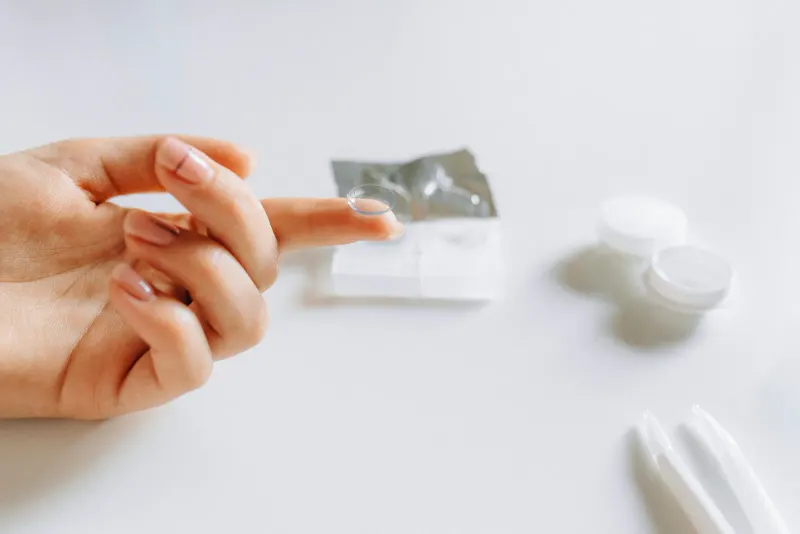
Contact lens hygiene mistakes can raise the risk of painful eye infection because lenses sit directly on the cornea, the clear front surface of the eye. Small habits with water, storage cases, sleep, and replacement schedules can make a real difference.
Contact lenses are medical devices, even when they are worn for convenience or appearance. Safe wear depends on clean hands, proper solution use, the right replacement schedule, and quick action when symptoms appear.
At a Glance
- Water should be kept away from contact lenses and lens cases.
- Old solution should be discarded rather than topped off with fresh solution.
- Sleeping in lenses can raise infection risk unless an eye doctor specifically prescribed that schedule.
- Eye pain, redness, light sensitivity, discharge, or blurry vision in a contact lens wearer needs prompt care.
Contact Lens Hygiene Mistakes That Matter Most
Microbes can cling to lenses and cases, especially when cleaning steps are skipped. The cornea usually has strong defenses, but a contact lens can trap organisms against the surface or create tiny areas of irritation. For a related symptom pattern, read Dry Eye Before Contact Lenses: Why Screening Helps.
The CDC advises contact lens wearers to wash and dry hands, keep lenses away from water, use fresh disinfecting solution, and replace cases as recommended. These habits reduce avoidable risk.
Hygiene problems often develop gradually. A person may do well for years, then become more casual about sleeping in lenses, stretching replacements, or rinsing a case with tap water.
Common Habits To Avoid
Many risky habits feel harmless because they do not cause symptoms right away. Infection risk is about repeated exposure and the chance that a microbe reaches a vulnerable surface.
- Rinsing lenses or cases with tap, bottled, distilled, or homemade saline water.
- Showering, swimming, or using a hot tub while wearing lenses.
- Topping off old solution instead of using fresh solution each time.
- Skipping handwashing or touching lenses with damp hands.
- Sleeping in lenses without a prescribed overnight-wear plan.
- Wearing lenses beyond the replacement schedule.
- Using decorative lenses without a valid prescription and proper fitting.
The FDA warns against using non-sterile water with soft contact lenses. Water exposure is a key concern because some organisms are difficult to treat once they infect the cornea.
Symptoms That Need Same-Day Care
Contact lens wearers should take eye symptoms seriously. Remove the lenses and seek prompt eye care for eye pain, increasing redness, light sensitivity, discharge, blurred vision, a white spot on the cornea, or symptoms that do not improve after lenses are removed.
Do not put the lenses back in to test whether the eye feels better. Bring the lenses, case, and solution to the appointment if possible, because they may help the clinician understand the exposure.
What The Eye Doctor May Check
The exam usually includes a slit lamp evaluation of the cornea, eyelids, tear film, and conjunctiva. A dye may be used to look for scratches or ulcers on the corneal surface.
If infection is suspected, the clinician may ask about lens type, wear schedule, water exposure, sleeping in lenses, recent illness, and how the case is cleaned. Some cases need laboratory testing or close follow-up.
Treatment depends on the suspected cause. Patients should not use leftover eye drops or someone else's medication, because the wrong drop can delay proper care or make some infections worse.
A Safer Daily Routine
- Wash hands with soap and dry them fully before touching lenses.
- Rub and rinse lenses with the recommended disinfecting solution if that is part of your system.
- Use fresh solution every time lenses are stored.
- Let the case air-dry as directed and replace it on schedule.
- Keep backup glasses available for days when lenses should not be worn.
Good contact lens hygiene is not about perfection. It is about reducing repeated risks and responding quickly when symptoms suggest the cornea may be irritated or infected.
Common Questions About Contact Lens Hygiene
Why is water such a problem with contacts?
Water can contain organisms that do not belong on contact lenses or in lens cases. Even clean-looking tap or bottled water is not sterile. Because a lens holds material against the cornea, water exposure can create a pathway for serious infection.
Is redness enough reason to remove lenses?
Yes. A red or painful eye should get a break from contact lenses, especially if there is light sensitivity, discharge, blur, or a foreign body feeling. Wearing a lens over an irritated cornea can make it harder to detect and treat a problem early.
Why should old solution be thrown away?
Disinfecting solution works best when used fresh as directed. Adding new solution to old solution dilutes the cleaning system and leaves debris behind. The case itself can also become contaminated, which is why case cleaning and replacement are part of safe lens wear.
Can decorative lenses cause the same risks?
Yes. Decorative or costume lenses still sit on the cornea and require a valid prescription, fitting, and hygiene plan. Poorly fitted or shared lenses can scratch the surface, reduce oxygen, or expose the eye to organisms that raise infection risk.
Building A Lens Break Plan
Every contact lens wearer should have a backup plan for days when lenses are not safe or comfortable. Glasses are important because a person with a red, painful, or irritated eye should not feel forced to keep wearing lenses to function.
A lens break also gives the cornea time to recover from irritation and helps the doctor evaluate the eye without a lens masking the surface. If symptoms return every time lenses are restarted, the fit, material, solution, hygiene routine, or wear schedule may need review.
- Keep current glasses available even if contacts are worn most days.
- Replace lens cases and solution according to professional instructions.
- Report repeated redness, dryness, or discomfort rather than stretching wear time.