School-age vision complaints are easy to miss when a child passes a brief distance screen, uses one eye to compensate for the other, develops symptoms only after sustained work, or cannot describe blur and double vision clearly. Classroom behavior may be labeled as inattention or avoidance before the visual task is examined. For a related symptom pattern, read Infant Vision Warning Signs Parents Should Know.
Persistent concerns need a complete history and eye examination, while reading or learning difficulties may also need educational evaluation. One pathway should not replace the other. You can compare this topic with When Preschool Children Should Have Vision Screening.
School-age vision complaints can be easy to miss because children may not know what clear, comfortable vision should feel like. Instead of saying they cannot see, they may avoid reading, lose focus, complain of headaches, or seem careless with schoolwork.
Some children pass a basic screening yet still struggle with focusing, eye teaming, tracking, or near work. A comprehensive eye exam can look beyond the distance chart and connect symptoms with how the eyes function during school tasks.
What matters first for school age vision complaints missed?
Children may describe vision trouble as tired eyes, headaches, blur, double vision, or words moving on the page.
- Behavior changes can be a clue, including avoiding reading, closing one eye, or losing place often.
- School screening is useful but does not replace an eye exam when symptoms persist.
- Eye pain, sudden vision loss, injury, light sensitivity, or a new eye turn needs prompt eye care.
Why School-Age Vision Complaints Get Missed
Children often assume everyone sees the same way they do. A child with one blurry eye may rely on the better eye and not complain, while a child with near focusing trouble may think reading is simply exhausting.
The American Optometric Association notes that parents and educators may assume a passed school screening means there is no vision problem. Screenings are helpful, but they are not designed to evaluate every visual skill.
Vision issues can also look like attention or learning problems. Eye strain does not explain every reading concern, but it should be considered when symptoms cluster around near work.
Signs Parents And Teachers May Notice
Vision complaints may appear during homework, sports, board work, or screen use. Patterns are often more useful than one isolated complaint.
- Squinting, covering one eye, or tilting the head.
- Frequent headaches or tired eyes after reading.
- Losing place, skipping words, or using a finger to track lines.
- Holding books or devices very close or far away.
- Avoiding reading, drawing, puzzles, or close work.
- Difficulty copying from the board or seeing the scoreboard.
- New clumsiness, trouble catching a ball, or poor depth judgment.
Children may also rub their eyes, blink often, or say lights bother them. These symptoms can come from dry eye, allergies, focusing strain, or other eye conditions.
What A Pediatric Eye Exam Checks
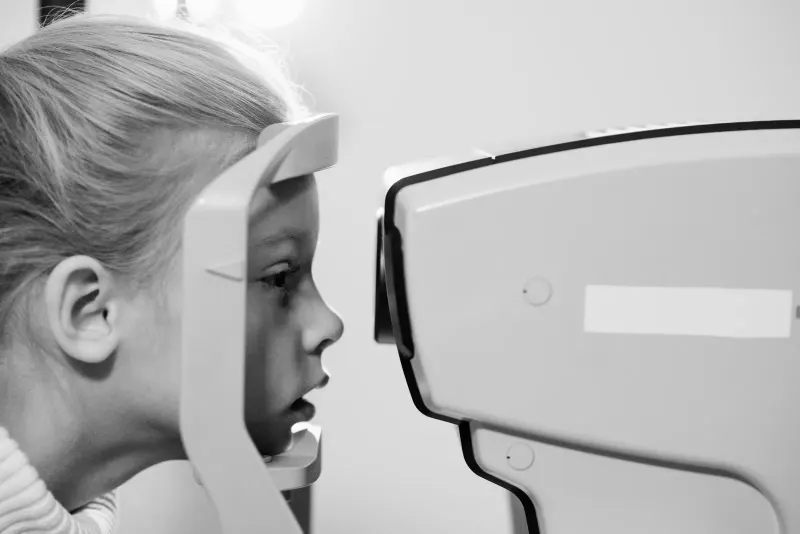
A thorough exam can measure distance and near vision, glasses prescription, eye alignment, eye teaming, focusing ability, color vision when needed, and eye health. The doctor may dilate the pupils to measure focusing more accurately.
If a child has headaches, the exam looks for eye-related causes but does not assume the eyes are the only reason. Headaches can have many causes, so persistent, severe, or unusual headaches should also be discussed with the child's medical clinician.
For children with learning concerns, eye care should be part of a broader picture. Clear vision supports reading and classroom comfort, but glasses or vision treatment do not replace educational evaluation when needed.
Symptoms That Should Be Checked Quickly
Seek same-day care for eye injury, chemical exposure, sudden vision loss, severe eye pain, new light sensitivity, a red painful eye, new double vision, or a sudden eye turn. These symptoms should not wait for a routine school screening.
Parents should also seek pediatric eye care when a child has a white pupil reflex in photos, persistent tearing, drooping eyelid blocking vision, or vision behavior that changes suddenly.
How To Make The Visit More Useful
Ask the child to describe when vision feels hardest, such as reading, board work, sports, or screens.
- Bring school screening results, teacher notes, old glasses, and any prior eye records.
- Write down headaches, eye rubbing, closing one eye, or behavior changes.
- Ask whether distance vision, near vision, focusing, and eye teaming were all checked.
School-age vision complaints deserve practical attention. The goal is not to label every school struggle as an eye problem, but to make sure a treatable vision issue is not quietly adding to the child's daily effort.
Practical questions for School-Age Vision
One common question for people considering school age vision complaints missed is "Can a child pass school screening and still need an eye exam?" That question and the related points below are answered separately because they do not all depend on the same finding.
Can a child pass school screening and still need an eye exam?
Yes. Screenings are designed to identify many important problems, but they may not test focusing flexibility, eye teaming, tracking, or every eye health issue. Persistent symptoms during reading, board work, or sports are a good reason for a comprehensive eye exam.
How do vision problems affect reading?
Vision problems do not explain every reading difficulty, but they can add strain. A child may lose place, avoid near work, reread lines, or complain that words blur or move. Treating a vision issue can reduce visual effort while educational support addresses learning needs.
What symptoms should teachers mention?
Teachers can note squinting, copying errors, closing one eye, poor tracking on the page, frequent trips to the board, headaches after near work, or avoidance of visual tasks. Patterns across several days are more helpful than one difficult afternoon.
When is the situation urgent?
Eye injury, sudden vision loss, a red painful eye, severe light sensitivity, new double vision, or a sudden eye turn should be checked quickly. For a child, behavior such as covering one eye or refusing to open an eye after injury also deserves prompt attention.
How To Connect Symptoms With School Tasks
The most helpful symptom history links vision complaints to specific tasks. Trouble copying from the board points toward distance clarity or attention shifts, while headaches during reading may suggest focusing, eye teaming, dry eye, or lighting strain.
Parents can ask the child to compare both eyes, but a home check should stay simple. It is enough to notice whether one eye seems blurrier, whether near work triggers symptoms, or whether breaks help. The exam can then test the likely visual skills directly.
From What Makes School-Age Vision Complaints Easy to Miss, the related guide Signs a Child May Not Be Seeing Well at School is useful when that narrower question applies; it should not be used to infer the diagnosis covered here.
- Track whether symptoms happen at near, far, or both.
- Note whether symptoms appear after a certain amount of reading.
- Ask the teacher whether problems are worse with board work, worksheets, or screens.