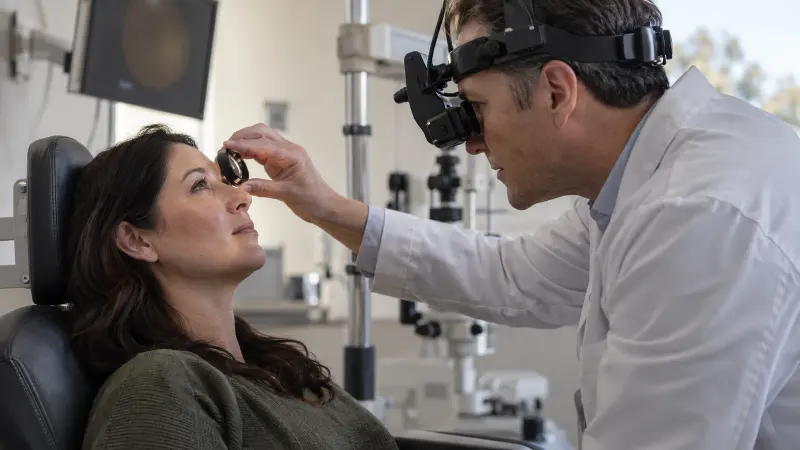

Sudden loss of sight calls for emergency action
When to seek emergency care
Sudden vision loss in one eye needs emergency care, even if sight comes back. The change may darken the whole view or leave a dim, blank, or missing area. The eye may not hurt. Retinal artery occlusion (a blockage of blood flow through a retinal artery) can cause sudden, painless loss of all or part of sight. Other urgent eye and nerve problems can look similar. A safe retinal artery occlusion triage plan starts with emergency assessment because symptoms alone cannot identify the cause.
Arrange transport without delay
Call emergency services for new sudden loss of sight and follow the route the emergency team gives you. Put the phone on speaker if another person can help. Ask that person to write the event details while you speak. Do not drive with a new sight change. Let another adult or the emergency team handle transport. A routine office appointment or a wait-and-see period does not match the urgency of a sudden loss. For a related symptom pattern, read What Happens During Retinal Tear Diagnosis.
Improvement does not end the concern
Sight that returns still needs emergency assessment after a sudden change. Improvement can seem quite reassuring. It does not show the cause. The first event still needs a full report. A short episode can fit the same urgent setting as sight loss that remains, yet the symptom cannot prove retinal artery occlusion. Tell the emergency team that the change improved and state when you first noticed it.
Describe the event without naming a cause
The first-minute vision-change record
Write down what you noticed while someone else arranges care. Record what happened, not what you think caused it. Do not cover and uncover each eye or repeat vision tests to fill a gap in the story. Give the care team a short record with these four details:
- The time when sight changed or the last time sight seemed unchanged
- The eye that seemed different
- The part of the visual field that became dim, blank, or hard to use
- Any other new symptom that began near the same time
Pain cannot sort the cause
Retinal artery occlusion can cause sight loss without eye pain. Some urgent events do not hurt. Other eye problems may cause pain that feels quite strong. Both patterns need a sound clinical check. Lack of pain does not make a sudden change safe to watch at home, and pain can point toward other urgent eye problems. Report whether pain occurred, but let the clinical team use the full exam to interpret it.
Partial loss still counts as a major change
A person may lose part of the visual field when a smaller retinal vessel has a problem. One side may seem dim. A patch may seem blank. The edge may feel hard to map. The visible pattern cannot show which vessel or condition caused the change. Describe a curtain, blank area, patch, or dim region in your own words without testing the eye again and again.
The examination looks beyond the eye
Eye and body checks serve different needs
The emergency team may arrange an urgent eye exam and a wider health assessment. Eye clinicians look for the cause of the sight change. The emergency team also checks for health problems beyond the eye. Retinal and ophthalmic artery occlusions can point to important blood vessel disease, so both parts of the assessment can shape the care plan. Clinicians choose the setting and tests from your symptoms, exam findings, and possible causes.
Inflammation can change the workup
Some clinical settings call for an assessment of inflammation as a possible cause. Age and health context can guide questions. The eye report adds a different form of context for the team. No one symptom settles the issue. A reader cannot decide whether inflammation caused the event from a symptom list or past health concern. Give the team a full symptom history and let clinicians decide which questions and tests fit.
Home maneuvers cannot replace assessment
Do not use eye massage, pressure drops, or oxygen as a home attempt to restore sight. None of those steps can replace an emergency assessment. Trying a maneuver can delay the call and blur the record of when sight changed. Bring your medicine list or containers if they are easy to reach without slowing your departure. Emergency clinicians can then choose care after examining you.
Questions people ask after sudden one-eye vision loss
Can an eye stroke happen without eye pain?
Yes, central retinal artery occlusion can cause sudden, severe sight loss without pain. The eye may look calm. The person may feel no ache. Those facts do not lower the need for care. Other eye or nerve problems can also cause a painless change, so pain cannot confirm or rule out an eye stroke. Emergency assessment gives the care team the chance to examine both eye and vascular concerns.
What if the vision change affects just part of one eye?
Loss in one part of the visual field still needs emergency care when it starts at once. A blank patch counts as loss. A dim edge also matters. The size does not set the care route. The area can vary with the retinal vessel involved, but the pattern does not identify a vessel at home. Describe the affected field and when you first noticed it.
What if my vision returns before I get help?
Keep seeking emergency assessment if sight returns after a new sudden loss. Note when sight came back. Mark any second change as well. Do not cancel help after an improvement. A brief improvement does not let a person exclude retinal ischemia (reduced blood flow to the retina) or another urgent cause. Tell the team how long the change seemed to last and whether it came back.
Should I drive myself after sudden vision loss?
Do not drive yourself after a sudden loss or major change in sight. Depth and field may feel wrong. More sight may fade while you are on the road. A support person can share event notes. Ask another adult for transport or call emergency services, then use the route the emergency team gives you. New sight loss can affect safe travel and may call for a stroke-capable assessment.
What details should I tell the emergency team?
State the start time, eye involved, area of sight affected, and any other symptom near the event. Use the clock time if known. Say when sight last seemed free from the change. Note any return of sight. Mention whether sight returned and share your current medicines when the team asks. Keep the report factual, since guesses about the cause can distract from the clinical assessment.
How is retinal artery occlusion different from other sudden eye problems?
Retinal artery occlusion involves loss of blood flow through a retinal artery. Other causes can look much alike. Some involve the eye and its inner parts. Others involve nerves or blood flow. Other eye and nerve conditions can create an overlapping pattern of sudden sight change. A clinical examination and the wider emergency workup help clinicians separate those possibilities.
Let the emergency team take over
Call emergency services for sudden one-eye sight loss. Take the four-part event record with you, and let the examining clinicians choose the next steps.