
Bring a Symptom Pattern to the Visit
Start with morning and later sight
Bring a short note about blur after you wake. Say if it clears or changes later. Add when reading or faces become easier to see. This pattern helps the team ask better questions. It does not grade Fuchs or prove a change in the disease.
Describe glare, halos, and light pain
Tell the clinician if glare makes dim tasks hard. Add any rings around lights. Say if bright light causes pain or discomfort. Name the setting where it happens. Do not use one symptom to judge corneal swelling.
Report pain with simple words
Use words such as ache, sharp pain, or surface sting. Say when the pain starts and how it changes over time. Intense pain needs fast care, so do not save a strong new pain for a routine visit.
A Seven-Day Fuchs Symptom Pattern to Bring to Your Visit
Compare the same parts of the day
Choose a few repeat points, such as waking, the start of tasks, and late day. Write a few words about blur, glare, rings, light pain, and eye pain at each point. Describe what happened without trying to score the cornea.
Mark the eye that seems different
Note if one eye seems worse or both eyes feel the same. Write what you notice during normal tasks. Tell the clinician if you cannot name the eye because the note does not need a home vision test.
Connect the change to a real task
Name a task that became harder. It may involve print, steps, faces, screens, or night driving. A task shows the real effect of the symptom. It also helps the team compare visits. Keep the note tied to what you did.
Keep the record short
Use one brief line for each chosen time. Add the eye and task, then bring the note on paper or on your phone. Short notes work well in a visit when you leave out guesses about disease stage.
Why the Pattern Helps
Fuchs changes cells at the back of the cornea
Fuchs endothelial dystrophy affects endothelial cells at the back of the cornea. These cells help manage fluid, so poor cell function can let fluid build up. The cornea can then swell and affect sight.
Morning blur does not show a disease stage
Fuchs can cause morning blur that clears later. This clue helps at a visit, but it does not show the disease stage or tell you to change treatment. The eye-care team must pair your history with an eye exam.
Pain can have more than one cause
Fuchs can cause eye pain as it gets worse. Tiny blisters can form when fluid affects the cornea, but a patient cannot confirm them from pain. Other eye problems can also hurt, so report a new pain and let the clinician examine the eye.
Link Your Questions to the Eye Exam
Ask what the exam can show
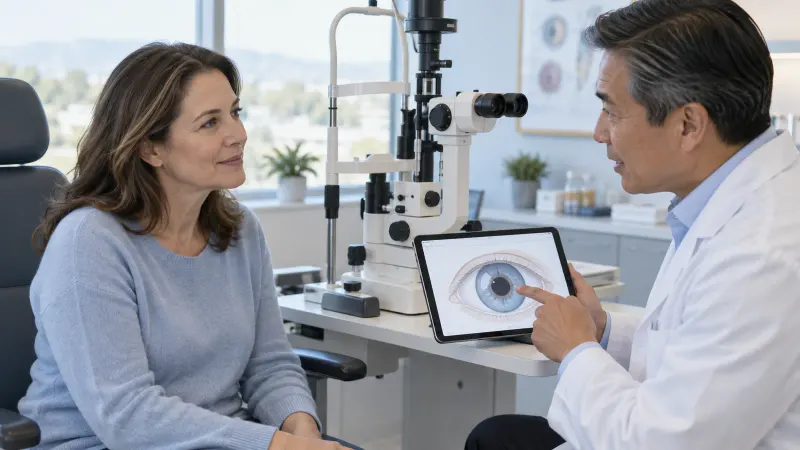
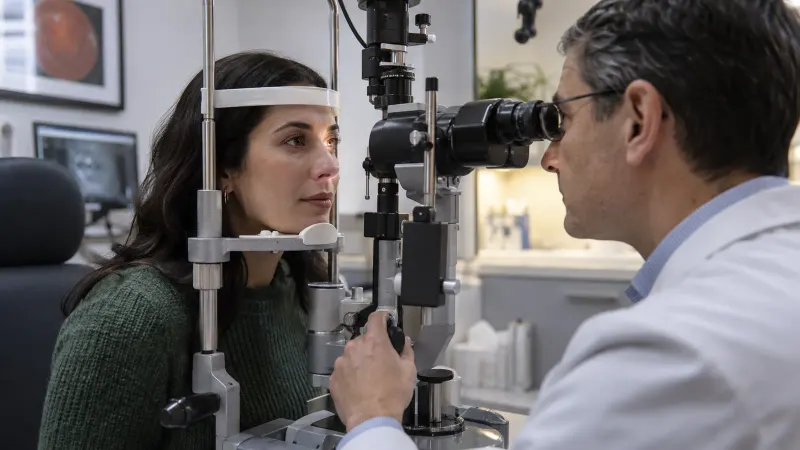
Ask how the team will check the cornea. Then ask if the findings fit your symptom pattern and request an answer in plain words. Keep the question tied to this visit rather than trying to read a test on your own.
Ask which changes need a faster call
Ask what pain or sight change should prompt a call. Confirm the after-hours route and write the answer beside your visit note. Use that plan when your pattern changes because it fits your case better than a broad rule.
Ask how the team will follow change
Ask what the team will compare at future visits. Symptoms may form one part of that review. Exam findings form another part. Bring the short pattern again if the team wants it. The record supports care but does not score progress.
Acute Changes That Need Fast Care
Sudden blur with eye pain needs emergency care
Use emergency care for sudden blurred vision with eye pain. A red eye adds concern, but the group of symptoms does not prove that Fuchs caused it. Other eye problems can look the same and require an urgent exam.
Sudden lost sight or changed sight can be an emergency
Seek emergency care if sight disappears without warning or a dark shade moves across your vision. New double vision or lines that look bent without warning also need urgent assessment. These patterns do not name a disease, so tell the team about Fuchs and let the exam find the cause.
Intense pain needs urgent assessment
Seek urgent assessment when eye pain becomes intense. Do not wait to finish the symptom record. Say when the pain began. Add redness, light pain, or sight change. The care team can choose the right next step.
Questions Before a Fuchs Dystrophy Visit
Why is my sight worse after waking?
Morning blur that clears later can occur with Fuchs. The pattern gives the clinician context, but it does not prove that the cornea has grown worse. Bring the timing and any shift from your past pattern to the visit.
Do glare and halos mean Fuchs has changed?
Glare and rings around lights can occur with Fuchs. They cannot prove a change in disease. Say when they occur. Name the task they disrupt. The team can compare your report with the exam.
Can Fuchs cause eye pain?
Eye pain can occur as Fuchs gets worse. Fluid problems can cause painful changes on the cornea. Pain can also have other causes. Report a new pain. Seek fast care for intense pain or a sudden major sight change.
Should I keep a long symptom diary?
A short pattern can support the visit. Use the same chosen times and real tasks. Name the eye if you can. Do not add a disease score. Stop the record and seek care if an acute pattern starts.
Does a bad morning prove corneal swelling?
A bad morning does not prove swelling caused the blur. Fuchs can affect corneal fluid, but an eye exam must link that process to your symptom. Use the morning note as a discussion point and let the clinician assess the cause.
What else should I bring?
Bring your eye medicines or an accurate list. Add questions from your record and any care you sought since the last visit. Tell the team about a new urgent call, then ask what details they want next time.
Prepare for Your Fuchs Visit
Bring the short symptom pattern and medicine list. Ask what the exam shows, which changes need a faster call, and how the team will track change. Seek urgent or emergency care before the visit when the acute pain or sight patterns above appear.