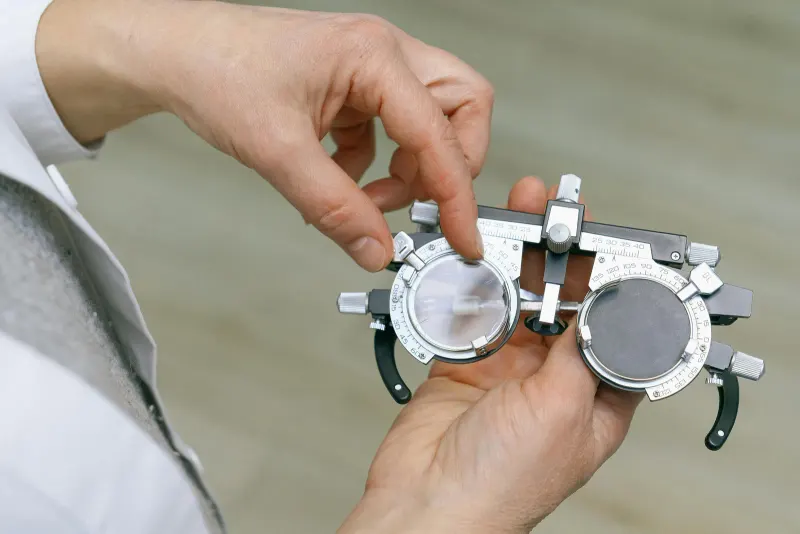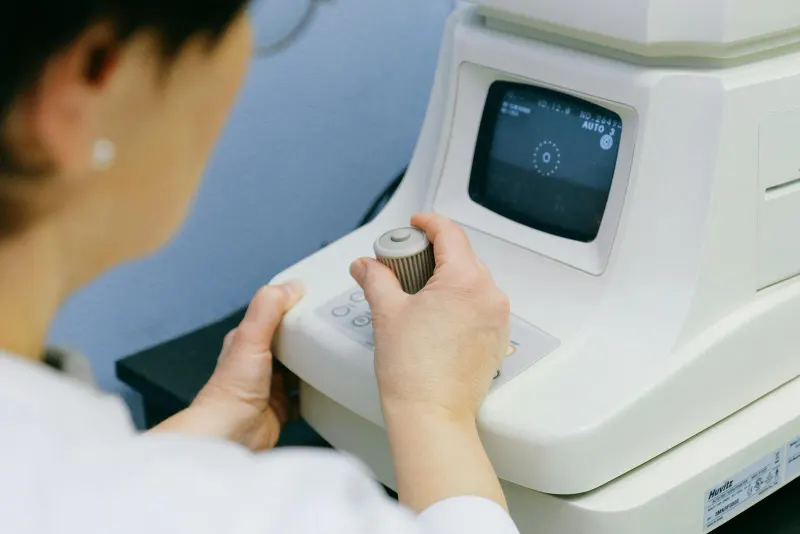

Tear osmolarity testing for dry eye can show whether the tear film is more concentrated than expected. It gives an eye doctor one piece of information about tear film stress, but it does not diagnose every cause of dry eye by itself.
Dry eye is a tear film disorder. Some people do not make enough tears. Others have tears that evaporate too quickly or become unstable because of eyelid oil gland problems, inflammation, medications, contact lenses, or environment.
At a Glance
- Tear osmolarity measures how concentrated the tears are.
- The test can support a dry eye evaluation, especially when symptoms and signs do not match neatly.
- Results need context from symptoms, eyelid exam, tear break-up time, staining, and medical history.
- A normal or borderline result does not rule out every eye surface problem.
- Pain, light sensitivity, discharge, or sudden vision change needs prompt care, not routine dry eye testing.
What Tear Osmolarity Measures
Osmolarity describes the concentration of particles in a fluid. When tears evaporate or the eye surface becomes stressed, the remaining tear film may become more concentrated. That concentration can irritate surface cells and contribute to burning, gritty feeling, watery reflex tearing, and fluctuating blur.
The National Eye Institute explains that dry eye can happen when eyes do not make enough tears or when tears do not work correctly. Tear osmolarity testing focuses on one part of that bigger picture.
The test usually uses a small sample from the tear meniscus near the lower eyelid. It is quick, but the result should be interpreted by someone who also examines the eyelids, cornea, conjunctiva, and tear film.
What the Test Can Add
Tear osmolarity can help when symptoms fluctuate or when a clinician wants objective data before changing a treatment plan. It may also help compare one eye with the other or track whether the tear film looks more stable over time.
- It can support a dry eye diagnosis when symptoms and exam signs fit.
- It can add information when dryness affects contact lens comfort.
- It can help monitor response alongside other exam findings.
- It can prompt a closer look at evaporation, inflammation, or tear production.
The result does not tell the whole story. A patient may have eyelid inflammation, allergy, exposure, corneal nerve pain, medication effects, or autoimmune disease that needs separate evaluation.
What Tear Osmolarity Cannot Prove Alone
A single number cannot show the exact cause of dry eye, choose the best treatment by itself, or prove that symptoms are harmless. Tear film changes can vary by time of day, recent drop use, environment, and blinking.
Some patients have severe symptoms with modest test changes. Others have abnormal measurements with fewer symptoms. That mismatch is one reason dry eye care uses a combination of testing and careful history.
Ask your doctor how the result fits with tear break-up time, corneal staining, eyelid oil gland findings, and your symptoms. The answer should connect the test to a plan you can understand.
What to Expect at the Appointment
Your eye doctor may ask about burning, watering, fluctuating blur, contact lens comfort, screen time, medications, autoimmune disease, allergies, and prior eye surgery. They may also ask which drops you use and how often.
Testing may include tear osmolarity, dye staining, eyelid margin evaluation, tear volume checks, and meibomian gland assessment. Meibomian glands make the oil layer that slows evaporation.
A plan may include environmental changes, eyelid care, lubricating drops, contact lens changes, prescription treatment, in-office procedures, or evaluation for related medical conditions. The right mix depends on the cause found during the exam.
Red Flags That Are Not Routine Dry Eye
Seek prompt care if dry eye symptoms come with significant pain, light sensitivity, thick discharge, sudden vision loss, a white spot on the cornea, or a contact lens-related red eye. These signs can point to infection, corneal inflammation, uveitis, or another condition.
Dry eye can be chronic, but new severe symptoms deserve a different response. Do not wait for a scheduled tear osmolarity test if the eye is painful, red, light-sensitive, or losing vision.
Questions to Ask About Results
- Does my tear osmolarity fit my symptoms and exam findings?
- Do my eyelid oil glands look healthy?
- Do I have staining on the cornea or conjunctiva?
- Could allergy, medication, autoimmune disease, or contact lenses be contributing?
- How will we know whether the plan is working?
Common Patient Questions
Is tear osmolarity testing painful?
Most people feel little or no discomfort. The test collects a small tear sample near the lower lid and does not involve a needle.
Can I use drops before the test?
Ask the office before your visit. Recent drops can affect some tear measurements, so the timing may matter.
Does an abnormal result mean I need prescription treatment?
Not by itself. Your doctor considers symptoms, exam findings, health history, and prior treatment before recommending the next step.
Tear osmolarity testing can make dry eye care more precise when it is used with a full eye surface exam. The value comes from context, not from treating the number alone.
When Testing Is Most Useful
Tear osmolarity can be useful when symptoms persist despite basic lubrication, when contact lens comfort is poor, or when a procedure is being planned and the eye surface needs to be stable. It can also help when one eye feels much worse than the other.
The test may be less useful if the eye has an obvious urgent problem, such as a corneal ulcer, infection, foreign body, or severe inflammation. In that setting, the clinician focuses on the urgent diagnosis first.
How to Prepare
Bring your current drops, contact lens details, and a list of medicines. Mention dry mouth, joint pain, skin conditions, allergy symptoms, and autoimmune diagnoses because dry eye can connect with whole-body health.
Tell the clinician what you want to improve. Reading comfort, computer work, contact lens tolerance, night driving, and morning pain may each point toward a different treatment priority.