
Pain light sensitivity and sight change need prompt care
Know when to seek care for a painful red eye
Seek prompt eye care for eye pain, strong light sensitivity, or any change in vision. Anterior uveitis (inflammation in the iris and nearby tissue at the front of the eye) can cause those symptoms. These anterior uveitis symptoms can also occur with other urgent eye problems, so an exam must guide the diagnosis.
A painful red eye with sensitivity to light or reduced sight deserves prompt contact with an eye doctor. Do not wait for a routine visit when the pattern has just begun. Tell the office that you have pain, light sensitivity, or a sight change so the team can choose the care route.
Eye pain changes the red-eye decision
Eye pain can occur with acute anterior uveitis, and it can also occur with other urgent conditions. A mirror cannot show which cause you have. Contact an eye doctor at once rather than treating the pain as a common red eye.
Describe whether the pain began at once or built over time. Name the eye that hurts and add any sight change. The care team can use those facts to decide how soon an exam should take place.
Marked light sensitivity needs an eye-doctor call
Strong pain from light needs prompt eye-doctor contact. You can call the symptom light sensitivity or say that room light hurts the eye. Both descriptions give the care team useful facts without naming a cause.
Do not test the eye with brighter light. That test cannot judge the level of risk. Tell the team which light brings on the pain and when the change began. Add redness, eye pain, or reduced sight if you have those concerns too.
A change in vision deserves prompt assessment
Any new change in vision with a red or painful eye needs prompt assessment. Anterior uveitis can cause blurred vision, but blur does not confirm the condition. Other urgent eye problems can share the same pattern.
Use plain terms for the sight change. Haze, blur, dim sight, or loss of detail can help you describe it. Name the eye involved. Do not wait for the sight change to grow before you make contact.
Symptoms cannot identify the cause at home
Redness alone does not settle the diagnosis
Redness can occur with anterior uveitis, yet the look of the eye cannot confirm it. A red eye may come from another cause that needs a different response. An eye doctor must examine the eye before choosing treatment.
Avoid calling the problem a common infection from its color alone. That label can lead you toward the wrong self-care choice. Report pain, light sensitivity, and vision change with the redness so the office hears the full concern.
A small pupil cannot act as a home test
A small pupil can occur with acute anterior uveitis, but a pupil check cannot diagnose the condition. People can misread size when light differs between the eyes. Let an eye doctor assess the pupil as part of the exam.
Do not delay care while you compare the eye with photos or old episodes. The urgent decision rests on pain, marked light sensitivity, vision change, and the full symptom pattern. The doctor can decide what the pupil finding means.
A past episode does not prove the new cause
Anterior uveitis may come back, but a new red or painful eye still needs a fresh assessment. The same person can have a different eye problem at another time. Do not assume that an old diagnosis explains the current symptoms.
Tell the care team about the prior episode and which eye had it. Share the treatment history if asked. The clinician can compare the new exam with the past record before making a care plan.
Prepare a clear call without self-treatment
Describe a red-eye concern in the terms your care team needs
Give the office a short report that starts with what changed, not what you think caused it. Four details can help the team understand the urgency.
- Time the concern began
- Eye involved or both eyes
- Pain, light sensitivity, or sight change
- Prior episode of anterior uveitis
Keep the list near you during the call. Answer follow-up questions with the same plain terms. The care team can then direct you to the right place for an exam.
Leave old eye drops out of the decision
Do not use leftover steroid or pupil-widening drops from a prior episode. Symptoms cannot select treatment. The current eye problem may require a different plan after an exam.
Tell the eye office which drops you still have and when a clinician first gave them to you. Wait for new instructions from the team that evaluates the current eye. Do not copy an old dose or taper plan from memory.
Let the examination set the treatment
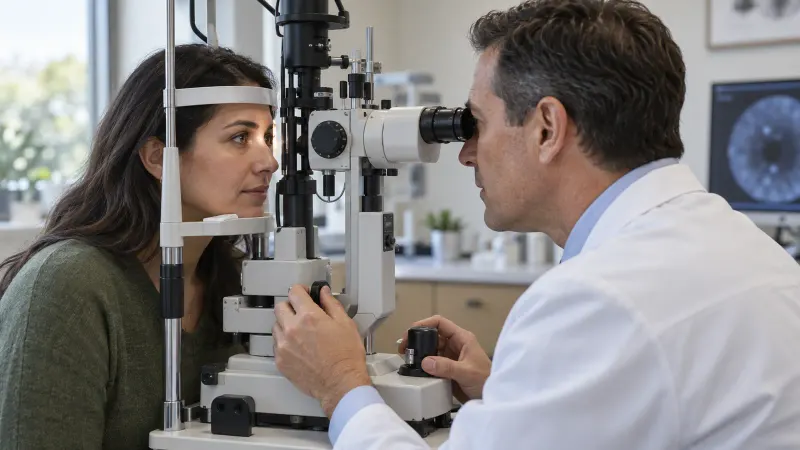
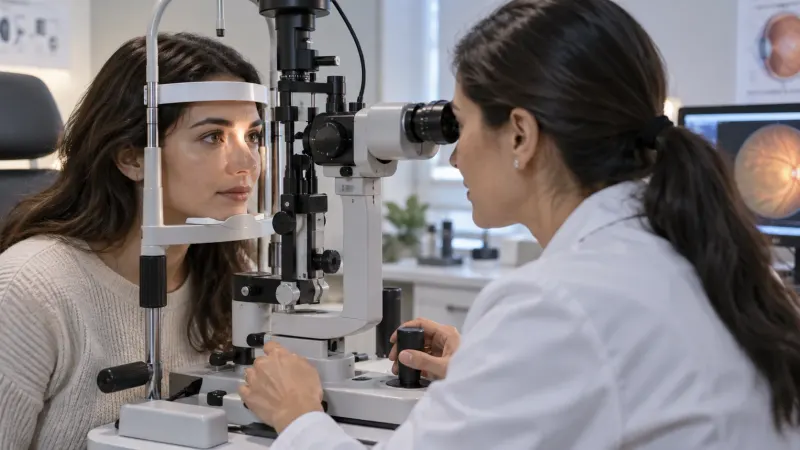
An eye clinician finds the cause through an exam. The clinician then chooses treatment. Symptoms can guide urgency, but they cannot select a medicine. The exam also lets the clinician look for another urgent cause.
Avoid online dose advice or a generic treatment plan. Care can differ between people and between episodes. Ask what the clinician found, what plan fits the current eye, and when the team wants another check.
Use the office report to find the urgent route
Local same-day and emergency routes can differ, so give the eye office the full symptom report at first contact. State eye pain, marked light sensitivity, or a vision change before other details. Ask where the team wants you to go and how soon.
If the office cannot respond, use an urgent eye-care or emergency route for a painful red eye with reduced sight or strong light sensitivity. Do not wait for the next routine slot. Bring the onset note and any prior eye record you have.
Answers about urgent anterior uveitis concerns
Is anterior uveitis the same as iritis?
People may use iritis for inflammation that involves the iris at the front of the eye. The urgent task stays the same when the eye hurts, light causes strong pain, or sight changes. An eye doctor still needs to confirm the diagnosis through an exam.
Can a red eye be more than a common eye infection?
A red eye can come from anterior uveitis or another urgent eye problem. Color alone cannot tell you which cause fits. Pain, marked light sensitivity, or a vision change needs prompt eye-doctor assessment.
What should I report when I call?
Give the onset time, the eye involved, any sight change, and the effect of light. Add a prior uveitis episode if you had one. State the most urgent symptom first so the office can route the call.
Does light sensitivity change the urgency?
Strong light sensitivity needs prompt contact with an eye doctor. Report whether light causes pain and whether the eye also looks red or has less sight. Do not wait for the symptom to fade before you ask for direction.
Can anterior uveitis return?
Anterior uveitis may recur. A past episode does not confirm that a new red or painful eye has the same cause. Seek a fresh exam so the clinician can assess the current eye.
Should I use drops from a prior episode?
Do not start leftover steroid or pupil-widening drops from an old plan. The care team must examine the current eye before it selects treatment. Tell the office what drops you have and follow the new instructions it gives you.
Put a painful red eye in front of an eye doctor
Contact an eye-care team at once for eye pain, marked light sensitivity, or a vision change. Give the onset and symptom pattern so the team can direct the urgent exam.