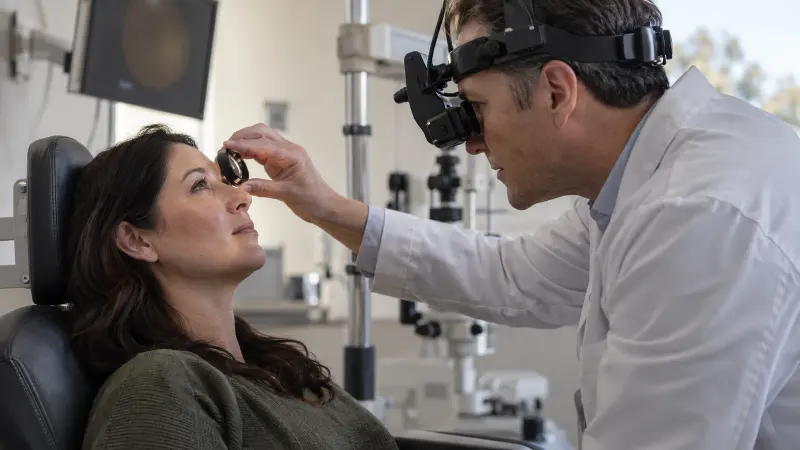
During a dilated eye exam, drops widen the pupils so the clinician can examine more of the retina, optic nerve, blood vessels, and other internal structures. Near vision may blur and light sensitivity may last for several hours, so bring sunglasses and arrange transportation if you may not be able to drive safely.
What Happens During a Dilated Eye Exam? A dilated eye exam is a comprehensive eye visit that lets the eye doctor see more of the inside of the eye. Dilating drops widen the pupils. With the pupils open, the clinician can examine the retina, optic nerve, blood vessels, and other structures that are harder to see through a small pupil.
The exam is usually straightforward, but it helps to know what to expect. Dilation can make near vision blurry and lights feel brighter for a few hours. Planning ahead with sunglasses, reading time, and transportation can make the visit easier.
What matters first for dilated eye exam?
Dilation widens the pupil so the eye doctor can check the back of the eye.
- The exam can help detect glaucoma, diabetic eye disease, macular degeneration, retinal tears, and other problems.
- Dilating drops may blur near vision and increase light sensitivity temporarily.
- Bring sunglasses and ask whether driving afterward is safe for you.
- Sudden vision loss, flashes, floaters, or severe eye pain should not wait for a routine exam.
Why Dilation Is Used
The National Eye Institute explains that dilation helps eye doctors check for common eye problems, including diabetic retinopathy, glaucoma, and age-related macular degeneration. Without dilation, the view through the pupil is narrower.
Some clinics use retinal photos or imaging, which can be very useful. Imaging does not replace every part of a dilated exam in every situation. The eye doctor decides what is needed based on symptoms, risk factors, and exam findings.
Before the Drops
The visit may begin with questions about vision, health conditions, medications, family history, and symptoms. Testing may include visual acuity, refraction for glasses, eye pressure measurement, pupil checks, eye movement, and a microscope exam of the front of the eye.
Tell the team if you have had a reaction to dilating drops before, have narrow angles, are pregnant, are nursing, or need to drive soon after the visit. These details help the clinician plan safely.
During Dilation
Dilating drops are placed in each eye. Its importance requires comparison with the earlier baseline and the purpose of the visit.
- The drops may sting briefly.
- You may wait while the pupils widen.
- Near vision may become blurry.
- Lights may feel brighter.
Once the pupils are dilated, the eye doctor uses lenses and lights to examine the retina and optic nerve. The lights can feel bright, but the exam should not be painful. If you need a brief pause, say so.
What the Eye Doctor Looks For
The back of the eye can show signs of diabetes, high blood pressure effects, macular degeneration, retinal tears, retinal detachment, optic nerve swelling, glaucoma-related nerve changes, inflammation, and other conditions. Dilation is especially important when symptoms involve flashes, floaters, vision loss, diabetes, or a family history of certain eye diseases.
The exam may also include OCT imaging, fundus photography, visual field testing, or other tests. These are chosen based on what the doctor needs to confirm or track.
After the Exam for pupil-dilated retinal examination
Wear sunglasses if light feels uncomfortable. The appropriate response depends on its timing, associated symptoms, and the examination findings.
- Expect near blur until the drops wear off.
- Avoid driving if vision feels unsafe.
- Ask when results should be reviewed or repeated.
- Follow any instructions about urgent symptoms after the visit.
Dilation effects vary by person and by drop. Children and people with lighter-colored eyes may sometimes stay dilated longer. If blur or light sensitivity lasts much longer than expected, call the eye care office for guidance.
Who May Need Dilated Exams More Often
People with diabetes, glaucoma risk, retinal disease, high myopia, eye trauma history, certain medication use, or a strong family history of eye disease may need dilation more often than someone with low risk. Age also matters. The schedule should be individualized.
Do not skip dilation only because vision seems clear. Many eye diseases begin quietly. A dilated exam can find changes before they affect everyday vision.
When Care Should Be Urgent
Do not wait for a scheduled dilated exam if you have sudden vision loss, a curtain-like shadow, new flashes, many new floaters, eye trauma, chemical exposure, severe eye pain, or halos with nausea. These symptoms need same-day urgent eye care.
If symptoms are mild but new, call and describe them clearly. The office can decide whether you need a routine visit, urgent dilation, or emergency evaluation.
Questions to Ask for dilated fundus assessment
What did you see in the retina and optic nerve? How much that point matters should reflect the person's function, risk pattern, and direct assessment.
- Do I need photos or OCT imaging for comparison later?
- How often should I have a dilated exam?
- Will dilation affect my ability to drive today?
- What symptoms should make me call before my next visit?
A whole-retina view after dilation is one of the clearest ways to look for quiet eye disease. Knowing the steps can make the visit less intimidating and more useful.
Preparing for a Better Exam
Bring your current glasses, contact lens information, medication list, and any previous eye records if you are new to the office. If diabetes, glaucoma, macular degeneration, retinal tears, or high myopia run in your history, say so before dilation. The eye doctor may look more carefully at certain structures or add imaging based on those risks.
- Ask how long dilation usually lasts with the drops being used.
- Bring sunglasses for the trip home.
- Schedule work or reading tasks with temporary blur in mind.
- Ask for written instructions if drops or follow-up are recommended.
If you are anxious about bright lights or drops, tell the technician. Short pauses and clear explanations can make the exam easier without reducing its value.
From What Happens During a Dilated Eye Exam, the related guide What a Comprehensive Eye Exam Checks is useful when that narrower question applies; it should not be used to infer the diagnosis covered here.