
Know when to see an eye doctor for new symptoms
Call about a new or worsening change in sight
See an eye doctor right away for new or worsening blur, floaters, or flashes. Eye pain, redness, and light sensitivity also need a prompt call. Posterior uveitis (inflammation at the back of the eye) can harm sight without care, but the same signs can come from other eye problems. Seek emergency help for sudden major sight loss, a curtain or shadow, severe pain, or trauma. A new brain or nerve symptom also calls for emergency help. Do not wait to name the cause from a search result.
Treat new blur as a prompt-care sign
New blur needs an eye exam even if the eye looks calm. So does a drop in sight. Note whether the change affects one eye or both. A brief eye-by-eye check may help you describe the change. It cannot identify back-of-eye inflammation or another cause. Avoid driving or another unsafe task while your sight feels impaired.
Report floaters and flashes in your own words
Floaters (small spots or shapes that seem to move in your view) can occur with uveitis. Flashes (brief streaks or bursts of light) can occur as well. Both signs can come from other urgent eye problems. Tell the eye-care team when they began and whether they changed. Add the part of your view that they affect. Seek emergency eye care if a new curtain or shadow joins them.
Call for pain, redness, or light sensitivity
Eye pain can appear with uveitis. A red eye or discomfort in light may also occur. You may have one sign without the others. Call the eye-care team when a sign starts or gets worse. Mention any change in sight. The doctor needs an exam to tell back-of-eye inflammation from infection or another eye condition.
Use an emergency route for severe warning signs
Use urgent local eye or emergency care for sudden major sight loss. Do the same for a curtain or shadow, severe eye pain, marked light sensitivity, or eye trauma. A new sign that involves the brain or nerves also needs emergency help. Do not wait for a routine visit slot. Follow the emergency route from your eye team if you have one. Tell the service that you have a uveitis concern.
Build a Prompt Eye-Care Message
Start with what changed
Begin the message with the change in your own words. Say if you see blur, moving spots, flashes, or a shadow. Add redness, pain, or discomfort in light if present. Avoid saying that the sign proves posterior uveitis. The office needs the experience, not a diagnosis you made at home.
Add the time and pattern
State when you first noticed the sign. Say if it began at once. If it built over time, tell the office that as well. Add whether it stays or comes and goes. Note if it has grown worse since it began. A clear time pattern helps staff choose the contact route without asking you to judge the disease type.
Explain what is different now
Compare the sign with your usual sight and comfort. Name the task that changed. It may involve reading, seeing a face, or moving through a room. Say whether one eye or both seem involved. Keep the note free of a guessed cause so the eye team can assess the full set of eye problems.
Include the care context that you know
Tell the office if an eye doctor has diagnosed uveitis. Say if a team treats your eye inflammation. List all current eye and health medicines from your own written record. Do not change or reuse them on your own. Mention recent eye trauma or a new health concern if it applies, and let the doctor decide what connects to the eye sign.
State which route you have tried
End the message with the office or service you contacted. State the help you need. Use the five-line cause-neutral order below so the team can scan the change without treating your message as a diagnosis.
- I noticed this change in my sight or eye.
- It began at this time and now follows this pattern.
- This is how it differs from my usual sight or comfort.
- My current eye-care context and medicine list include these known facts.
- I tried this contact route and need to know where and when the team wants to assess me.
Understand why an eye exam matters
Symptoms cannot locate the inflammation
Back-of-eye inflammation can affect the retina (the tissue that senses light). It can also affect the choroid (a blood-rich layer under the retina). A list of signs cannot show which eye layer has inflammation. The list also cannot separate uveitis from a retina problem, infection, or another eye disease with similar signs.
The clinician may widen the pupil for the exam
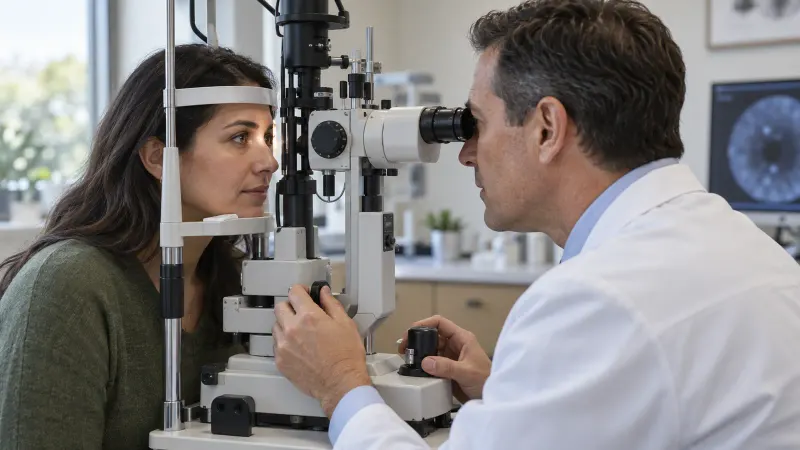
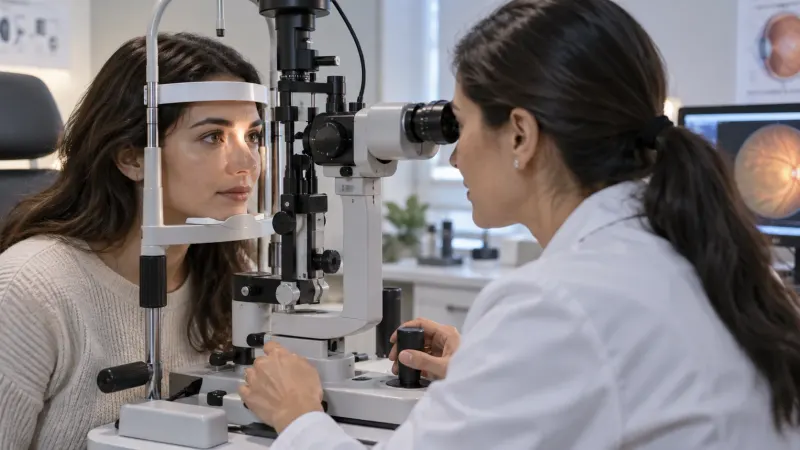
An eye doctor may perform a dilated eye exam (an exam after drops widen the pupil). The wider pupil helps the doctor view the back of the eye. The doctor may also ask about your health history. Tests may help the care team look for inflammation or infection. The exam findings guide the next step, so an online account cannot replace the visit.
Treatment follows the cause and location check
Doctors choose treatment after they assess the site and cause of the inflammation. Do not start leftover eye drops or pills based on a sign list. The same rule applies to injections and other treatment. An infection can make some medicines unsafe and call for a different plan. Contact the treating team if you use a medicine for uveitis and your signs change.
Questions about possible posterior uveitis symptoms
Can floaters prove that I have posterior uveitis?
Floaters can occur with uveitis. They do not prove posterior uveitis. Other eye conditions can also cause moving spots or shapes. New or worsening floaters need prompt eye-care contact. Use emergency care if a curtain, shadow, or major sight loss also appears.
Can posterior uveitis occur without a red eye?
Back-of-eye inflammation may cause little pain in some cases. Redness may also be slight or absent. A calm-looking eye does not rule out a problem when sight changes or floaters appear. Contact an eye doctor about new or worsening signs even if the front of the eye does not look red.
What if I cannot reach my regular eye doctor?
Use a local urgent eye-care route when your usual eye doctor cannot respond. Choose emergency care for severe warning signs. Tell the service about the sight change and its timing. Add pain, redness, discomfort in light, flashes, floaters, or a shadow. Do not delay urgent contact while you keep calling an office that cannot respond.
Should I use leftover steroid drops while I wait?
Do not start leftover steroid drops (medicine used to reduce inflammation) or another old treatment from a prior episode. Back-of-eye inflammation can have several causes. The doctor must check for infection before choosing some medicines. Contact the treating eye team for instructions. Use urgent care if warning signs are severe.
What should I ask when the office calls back?
Ask where the team wants to assess you. Confirm how soon you should arrive. Ask if you should bring medicine lists or eye records. Find out if another person can come for support. Repeat the emergency signs that should send you to a different route while you wait.
Why should I avoid choosing a uveitis subtype online?
Eye doctors name a uveitis subtype from the site of inflammation. They also use the exam findings. Many signs overlap across uveitis types and other eye diseases. A wrong label can delay the right test or lead to unsafe self-treatment, so use the sign list to make contact rather than to make a diagnosis.
Send the message and follow the eye-care route
Use the five-line Prompt Eye-Care Message to state the change, timing, difference from your usual state, care context, and route tried. Contact eye care without delay for new or worsening signs. Use your team's emergency route if sight drops at once, a dark curtain enters the view, pain or light sensitivity becomes severe, an injury occurs, or a new brain or nerve symptom starts.