
When to seek care for a contact lens red eye
Remove the lens and contact an eye doctor
Acanthamoeba keratitis (a rare infection of the cornea, the clear front layer of the eye) can look like other eye infections. Take out your contact lenses when pain, redness, blur, light sensitivity, unusual tears, discharge, or a gritty feeling begins. Call an eye doctor at once. Keep the lenses out while you wait for care. Do not wait for the pain to grow. Pain strength and water exposure cannot show that the eye is safe.
Treat a symptom cluster as a reason for care
A single symptom cannot tell you the cause. Acanthamoeba keratitis can look much like other corneal problems. Pain and redness both need care. Blur, light sensitivity, unusual tears, discharge, and a gritty feeling also count. Call even if you cannot match each item in a list. A new change needs an eye exam. Call as well when the eye gets worse or does not improve.
Do not let mild pain rule out concern
Some people with this infection report severe pain. Others do not report pain. Pain strength cannot serve as a home test for a red eye. A mild ache does not exclude a corneal infection. Intense pain does not name Acanthamoeba as the cause. Seek prompt care for reduced sight, light sensitivity, more redness, discharge, or another new concern in a contact lens wearer.
Your exposure story gives the care team useful context
Give the eye-care team the contact-lens details that matter
Tell the eye-care team how you use, clean, store, and replace your lenses. Do not try to name the cause. A short handoff keeps key facts in view when pain or worry makes them hard to recall. Read the four points during the first call if the office needs to decide how soon to examine you.
- The type of lens and your wear schedule
- The last time you wore or removed the lens
- Any water contact while the lens was in your eye
- The first symptom and how it has changed
Describe water contact without drawing a conclusion
Swimming, showering, or using a hot tub while wearing contact lenses can raise exposure risk. Tell the eye-care office what happened and which lens was in place. State when the water contact occurred. Include tap water used on a lens or case if that happened. Do not delay the call while you judge whether the contact lasted long enough to matter. Water history helps the clinician, but it cannot prove which infection or eye problem you have.
Build a short symptom timeline
Note when the problem began and which eye changed. Write down any rise in pain, redness, light sensitivity, tears, discharge, or blur. Add the last time you wore the lens. Include care advice you received and what changed next. Use clock times if you know them. Do not delay care to build a perfect record. Plain notes help the doctor without naming a cause.
An eye examination separates look-alike problems
Expect questions and a close eye check
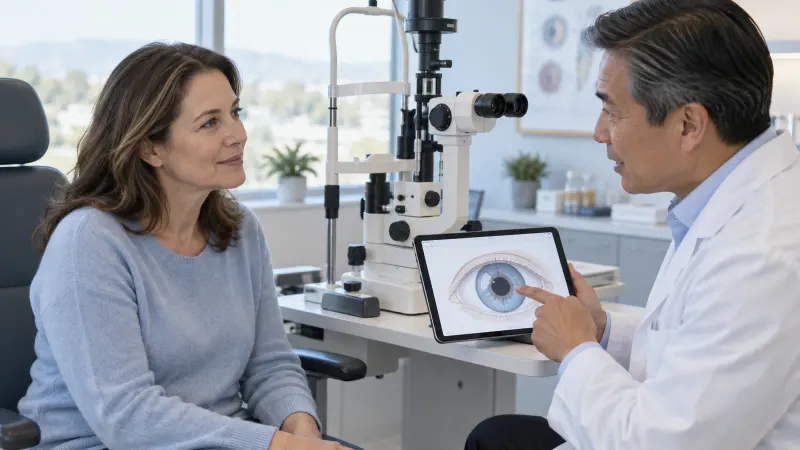
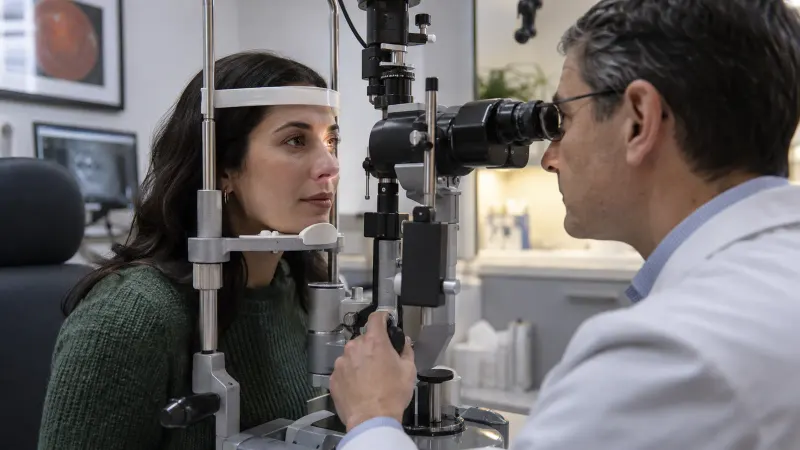
An eye doctor can compare your symptoms, lens habits, water history, and eye findings. The doctor may need special tests. Some cases may call for a sample from the cornea. A symptom list or photo cannot replace the exam. Several forms of keratitis (inflammation or infection of the cornea) can look alike. The eye findings guide the tests, since pain and exposure cannot name the cause.
Leave treatment choices with the clinician
The approved research does not support a home treatment plan for a suspected infection. Do not put tap water in the eye. Avoid homemade solution and drops that no clinician gave you. Your eye doctor can select the next step after the eye check. The findings will guide what tests or care the doctor may choose.
Keep your report focused during the call
Start the call with contact lens wear and your main symptom. Name any vision change or light sensitivity next. Share when the concern began. Tell the office whether water touched the lens. Say if the lens remains in the eye. Keep it out after removal. Give the removal time and state whether one eye or both eyes changed. Ask which route to use after office hours. Read back the care steps so you know what to do. If someone can help, ask that person to write the plan while you speak. A short report helps staff route the concern without asking you to name the cause.
Questions contact lens wearers ask about possible infection
Can Acanthamoeba keratitis look like another eye problem?
Yes, the symptoms can resemble other eye infections and other forms of keratitis. Pain does not identify the germ, and water contact does not prove the cause. An eye doctor needs to examine the cornea and may need special tests before naming the problem. Keep the call focused on what you noticed and when it changed.
Why does contact lens and water history matter at an appointment?
The history gives the clinician context for the eye check. It can also guide later tests. Showering, swimming, or hot-tub use while wearing lenses can raise exposure risk. Share those facts without drawing a firm conclusion. The details support clinical judgment but do not give you a home diagnosis.
Should I keep wearing my contact lens while I wait for advice?
Remove the lens if pain, redness, blur, light sensitivity, unusual tears, or discharge begins. Keep it out while you seek advice. Do not put in a fresh lens. The eye-care team needs to assess the problem. Ask when you may use lenses again after the doctor examines the eye and gives you a plan.
What should I tell the eye-care office?
State that you wear contact lenses at the start. Name the symptoms and any vision change. Report the timing, any water contact, and your full lens wear schedule. Add what happened after any prior care advice. These facts give the office a sound picture of the concern without a self-diagnosis.
Can a rare infection start with familiar symptoms?
Yes, a rare corneal infection can begin with symptoms that people notice with other eye problems. The rare label should not cause panic. It should not excuse a red or painful eye either. Light sensitivity or blur adds more concern for a contact lens wearer. Prompt assessment gives the clinician a chance to identify the true cause.
How is this different from routine contact lens dryness?
Dryness and infection symptoms can overlap. Comfort level alone cannot draw a safe line between them. Worsening pain, redness, light sensitivity, reduced vision, unusual tearing, or discharge deserves prompt eye care. Remove the lens and describe the full pattern to an eye doctor. Let the examination, not a home comparison with past dryness, determine the cause.
Arrange a focused eye assessment
Contact an eye-care office now if a contact lens eye problem includes pain, redness, light sensitivity, blur, unusual tearing, or discharge. Bring your lens-use, water-exposure, and symptom-timing notes to the visit.